Biking and Hiking New Zealand - First Days in Auckland
New Zealand was the destination for a long cycling and hiking trip in the southern spring and summer of 2015/16. The plan was to travel through both the North and South Islands, combining long days on the bike with some of the country's famous hiking tracks. What attracted me most was the variety: volcanic landscapes, long coastlines, forests, mountains, and a surprising number of remote gravel roads and dead ends. It started, however, not on the bike at all, but stuck in Auckland for the better part of a week, waiting for that bike to turn up.
New Zealand
Geography of New Zealand
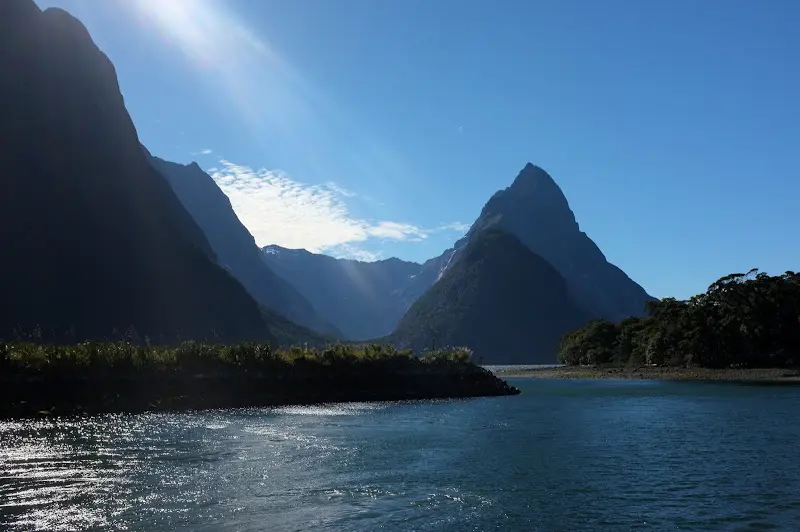
New Zealand lies in the southwestern Pacific and consists of two main islands, the North and South Island, plus more than 700 smaller ones. Rolling hills, rugged mountains, pristine beaches and dense forest all sit within a few hours' drive of each other. The Southern Alps run the length of the South Island and hold the country's highest peak, Aoraki/Mount Cook. New Zealand's long isolation from other landmasses has produced a unique mix of plants and animals found nowhere else on Earth.
History of New ZealandThe Māori arrived from Polynesia around 1,000 years ago and developed a distinct culture built around tribal affiliations and a deep connection to the land. Dutch explorer Abel Tasman sighted the islands in 1642, the first European to do so, and James Cook mapped the coastline more than a century later. The 1840 Treaty of Waitangi between the British Crown and Māori chiefs opened the way to colonisation and the social and political upheaval that followed.
Culture of New ZealandMāori and European influences sit at the core of New Zealand's culture, with Pacific Island and Asian influences increasingly part of the mix. Traditional Māori arts such as carving, weaving and the haka remain widely practised, alongside a strong push to revive te reo Māori. English and Western customs still dominate day to day, but biculturalism runs through festivals, music and art across the country.
Economy and SocietyAgriculture, tourism and trade drive a modern, prosperous economy. Fertile land and a temperate climate make New Zealand a major exporter of dairy, meat and wine, while millions of visitors come each year for the scenery and adventure tourism. The society leans egalitarian, with a strong emphasis on social welfare, education and healthcare, and consistently ranks near the top of global quality-of-life indices.
Environmental StewardshipConservation runs deep here: numerous national parks protect the country's ecosystems, and sustainability is a stated priority in both farming and tourism. New Zealand also leads on renewable energy, generating much of its electricity from hydro, geothermal and wind sources, while government and community groups keep working on climate change and habitat loss.
My trip to New Zealand began at Munich Airport on 18 October at 22:25, with 38 kg of luggage and a flight that left on time. On the way to the airport, the soles of my 25-year-old hiking boots came apart — both of them, at once. Lucky, in a way: better now than on the Kepler Track, and I still had a second pair for hiking. I still wonder whether the old boots could have been saved.
Changing planes in Dubai, I ended up next to two Spanish girls on the long flight to Auckland — they were spending four weeks in the country. When I finally landed and reached baggage claim, I was called out by name and told my bike wouldn't be on this flight: Emirates had left it behind and would deliver it to my campsite in Manukau the next day. So I took the bus there with the rest of my luggage, to a campsite I already knew from a visit in 2012. The missing bike nagged at me more than it should have. I wanted a day in Auckland, but had to be back at the campsite by 4 p.m. for a delivery window that, as it turned out, meant nothing at all.
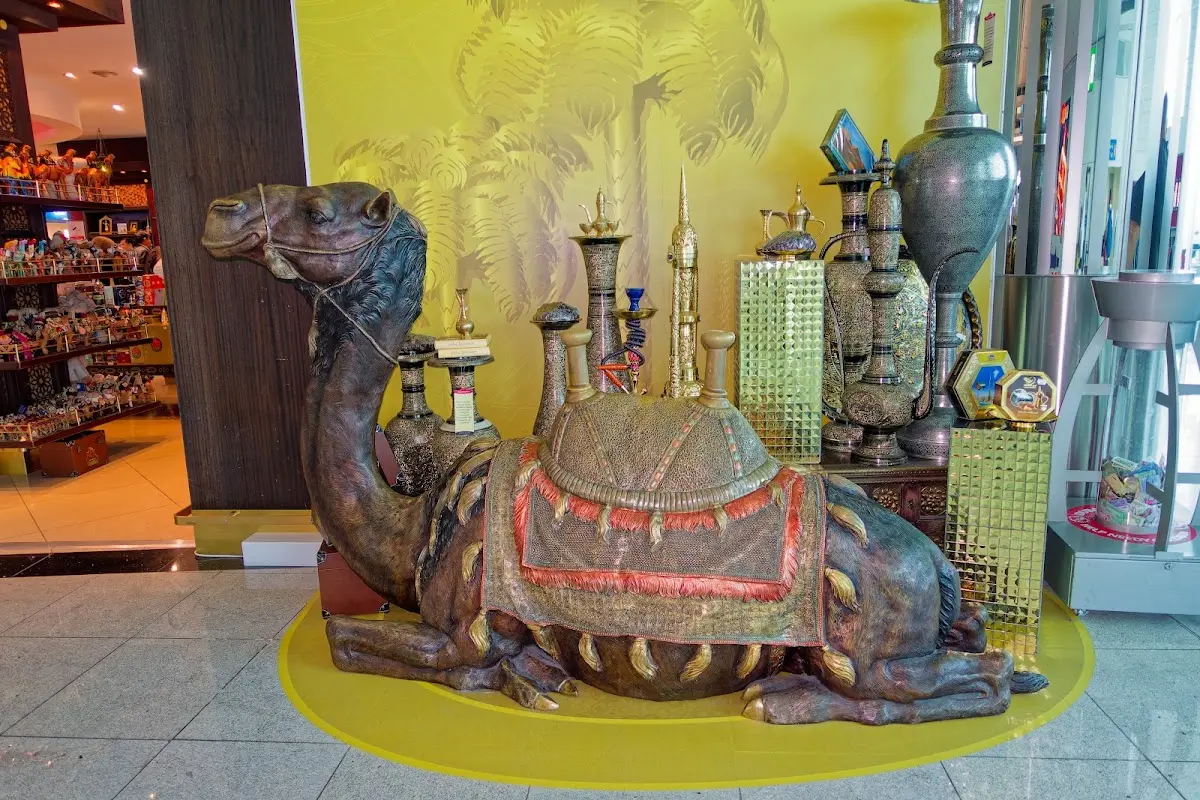
The stopover in Dubai — a camel standing guard over the duty-free shop while I waited for my connection to Auckland.
Auckland
Auckland, New Zealand's largest city, is often called the "City of Sails." It lies between two harbours, the Waitematā on the Pacific side and the Manukau on the Tasman side, and spreads across volcanic hills, suburbs and waterfronts. It's the country's main gateway and its biggest urban centre by far, shaped by Māori, European, Pacific and Asian communities alike. For a traveller arriving after a long flight, Auckland is above all a place of transition: ferries, traffic, a skyline, harbours, and a first taste of everyday life in New Zealand. Compared with the remote country still to come, it felt busy, spread out and thoroughly urban.
By now the jet lag had mostly worn off, and with still no word on the bike, I gave up waiting by the phone and spent the day walking the city instead — down at the waterfront, up through the CBD, into Albert Park, on to the Auckland Domain and the War Memorial Museum, and back via a rose garden and a lookout over the harbour. Breakfast at the campsite had been forgettable; the walk more than made up for it. I called the airport again at 9:30 p.m. and was told, again, that the bike would arrive that day. Of course it didn't, and I was slowly running out of patience.
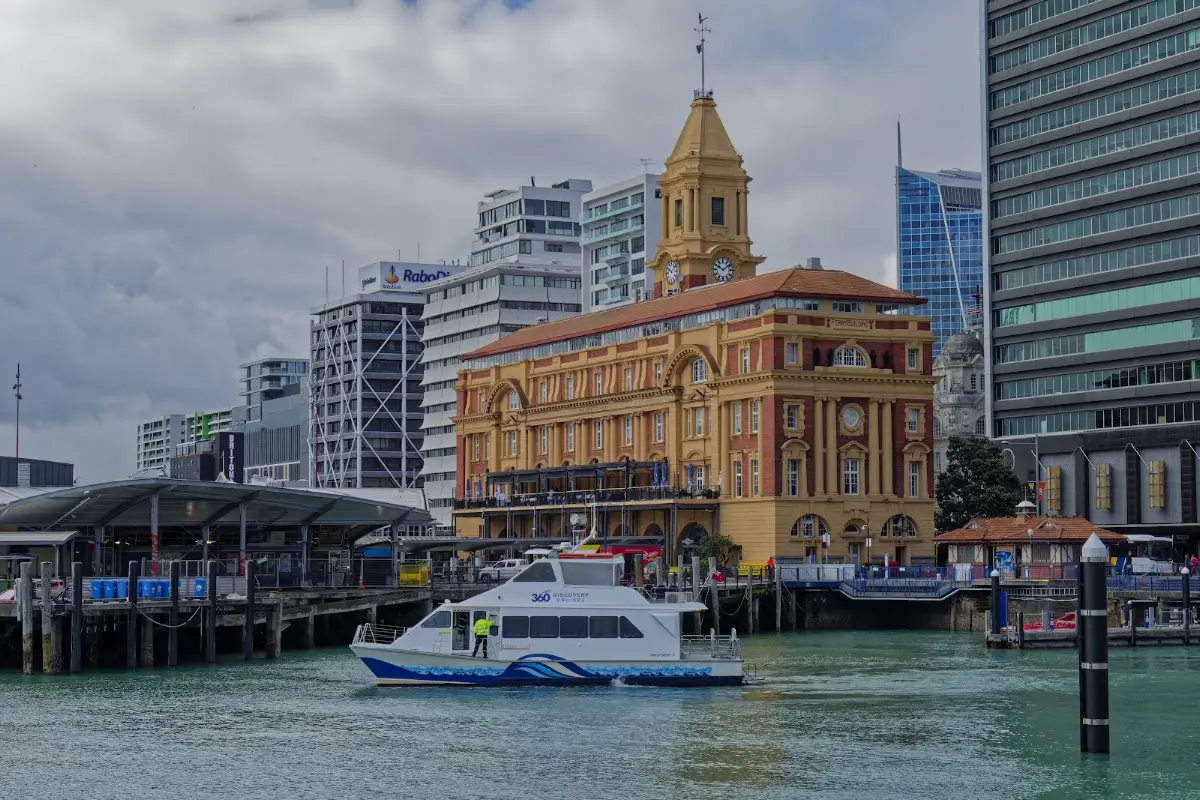
Auckland's old Ferry Building on the waterfront — its clock tower is one of the few 19th-century survivors among the glass office towers behind it.
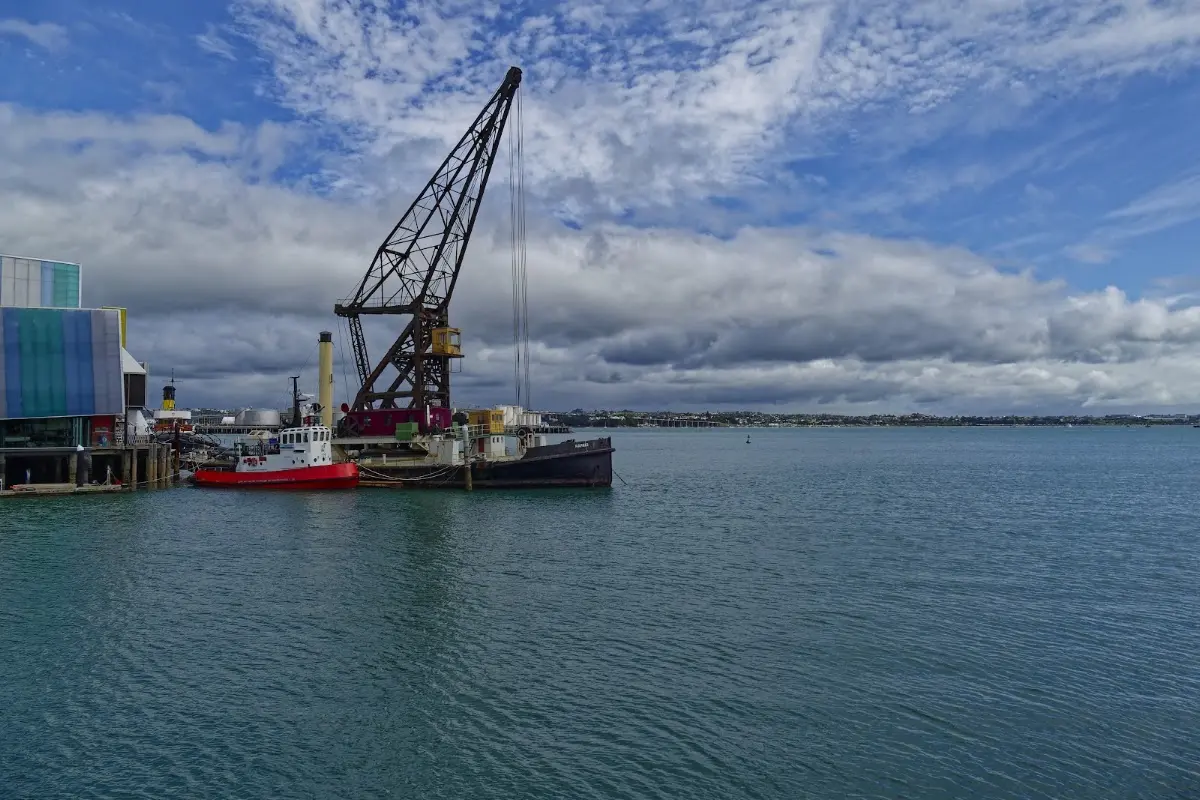
An old crane barge moored by the ferry terminal — unglamorous harbour machinery that quietly keeps a port city running.
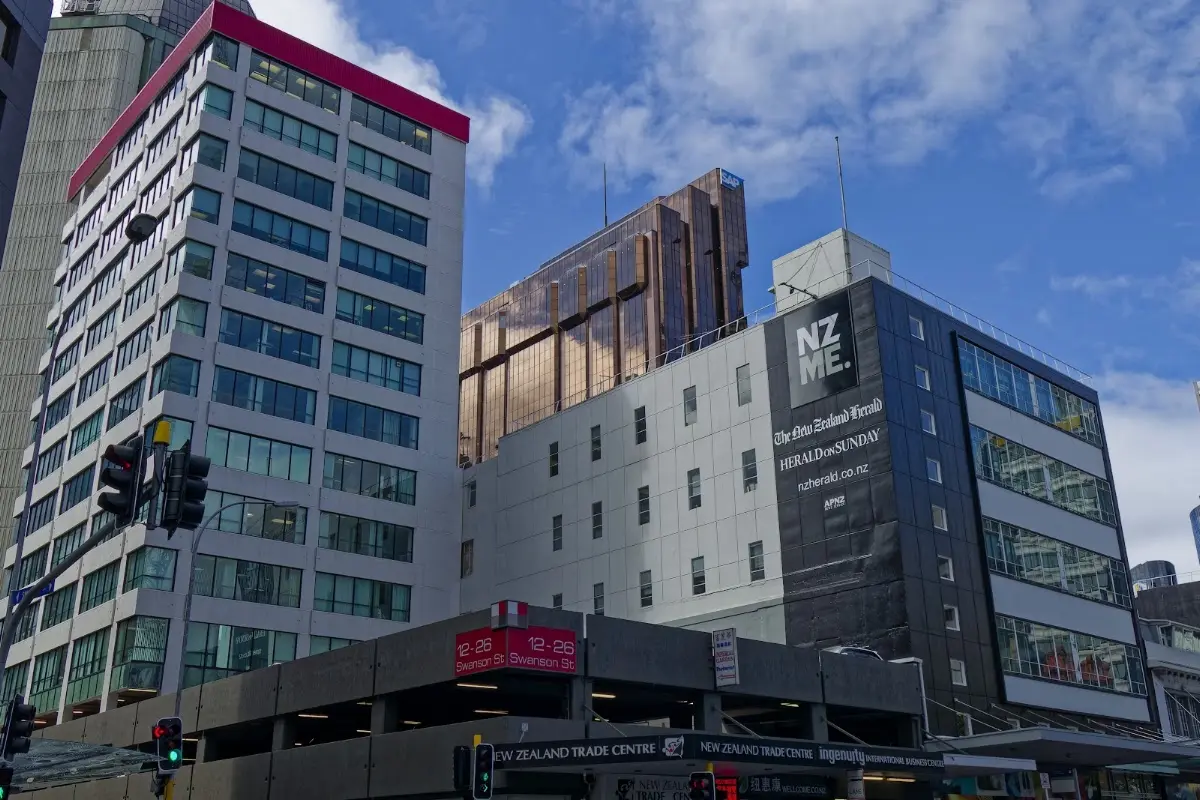
Looking up into the CBD from Queen Street — media offices, banks and several decades of architecture stacked on top of each other.
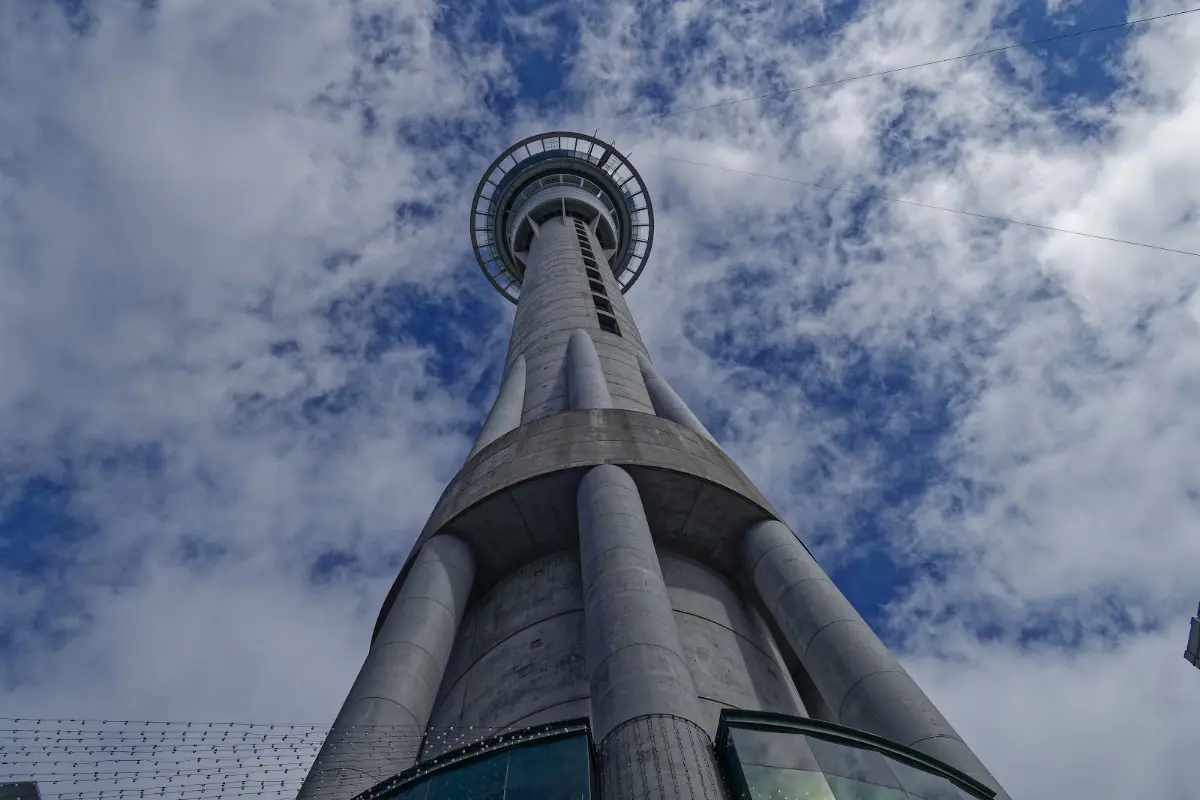
The Sky Tower, 328 metres of concrete and steel, impossible to lose sight of anywhere downtown.
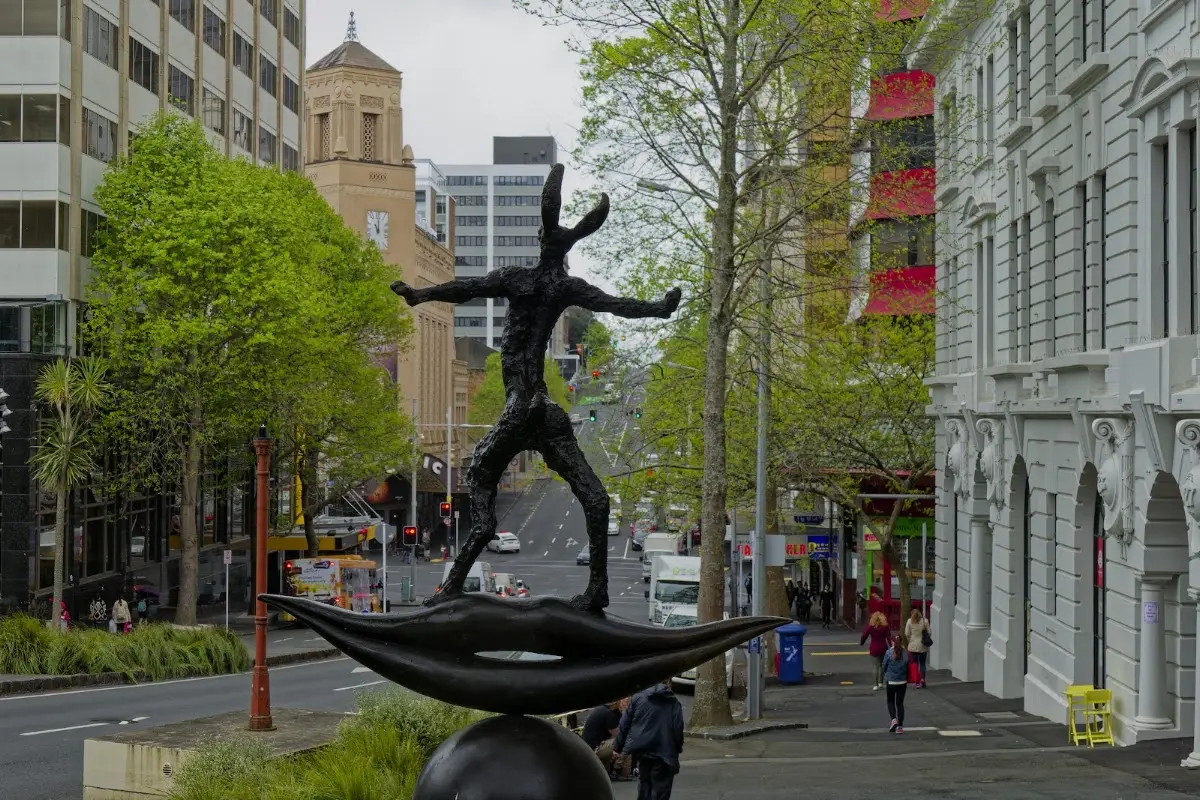
One of the bronze sculptures dotted along Queen Street — Auckland doesn't mind putting art in the middle of the traffic.
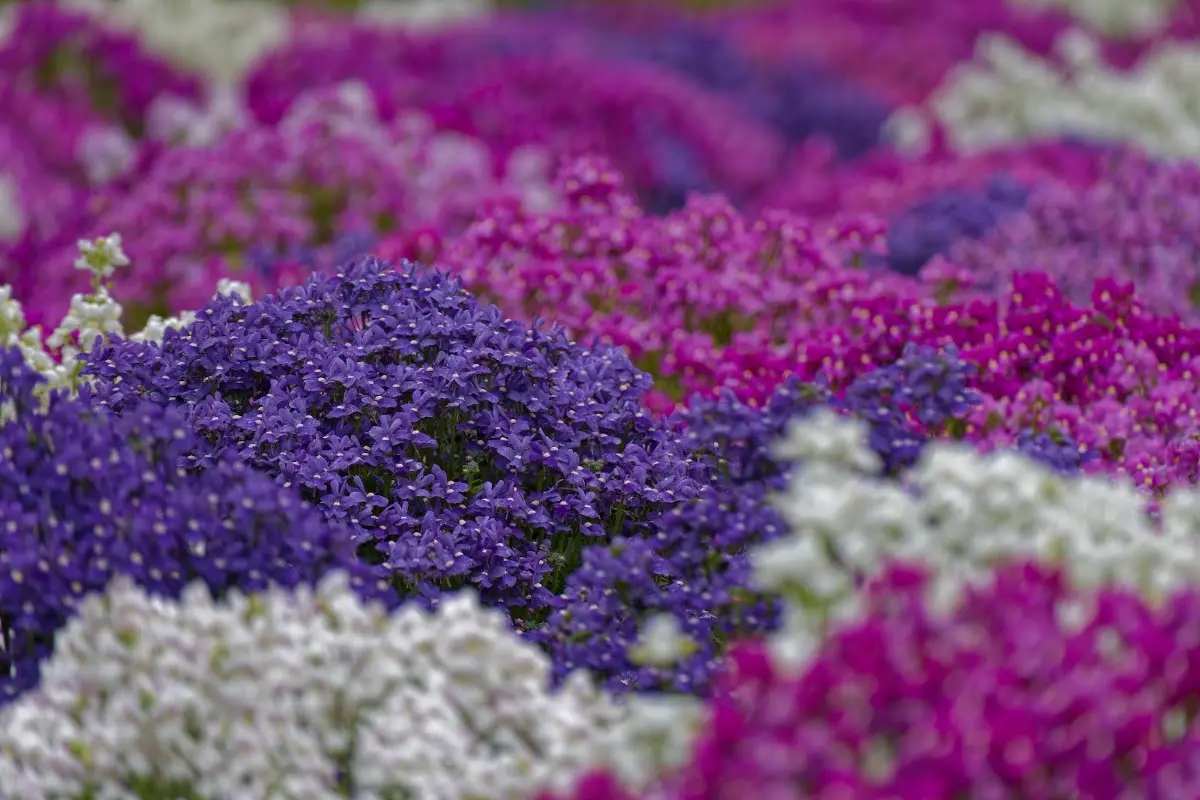
Somewhere between the Sky Tower and Albert Park — a flower bed along the path.
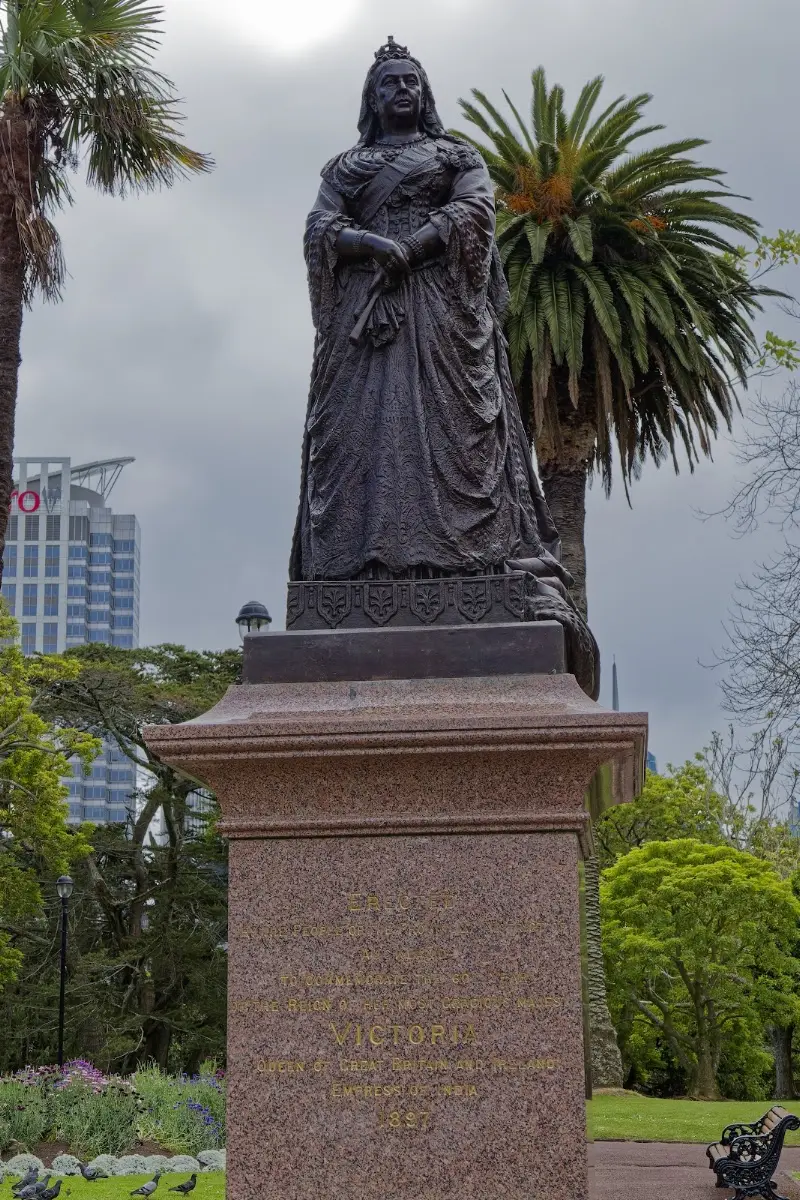
Queen Victoria keeping watch over Albert Park, once a British army camp during the New Zealand Wars and now the CBD's green square.
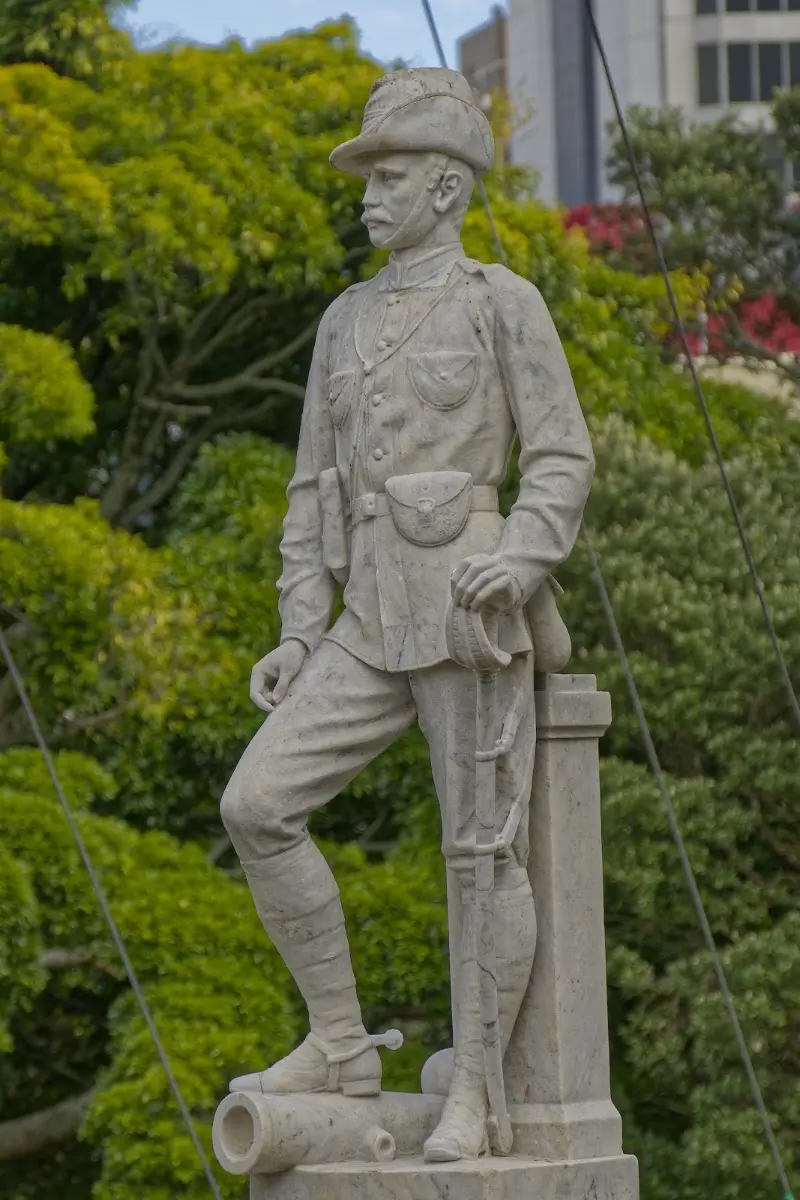
A memorial to New Zealand's Boer War contingent, tucked among the palms of Albert Park.
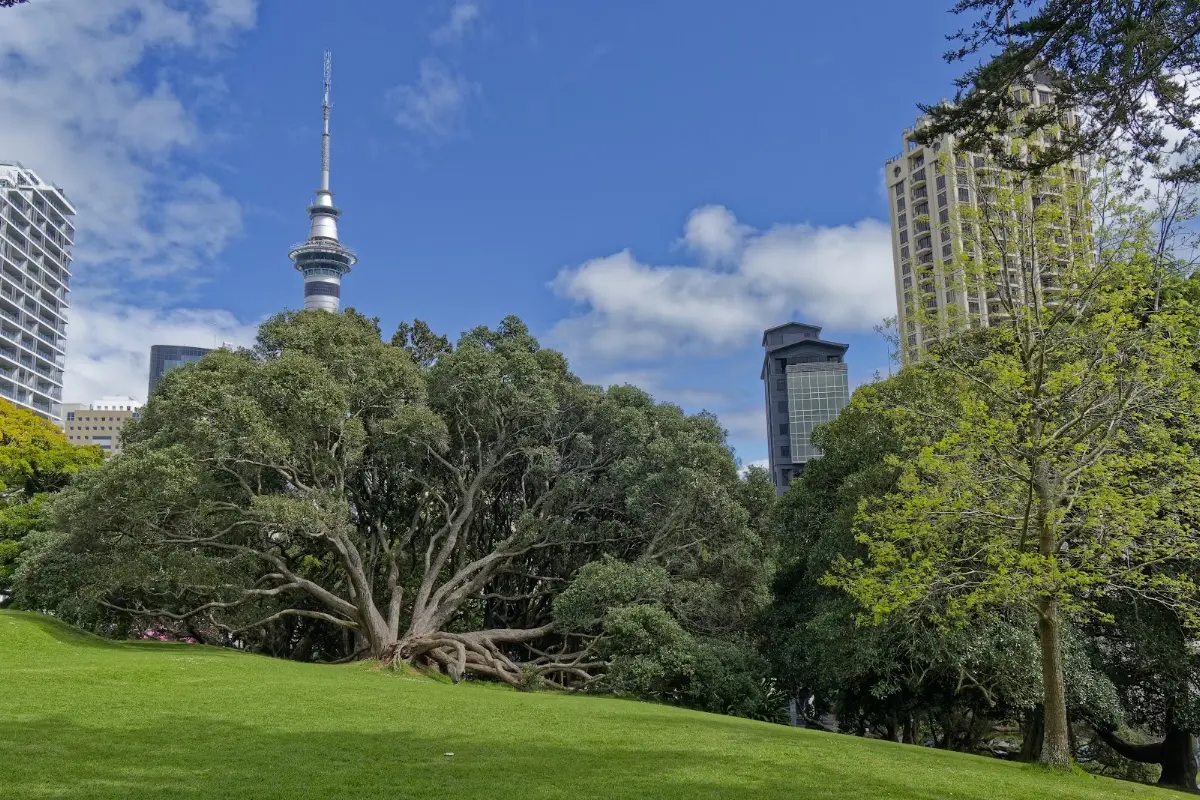
The Sky Tower again, partly screened by Albert Park's trees.
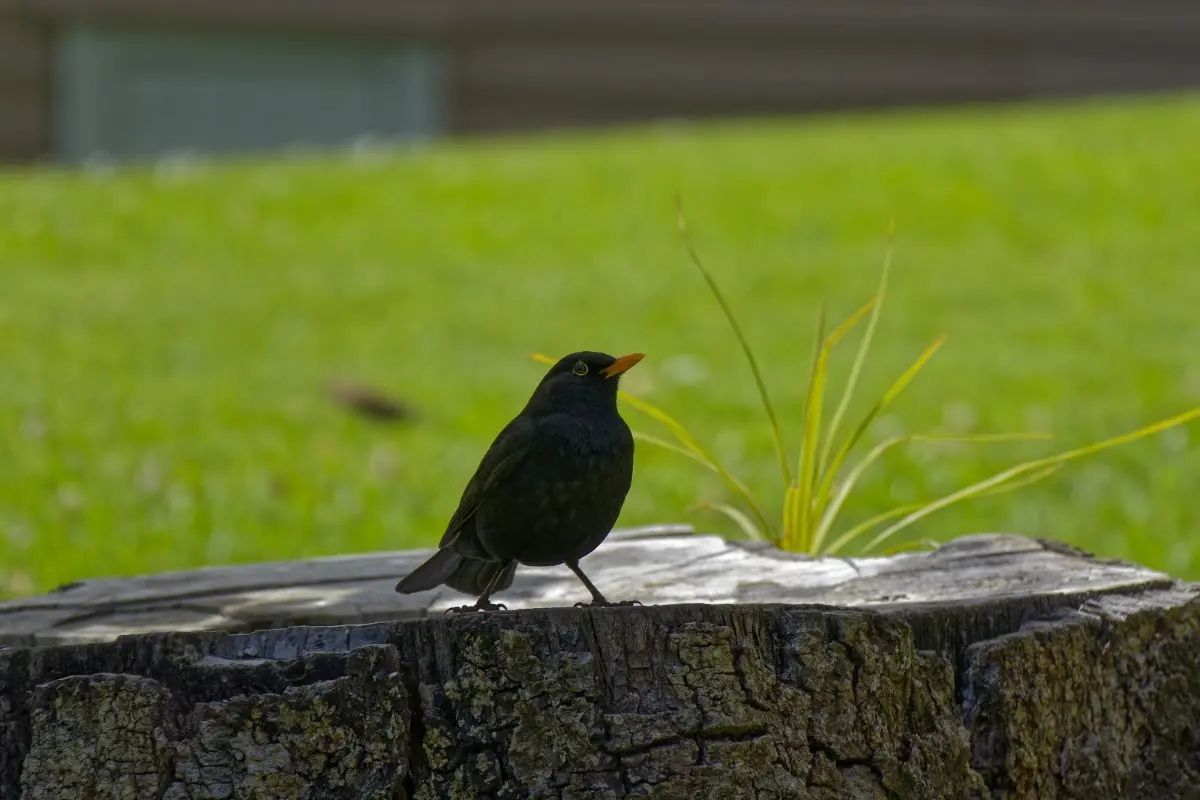
A blackbird, unmistakably European and clearly at home — descendants of birds brought over by homesick 19th-century settlers.
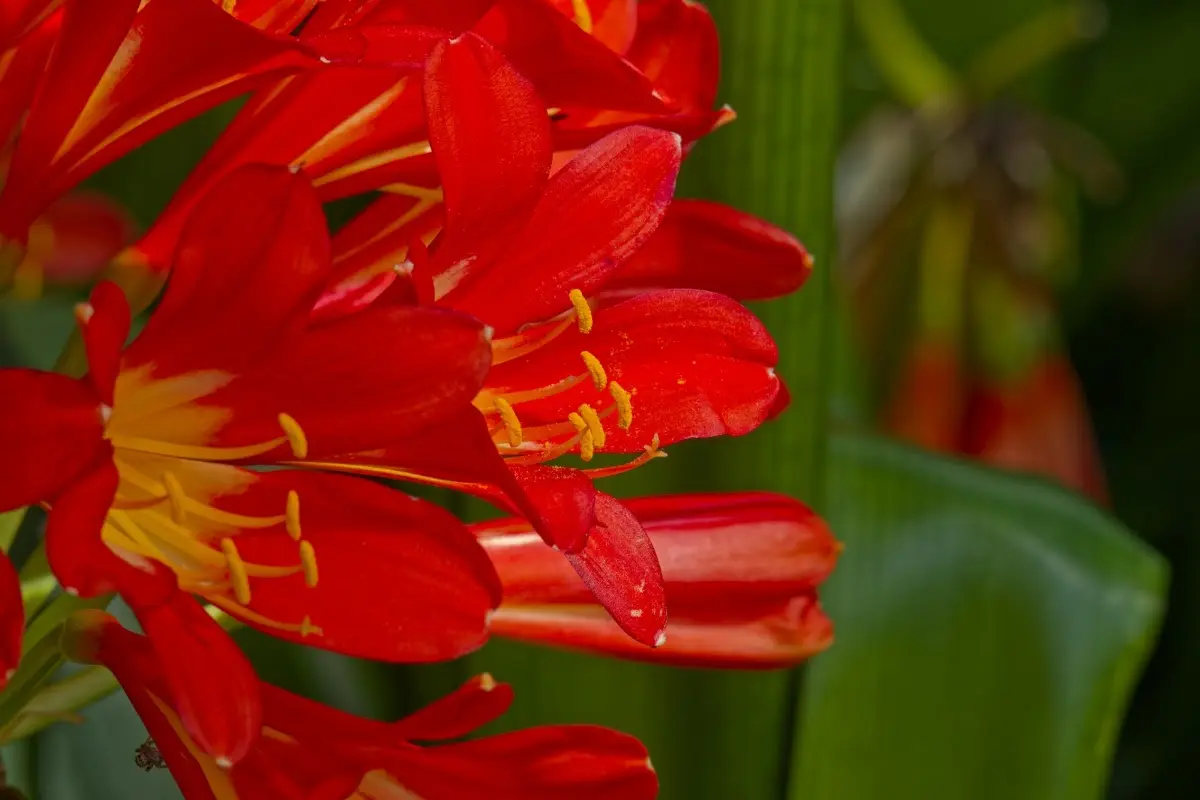
Clivias in full bloom — spring in Auckland.
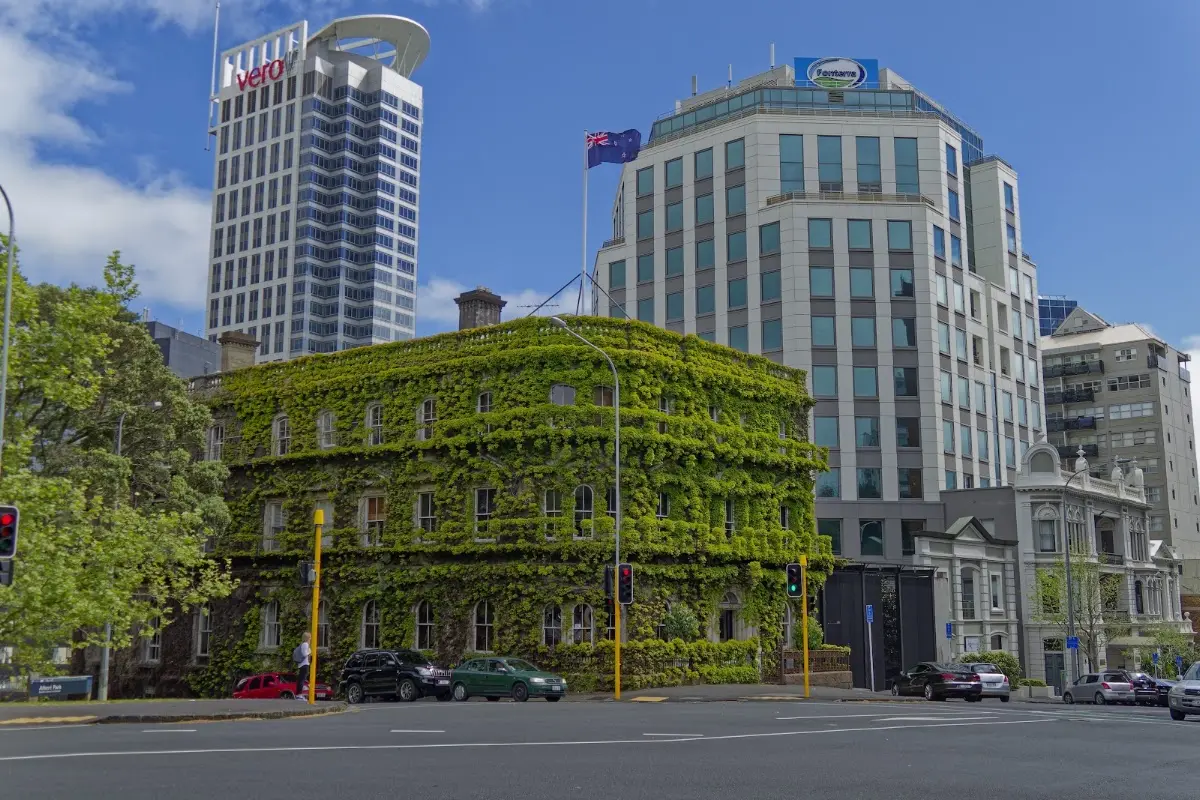
One of the older buildings near Albert Park, these days more ivy than stone.
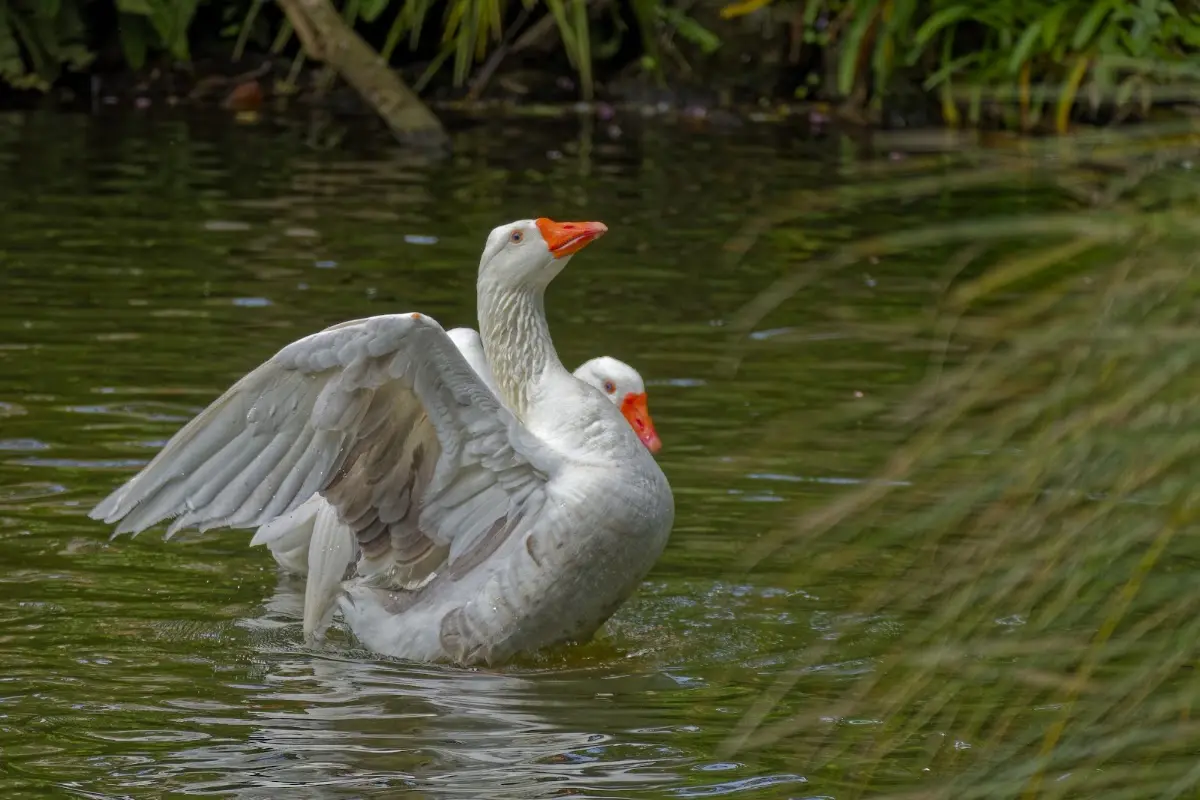
Domain geese, unbothered by tourists and jet lag alike.
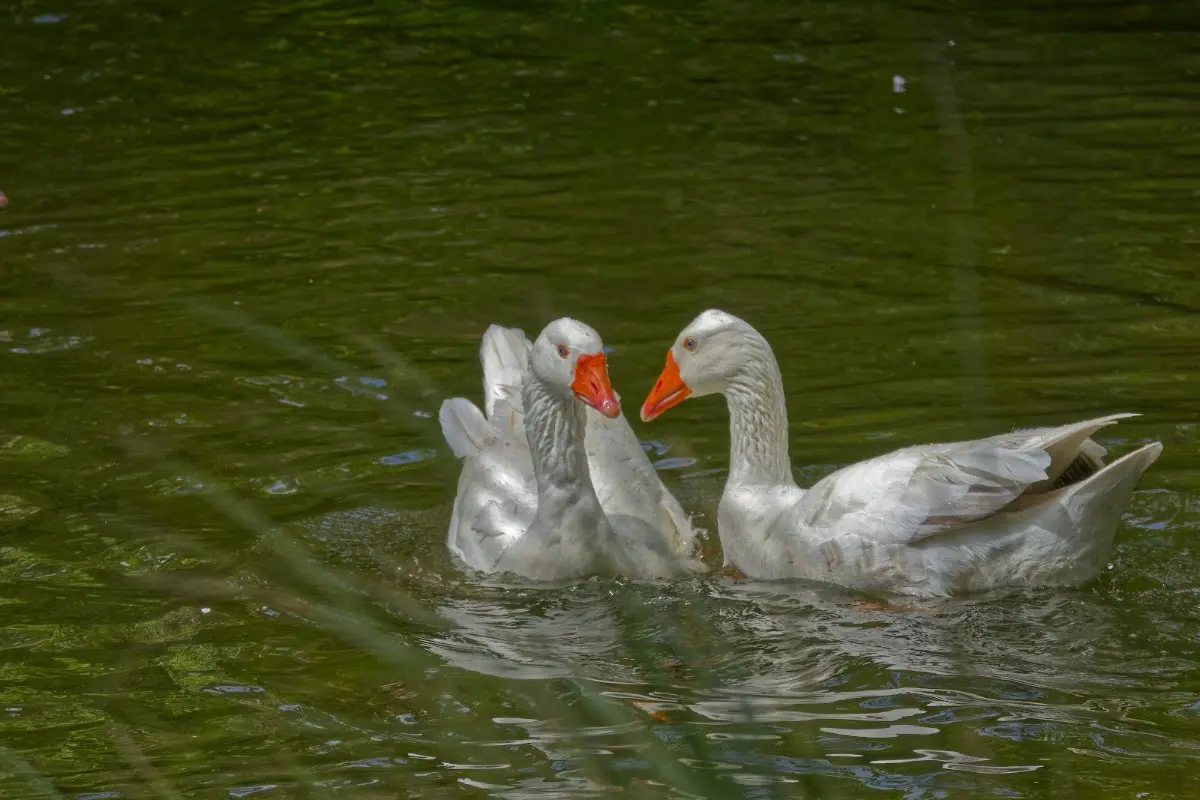
Two more of the Domain's pond residents, side by side at the water's edge.
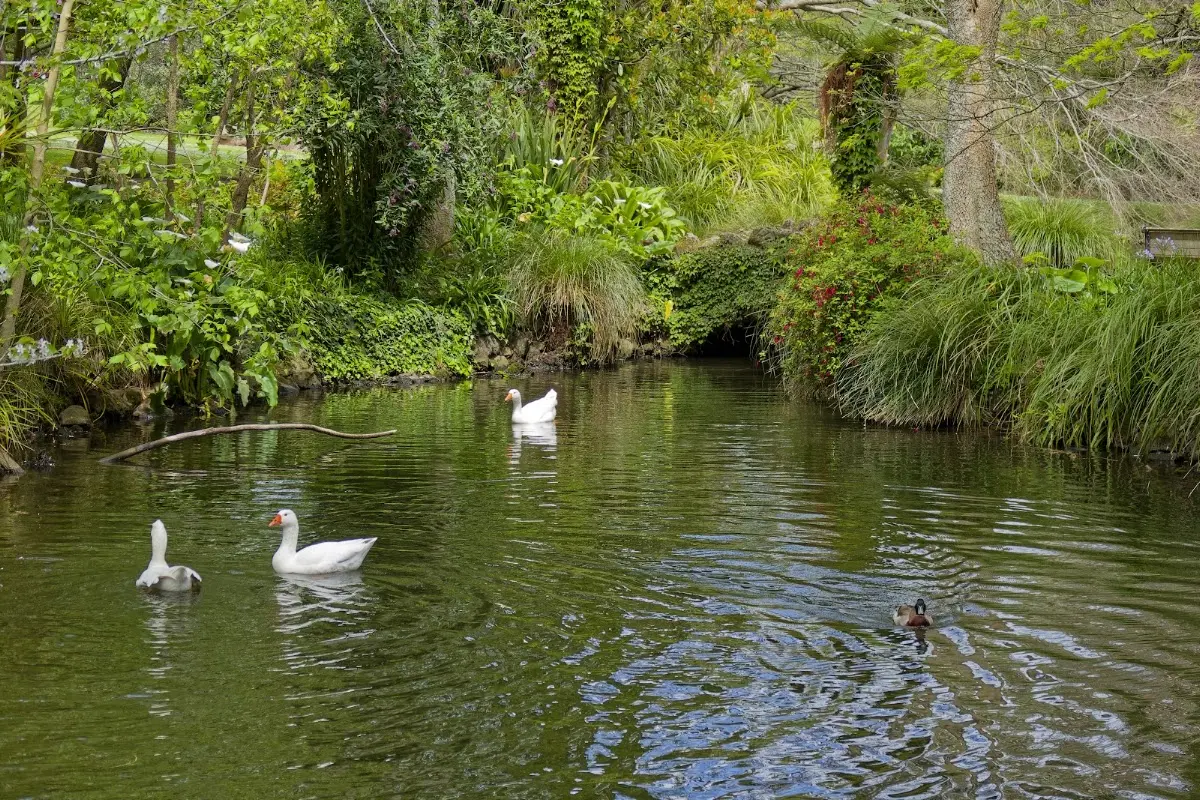
The ponds of the Auckland Domain — a quiet green pocket just minutes from the CBD skyline.
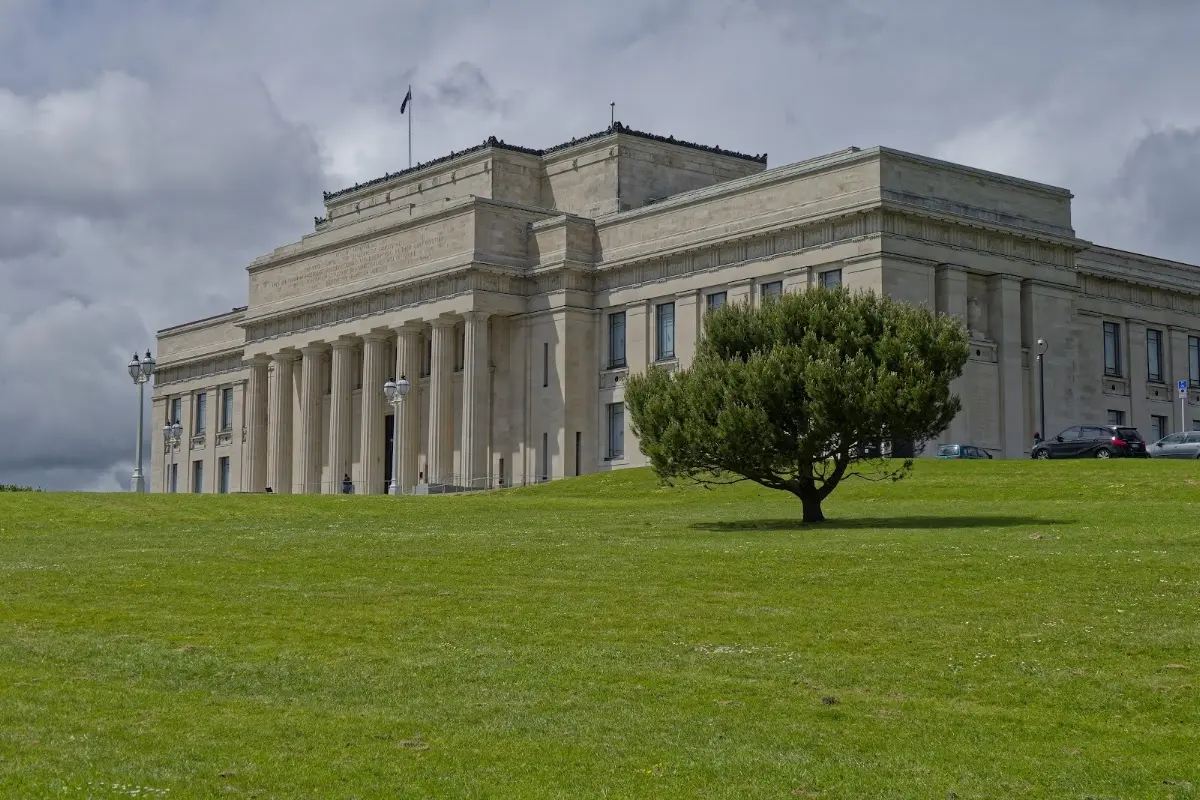
The Auckland War Memorial Museum, sitting on the Domain's highest point.
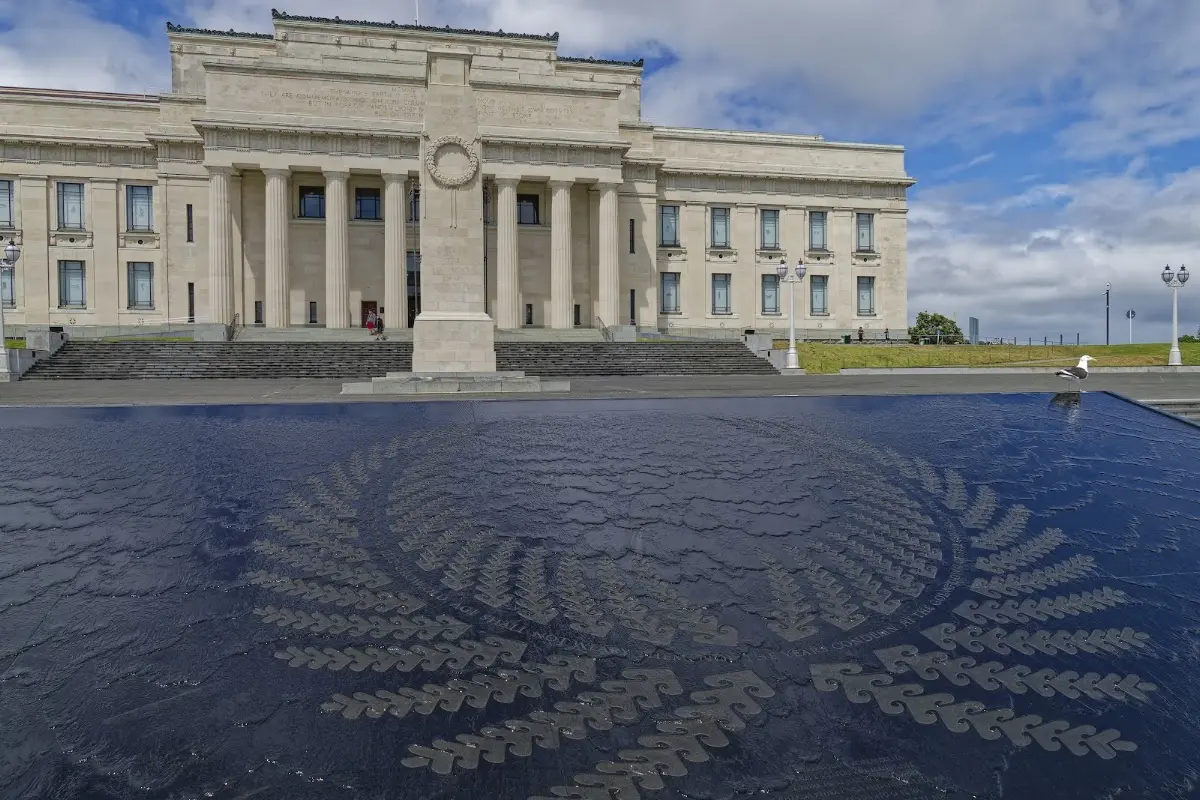
The Court of Honour in front of the museum — its reflecting pool doubles as the city's principal war memorial.
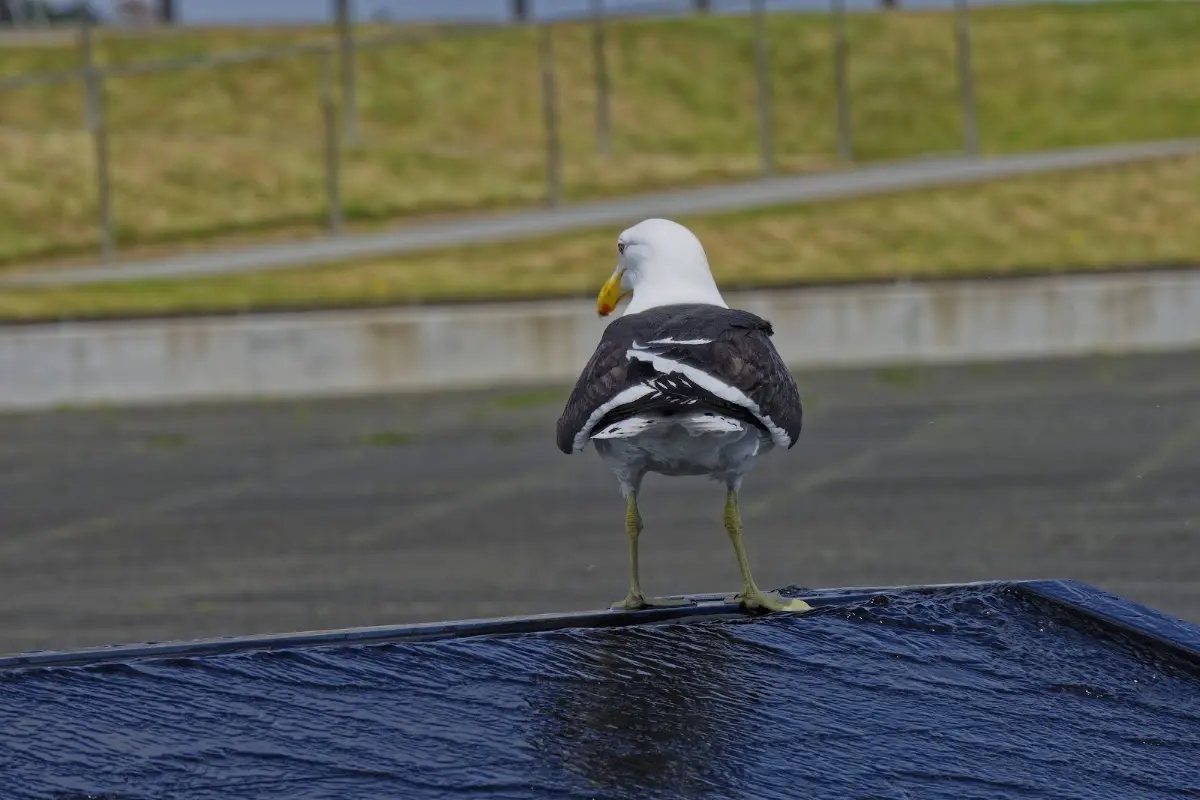
A gull on the museum grounds.
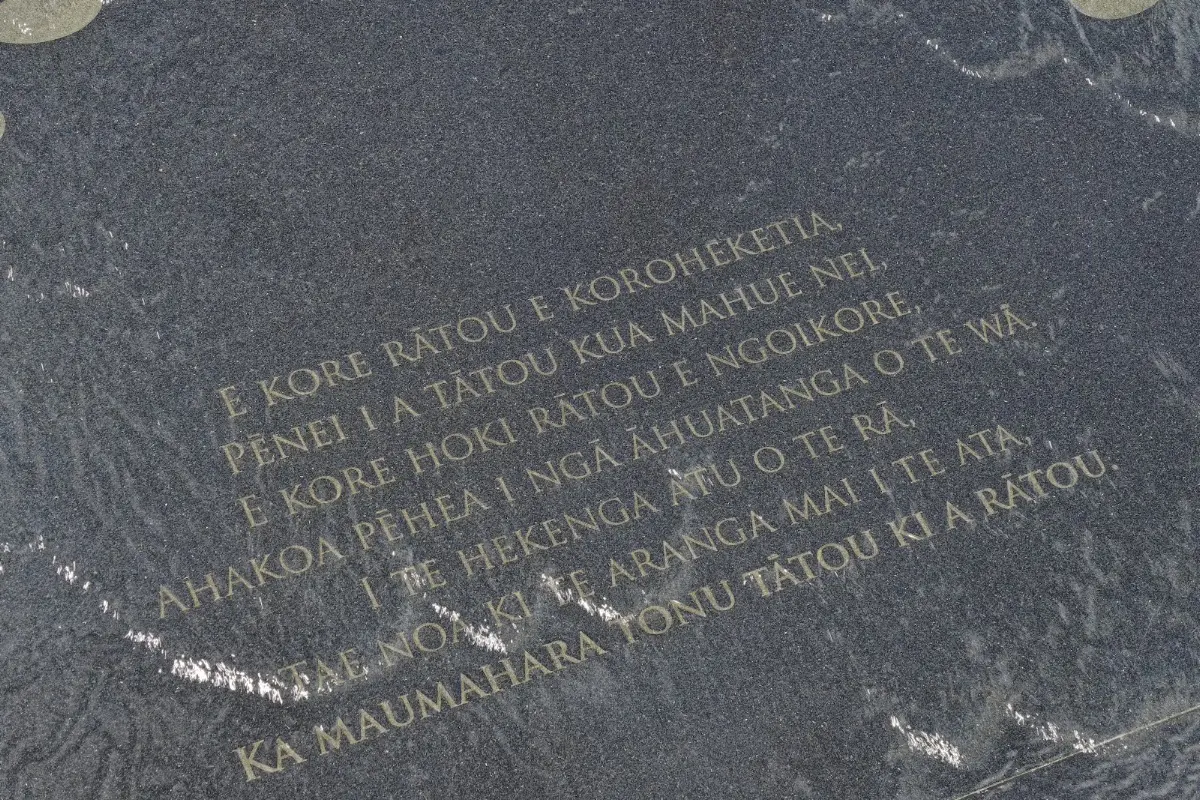
Part of the memorial inscription in front of the museum, in te reo Māori — a reminder this is a war memorial as much as a museum.
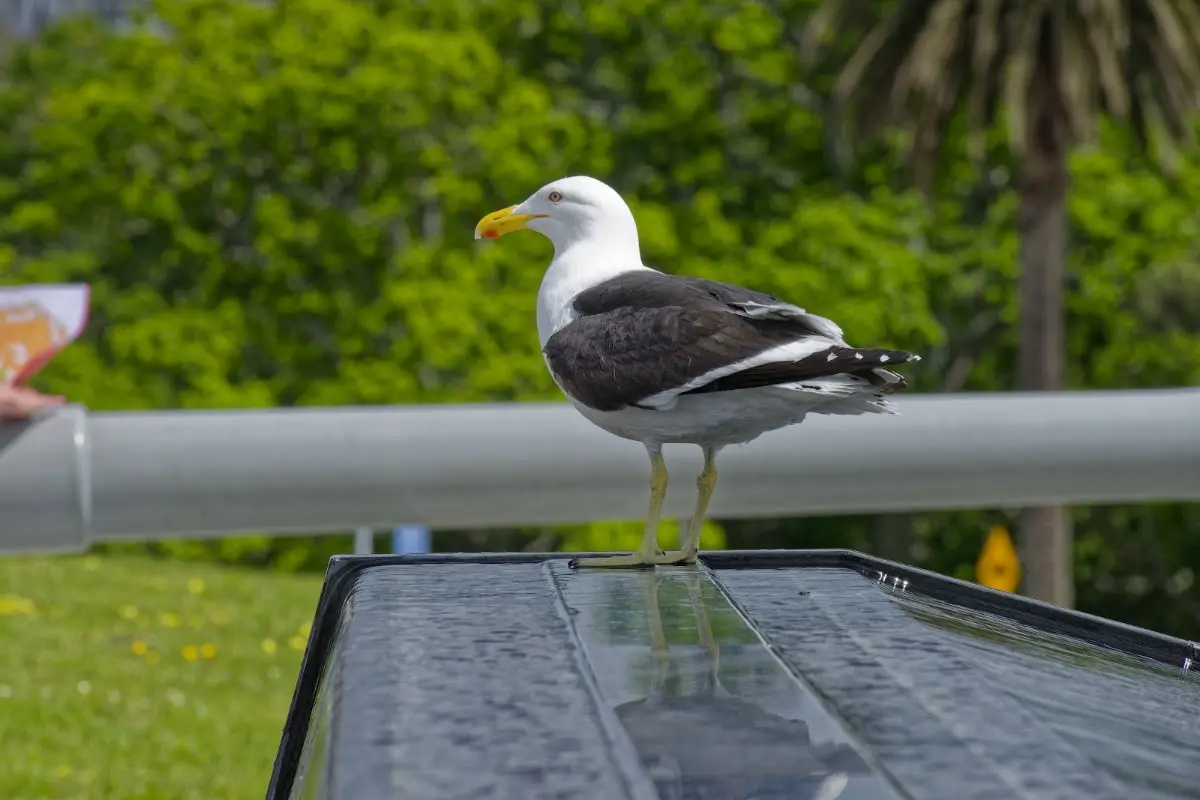
Another gull, perched on a nearby railing.
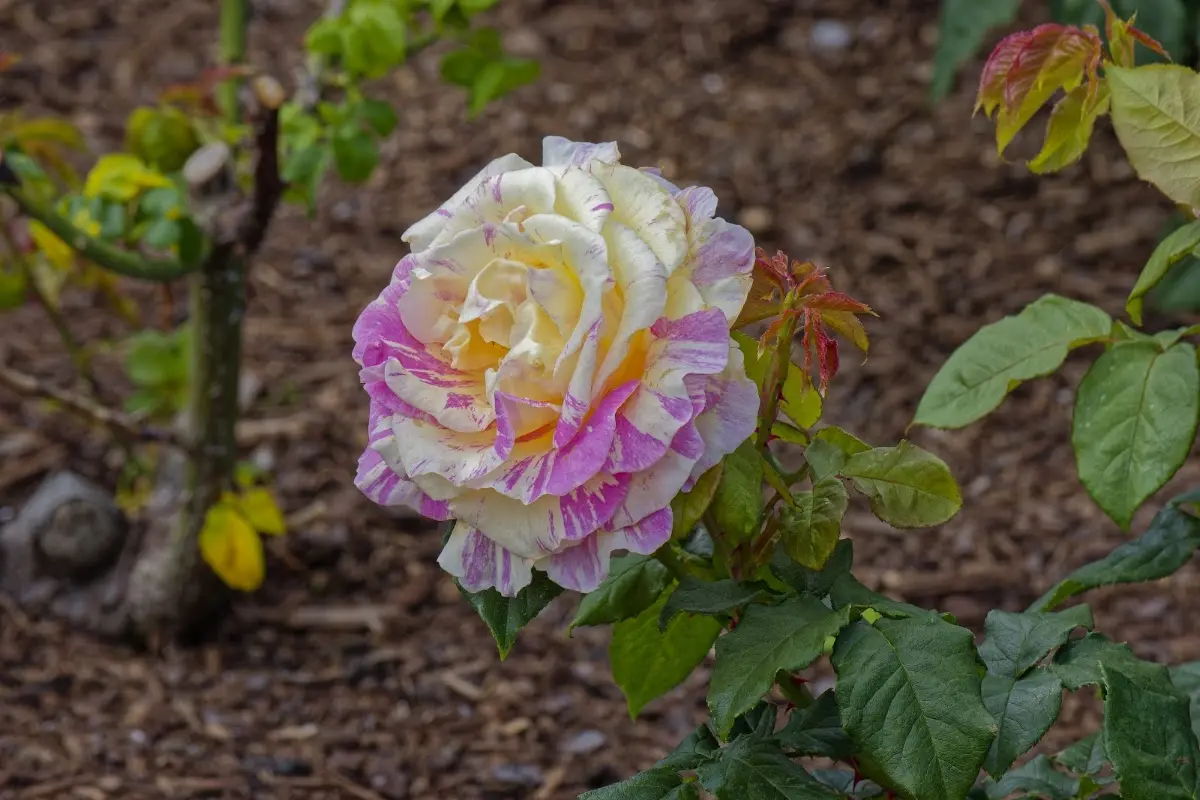
Roses in the Domain gardens, photographed at close range.
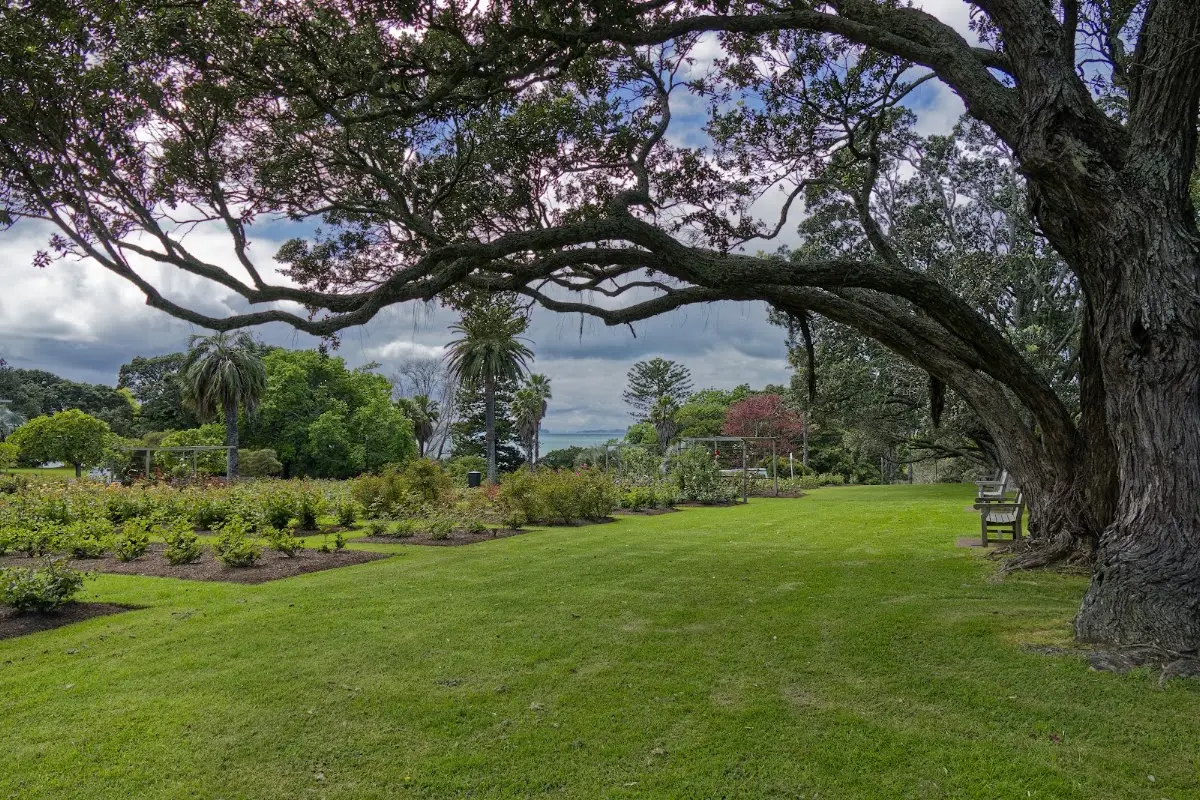
The rose garden, with a view down toward the harbour through the trees.
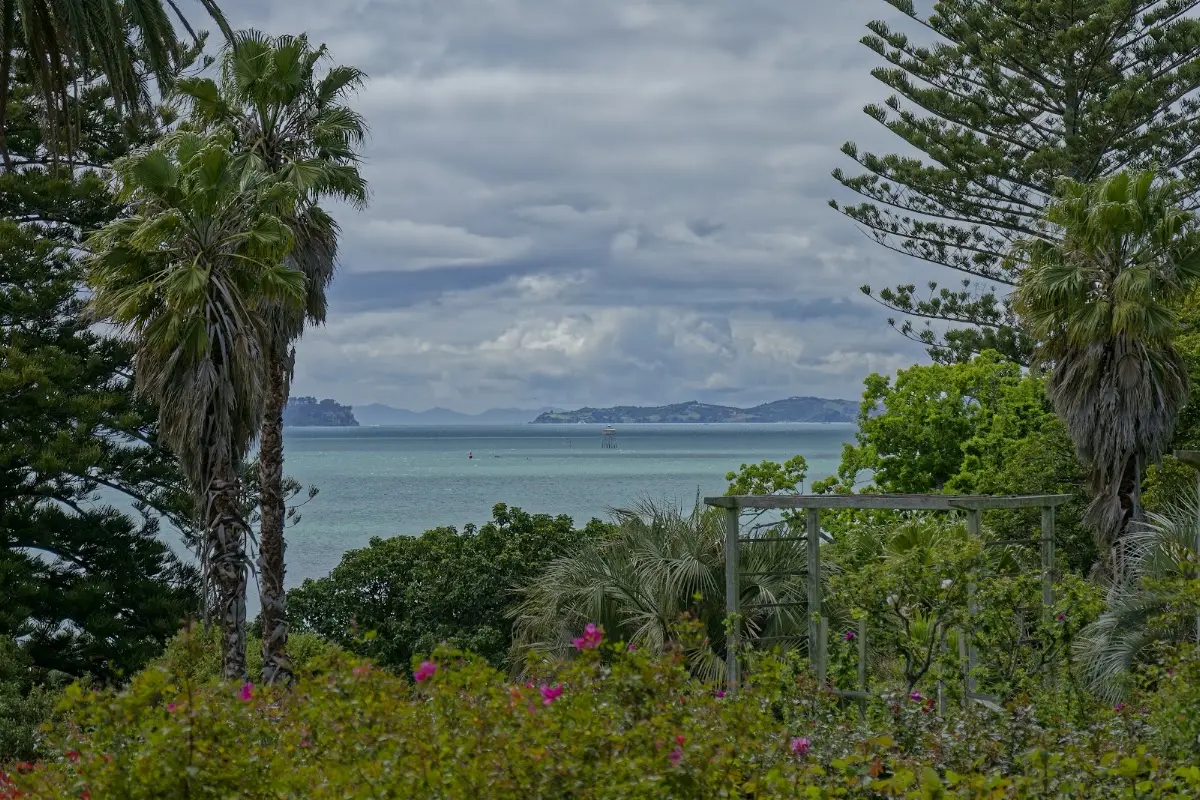
A gap in the trees, and suddenly the Hauraki Gulf again.
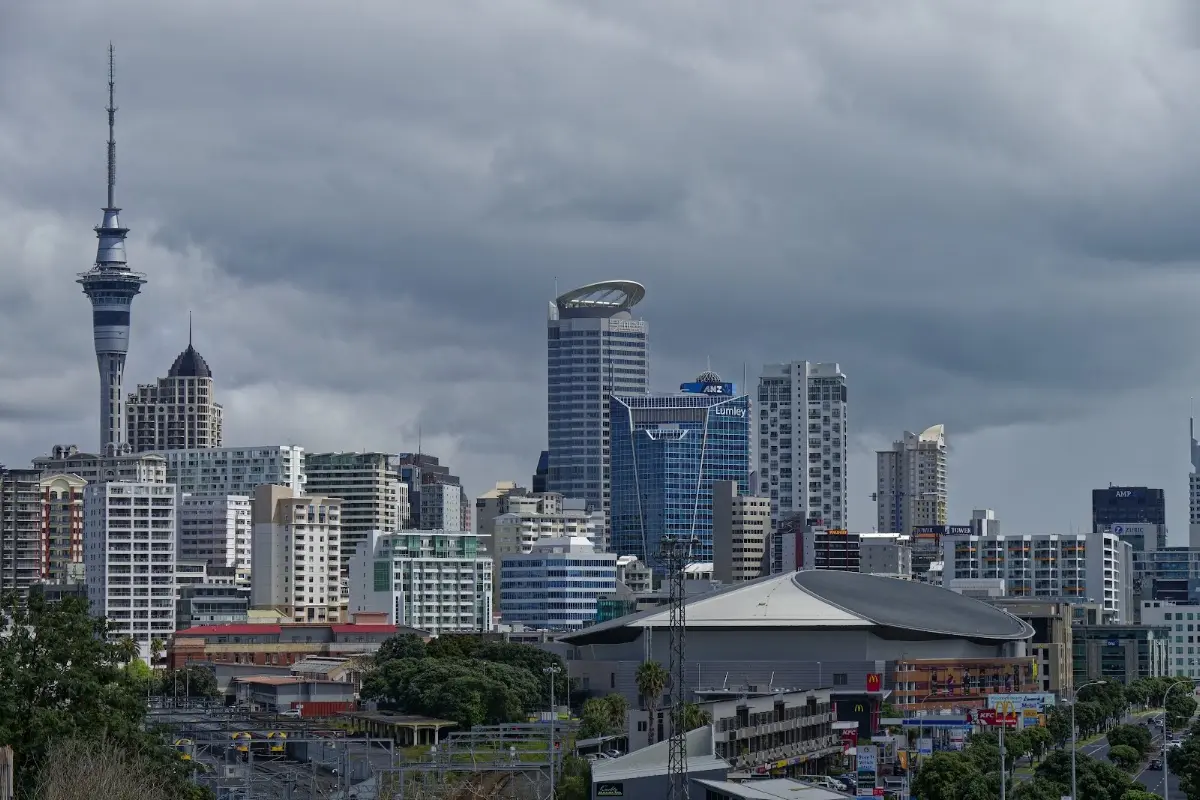
Auckland's skyline from one of the city's volcanic cones — a reminder that the city was built on a volcanic field.
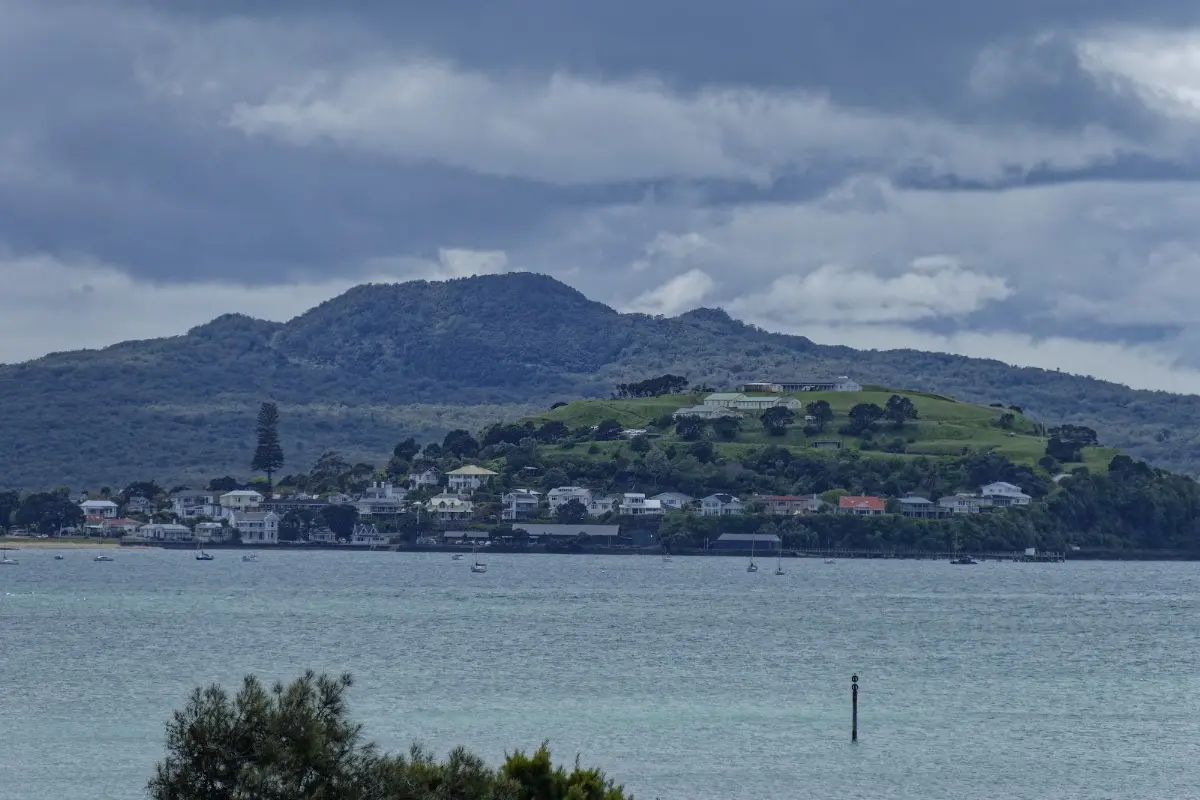
Looking out across the harbour from the same hill.
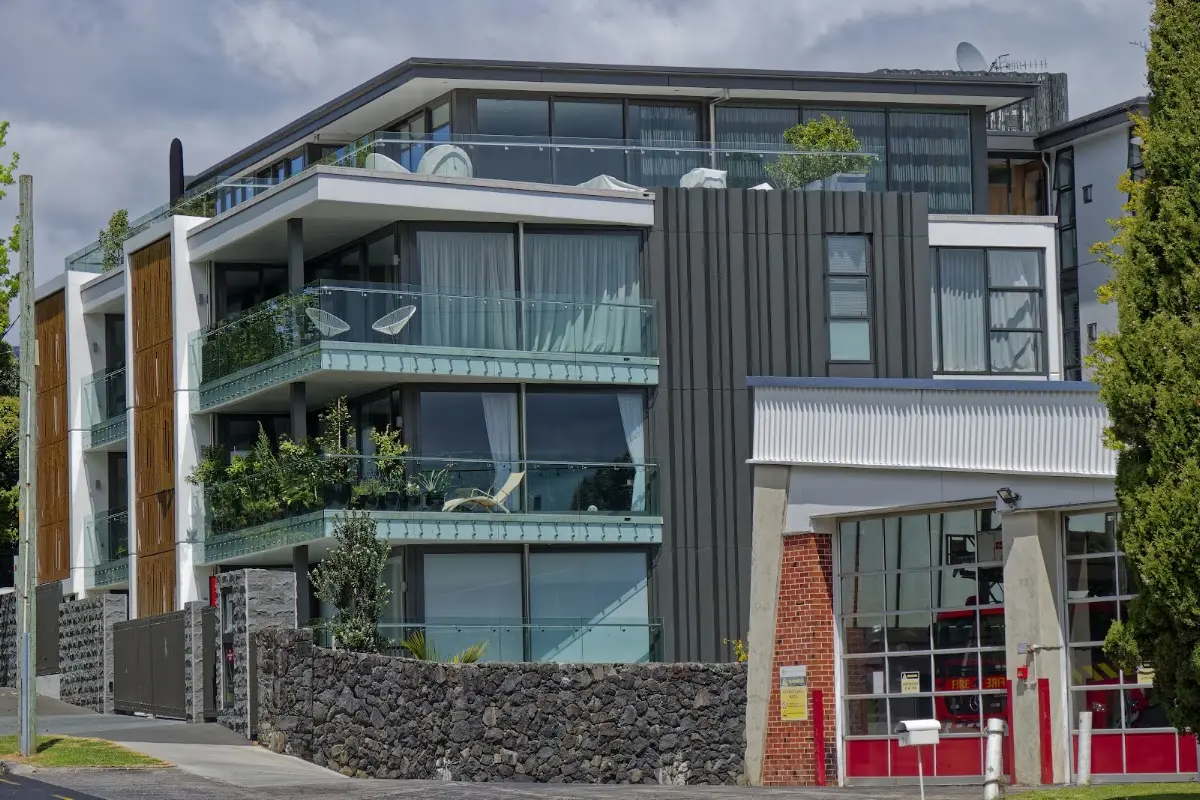
Back down at street level, on the way home.
Auckland Harbour
Auckland's harbour defines the city's character. The Waitematā, with its marinas, ferries and skyline views, is the reason Auckland calls itself the "City of Sails." Around the waterfront, especially near the Viaduct and Wynyard Quarter, the city feels open and maritime in a way that's quite different from most European cities.
Another morning at the campsite. I read the first two books of Douglas Adams' Hitchhiker series and about 30% of Christopher Clark's The Sleepwalkers. No call, no message, no answers. At 1 p.m. I took the bus to the airport, found the delayed baggage office, collected the bike, found a suitable spot nearby to assemble it, and half an hour later was cycling back to Manukau. A great relief at last. The campsite in Manukau was just as I remembered it: lively, social, and full of very different people. Unfortunately it would close the following year, in 2016, because the rent had become too expensive.
One more day in Auckland before setting off properly. I went out on the harbour — past the Ferry Building again, under the Harbour Bridge, and straight into the middle of a fleet of racing catamarans out training on the water. Not a bad way to spend the last day before four months on a bicycle.
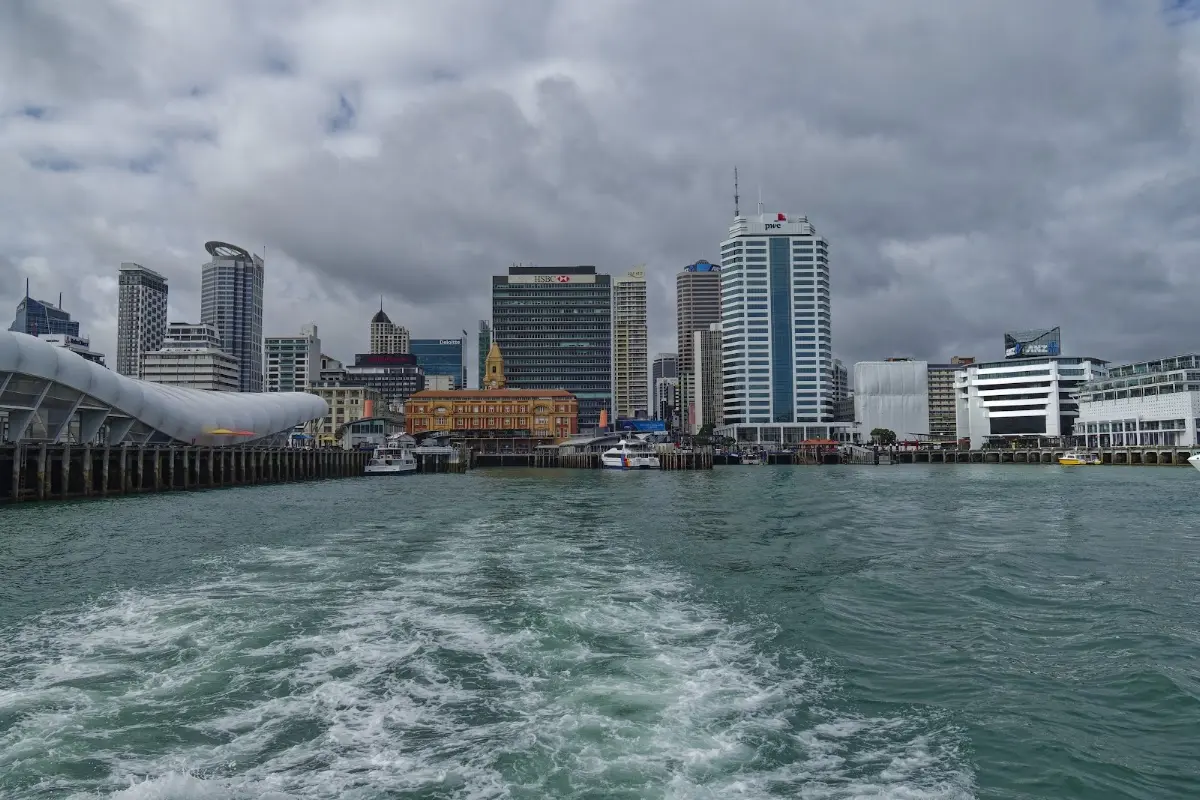
One more look at the Auckland skyline — this time from the water.
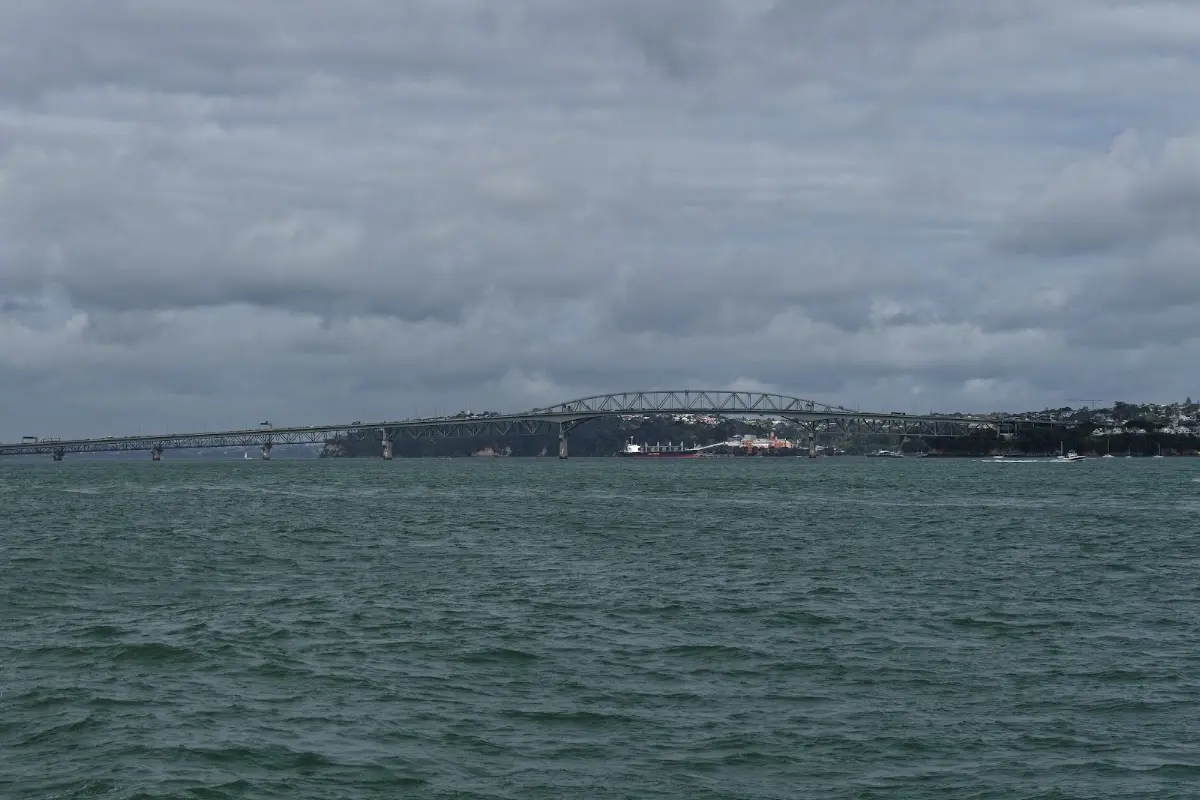
The Auckland Harbour Bridge from below — the crossing that cyclists heading north are generally better off avoiding.
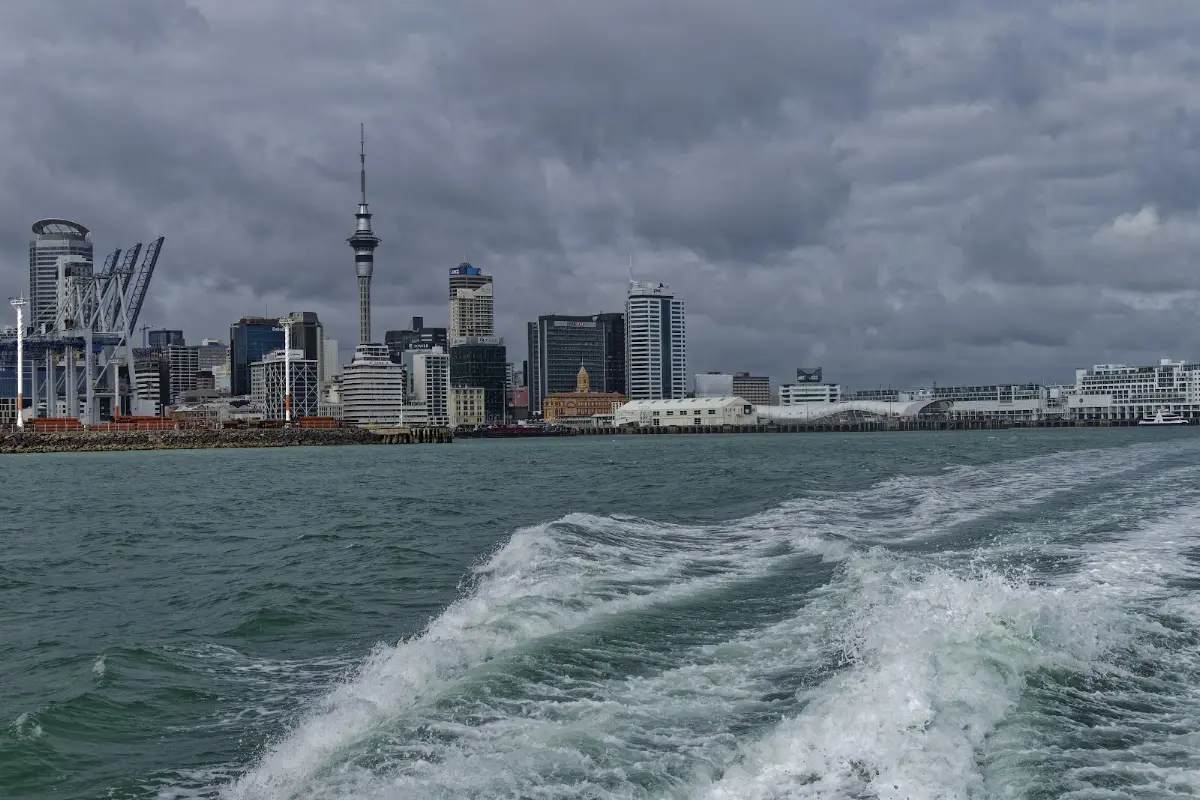
The skyline shrinking behind the boat's wake.
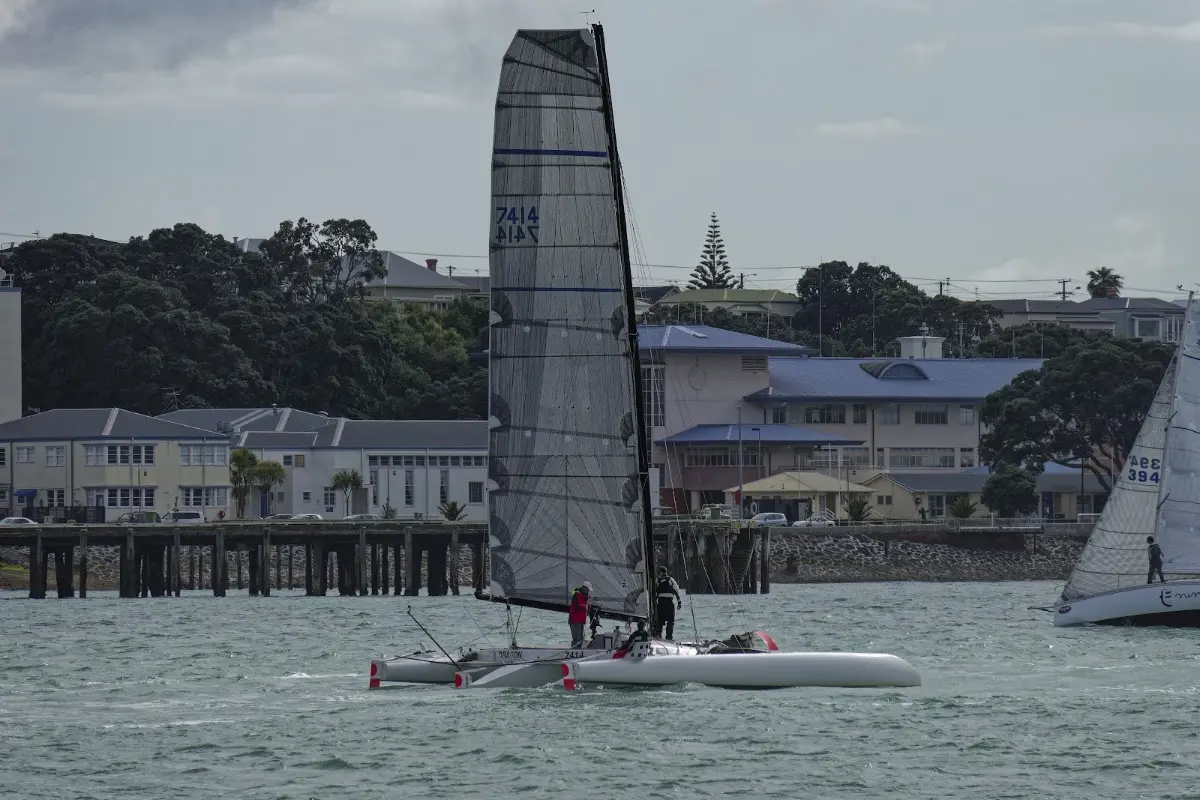
A racing catamaran out on the harbour — living up to the City of Sails name.
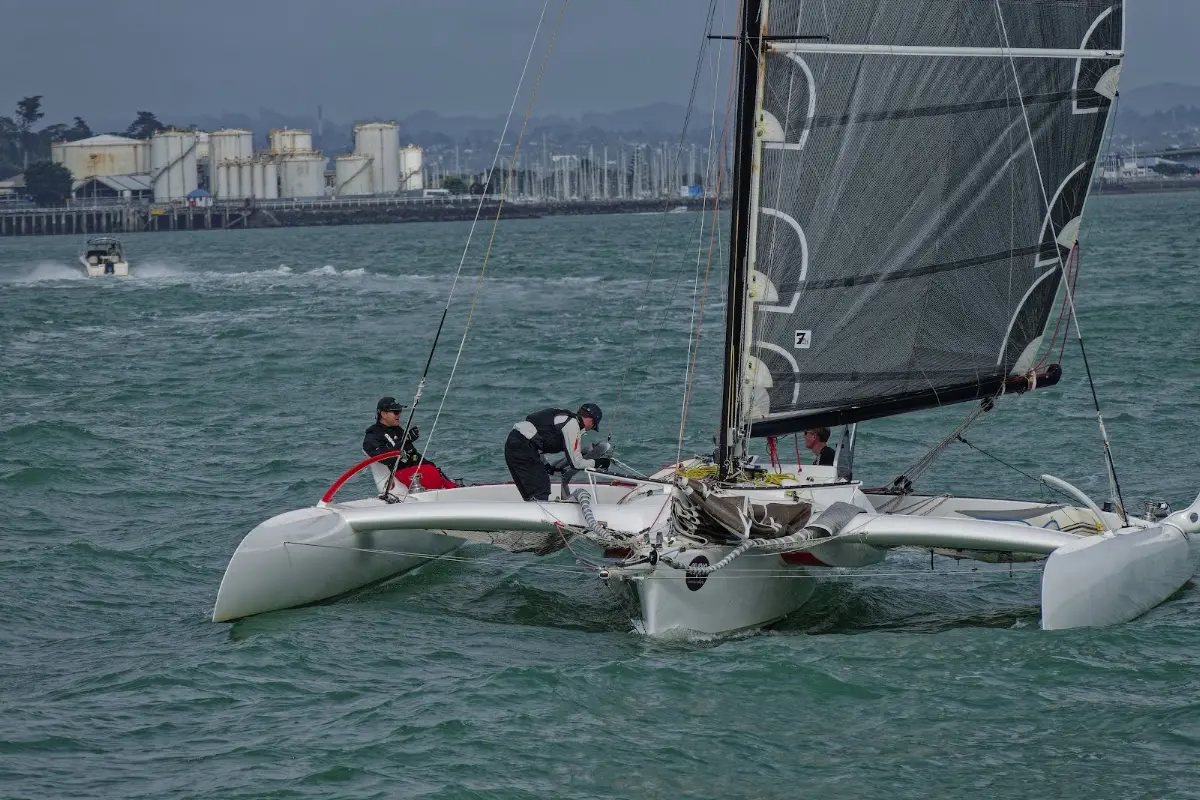
Same boat, closer — a look at the racing gear.
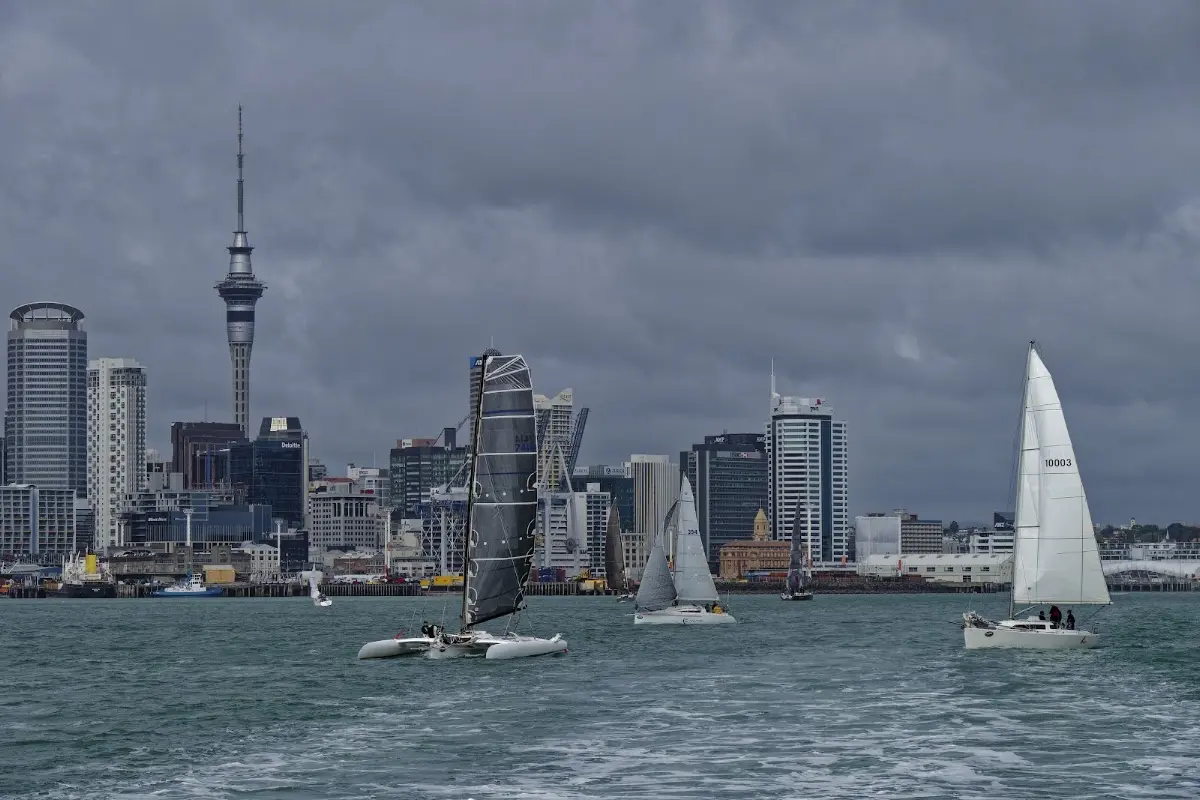
One last look at the fleet, with the Sky Tower in the background.