Biking and Hiking New Zealand - 15 Mount Cook Nationalpark
Cloudy in the morning, but the clouds cleared early. Coffee in Tekapo and Glentanner, then cycling along Lake Pūkaki with impressive views. In the evening I sat and talked with several French women who were working as au pairs. One of them worked on a salmon farm at Lake Paringa / Tāwhiriraupō. Later three Germans arrived, around 18 to 20 years old, doing work and travel in Australia and spending a holiday in New Zealand.
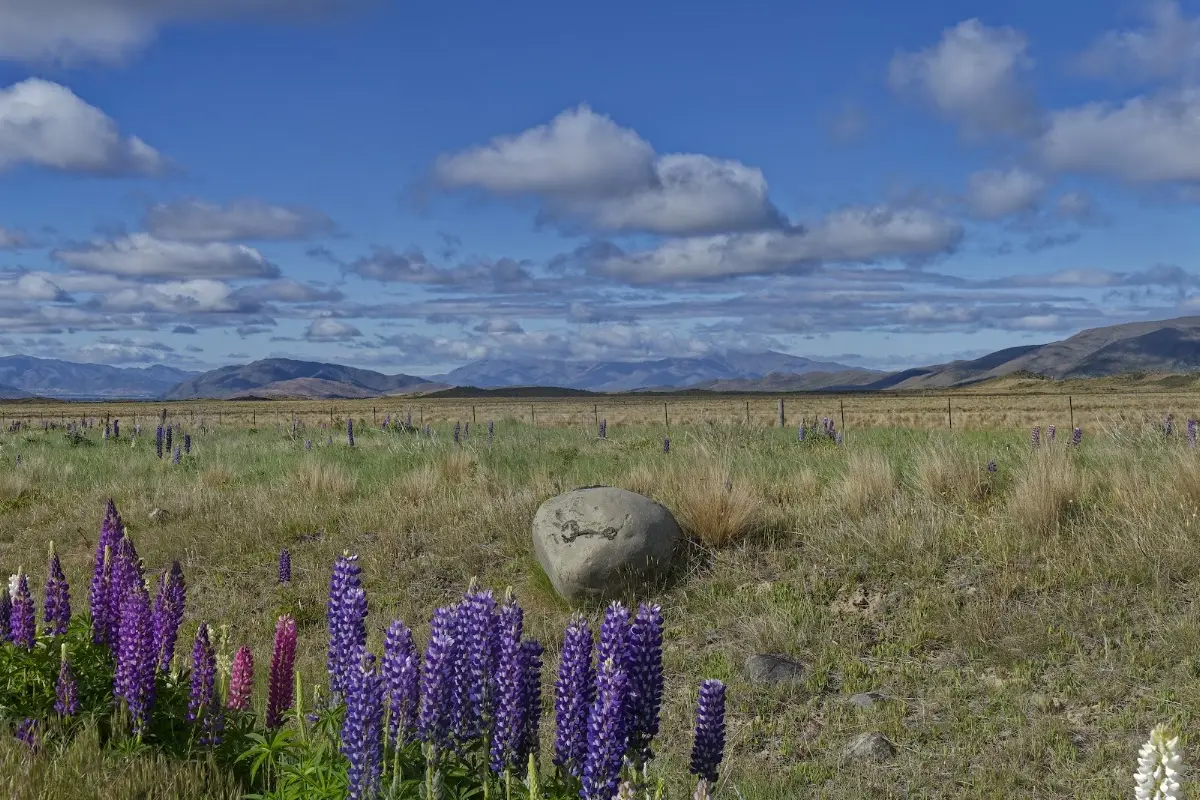
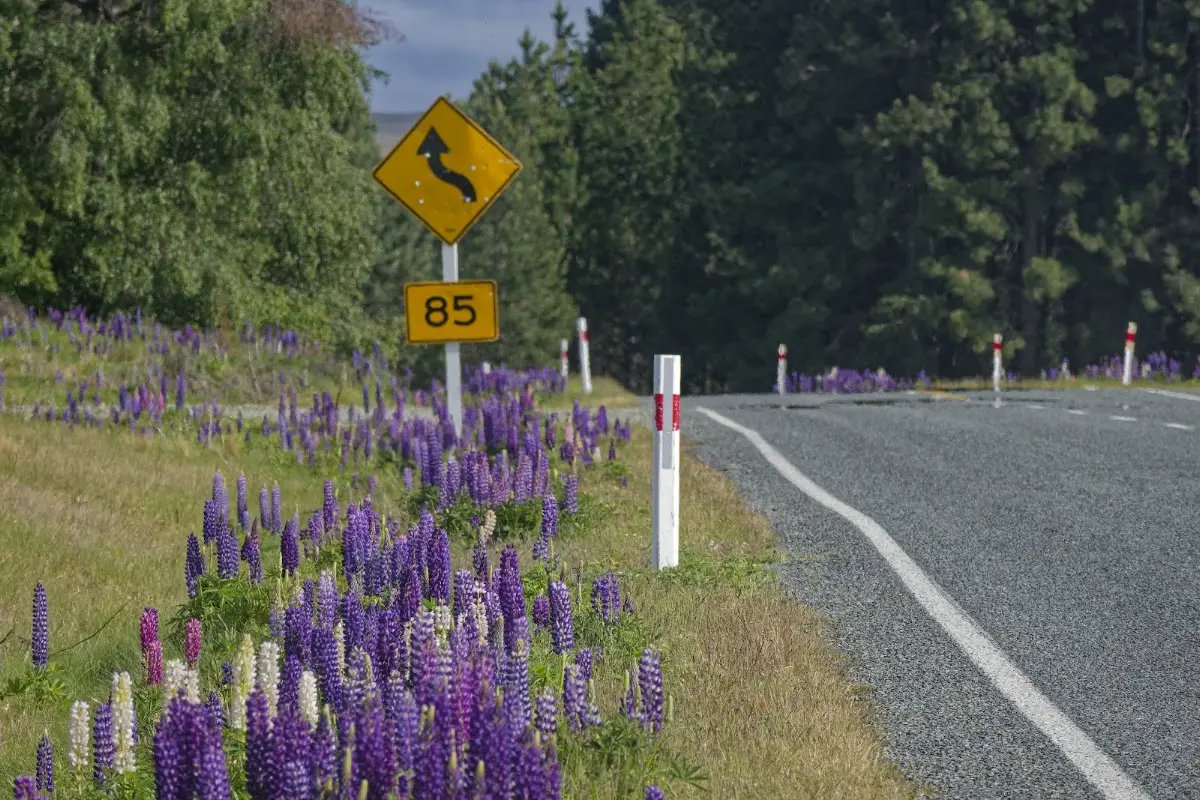
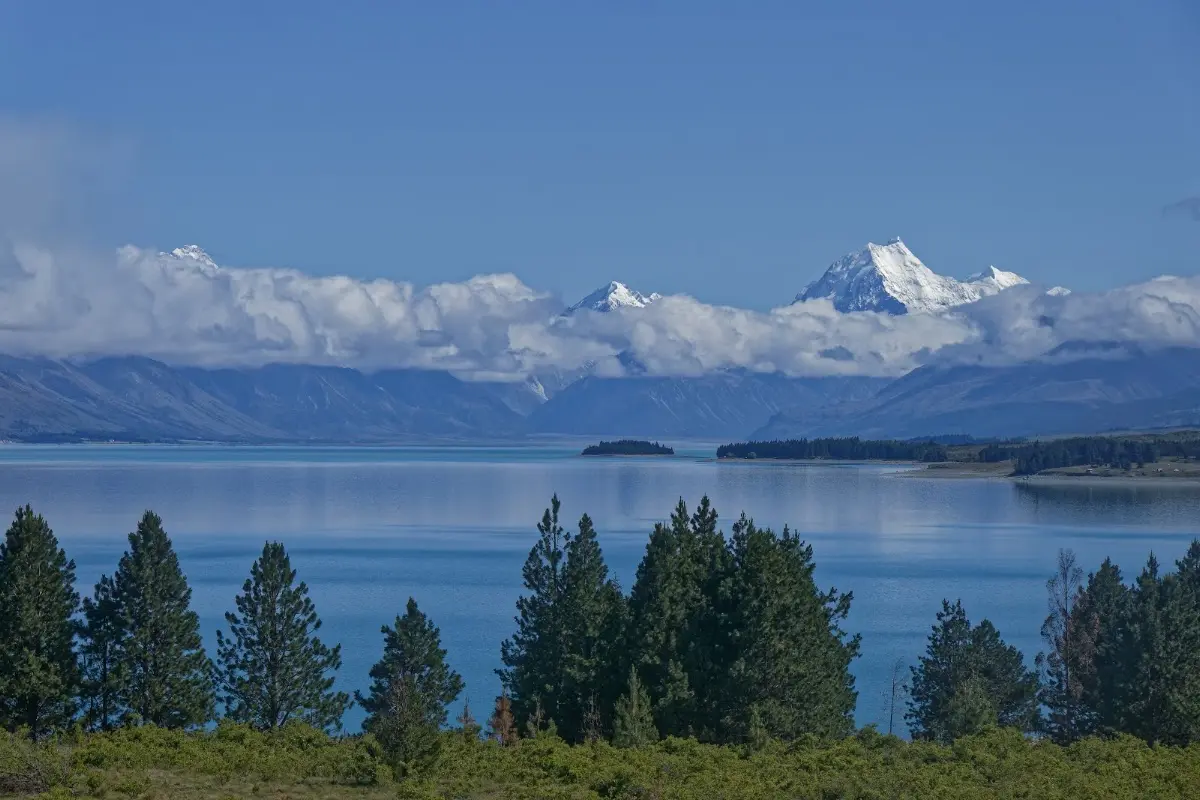
Lake Pukaki
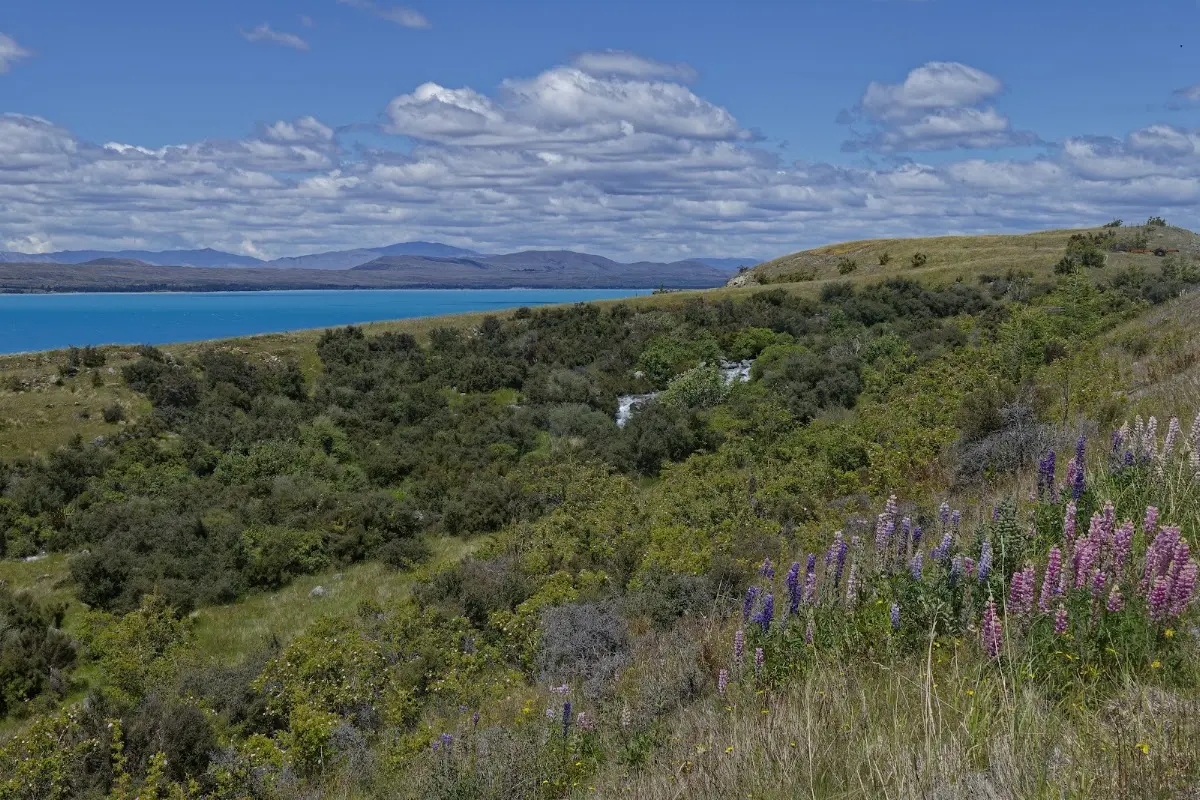
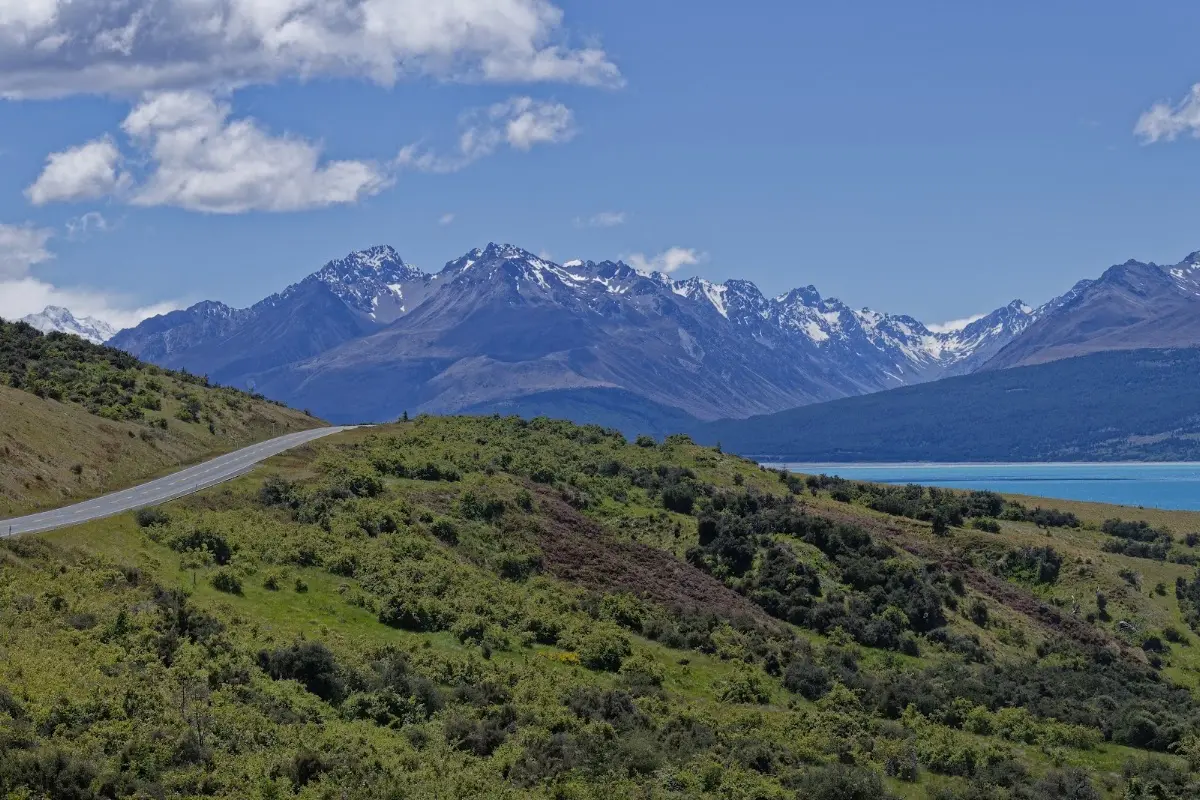
Lake Pukaki is one of the South Island’s most striking alpine lakes, stretched north–south along the edge of the Mackenzie Basin and famed for its vivid turquoise colour. Its Māori name, Pūkaki, belongs to a landscape shaped by ice: like nearby Lakes Tekapo and Ōhau, it was formed when retreating glaciers left terminal moraines that dammed a valley and created a long, deep lake. Covering about 178.7 square kilometres, Lake Pukaki sits at over 500 metres above sea level and is fed by the braided Tasman River, whose waters come from the Tasman and Hooker Glaciers near Aoraki / Mount Cook. The same glacial origins give the lake its remarkable blue hue, caused by “glacial flour,” the fine rock particles suspended in the water.
The lake’s setting is among the finest in New Zealand. To the west rise the Ben Ohau Range and the road to Aoraki / Mount Cook Village, while from the southern shore there are sweeping views toward the country’s highest peaks, some 70 kilometres away in Aoraki / Mount Cook National Park. On the flatter land to the east, farmland stretches toward Lake Tekapo, while cyclists on the Alps 2 Ocean trail follow part of the lakeshore. The area also carries traces of older human use: Ngāi Tahu once maintained a seasonal food-gathering settlement called Punatahu on the southern shore, reflecting the long Māori relationship with this high-country environment.
Lake Pukaki is not only scenic but also central to modern New Zealand’s hydroelectric system. Its natural outflow into the Pukaki River was dammed as part of the Waitaki hydroelectric scheme, and canals now redirect water between lakes and power stations, including Tekapo B and Ōhau A. To increase storage capacity, the lake was artificially raised twice in the 20th century, first in 1952 and again in 1976, submerging Te Kohai Island—better known as “Five Pound Note Island” because it had appeared on New Zealand’s old £5 banknote. Together with Lake Tekapo, Pukaki now provides a major share of the country’s hydroelectric storage, and its water levels are carefully managed as part of the national energy system.
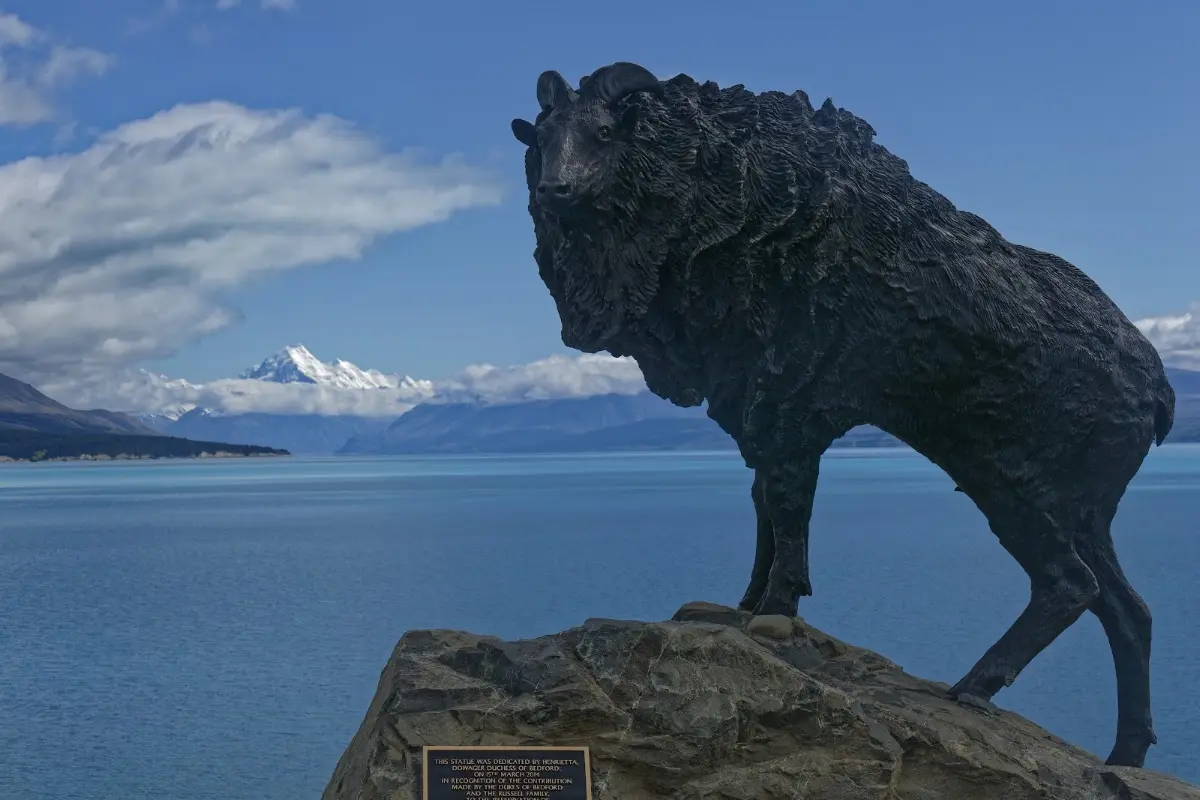
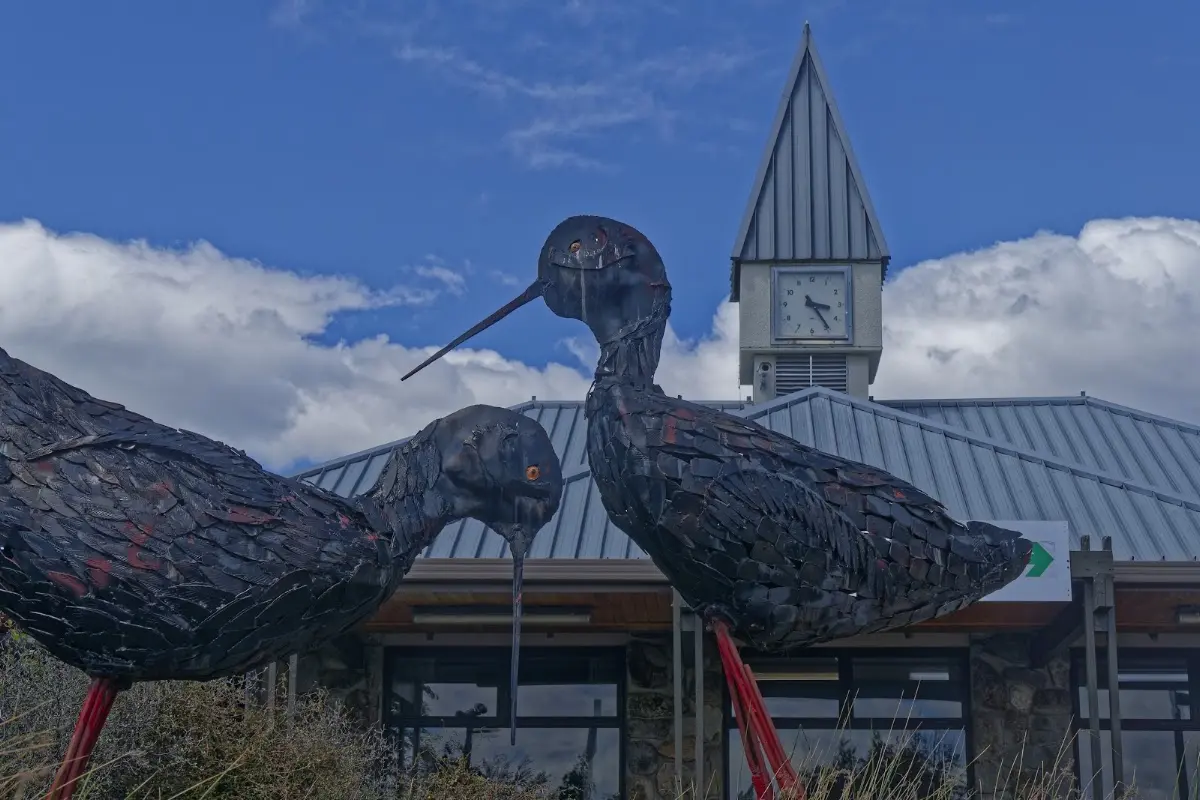
Modern visitors often know Lake Pukaki for its extraordinary roadside views, though these have occasionally proved dangerous, with motorists stopping suddenly to admire the scenery along State Highway 8. The lake’s southern shore has a visitor centre and a bronze statue of a Himalayan tahr, installed in a landscape that became a focal point in 2020 during protests over tahr culling. That same year, a major scrub fire burned 3,500 hectares around the lake, closing highways and requiring a large aerial and ground response. Nearby, the small Pukaki Scientific Reserve protects rare species such as the nationally endangered moth Izatha psychra, showing that beyond its famous beauty and engineering importance, Lake Pukaki is also a place of fragile ecology and enduring environmental significance.
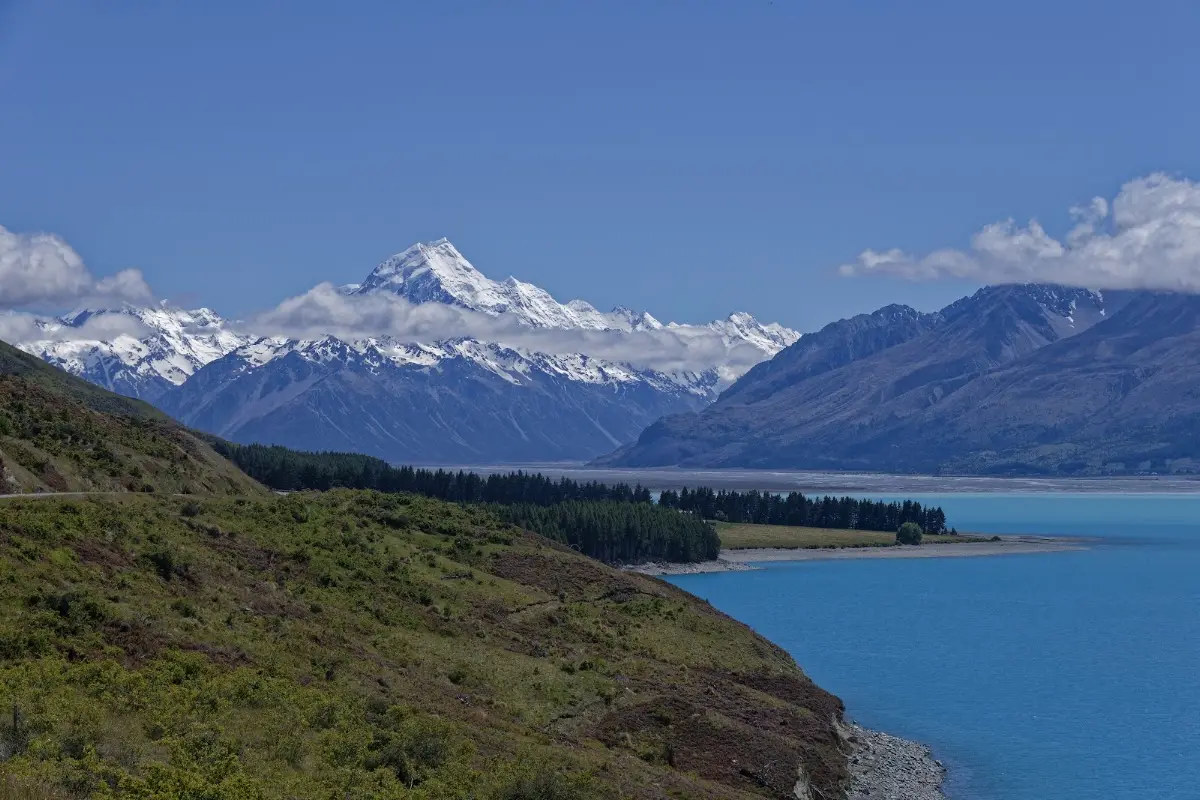
Aoraki / Mount Cook
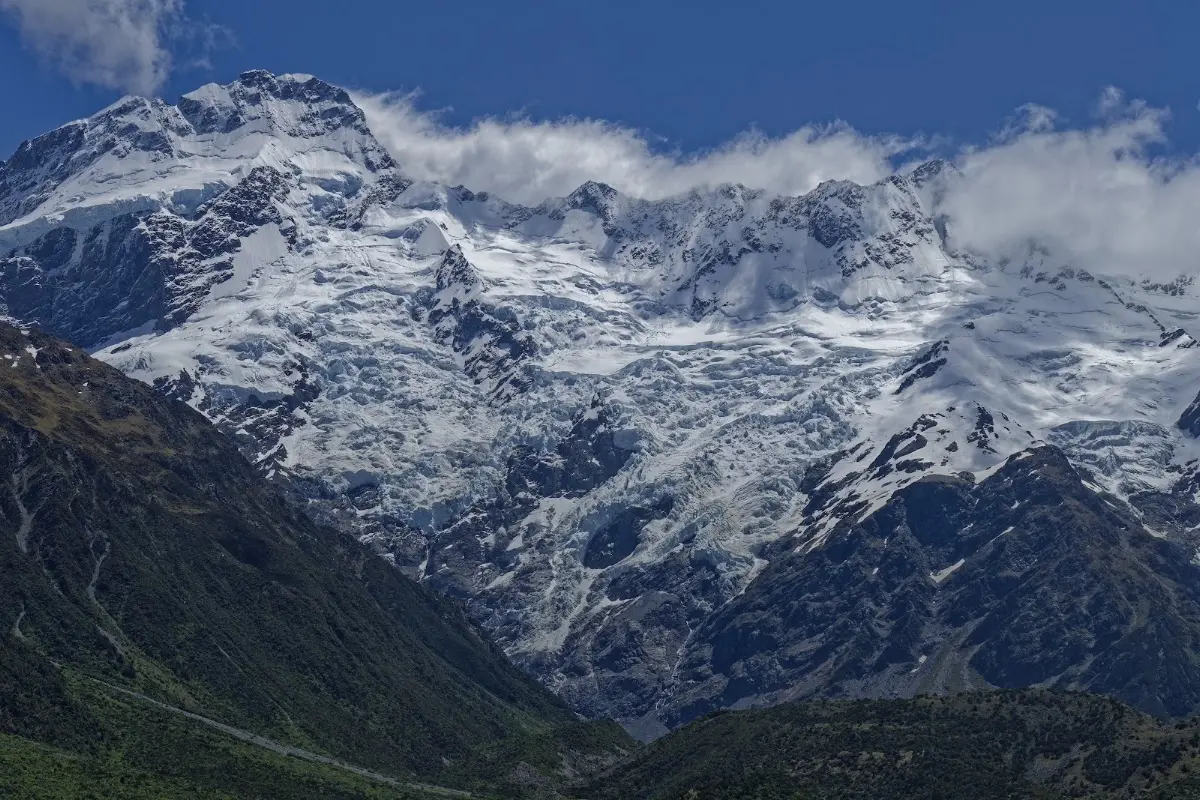
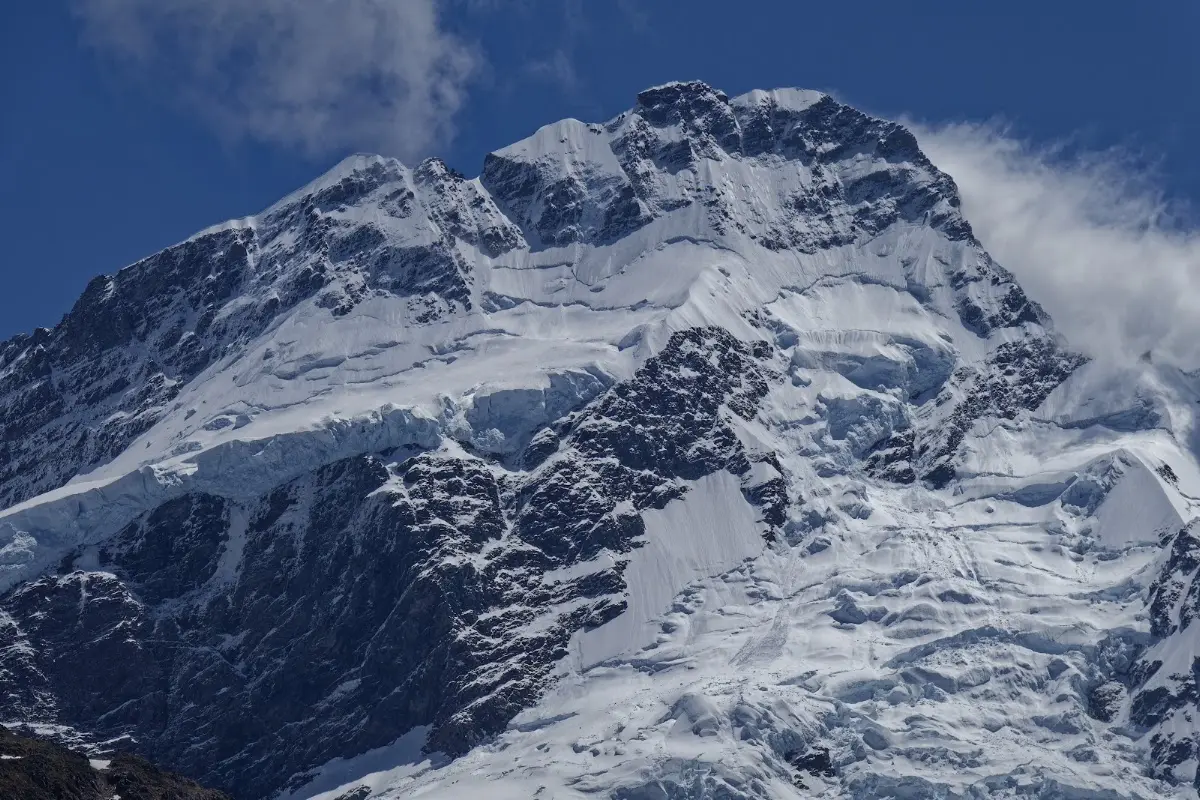
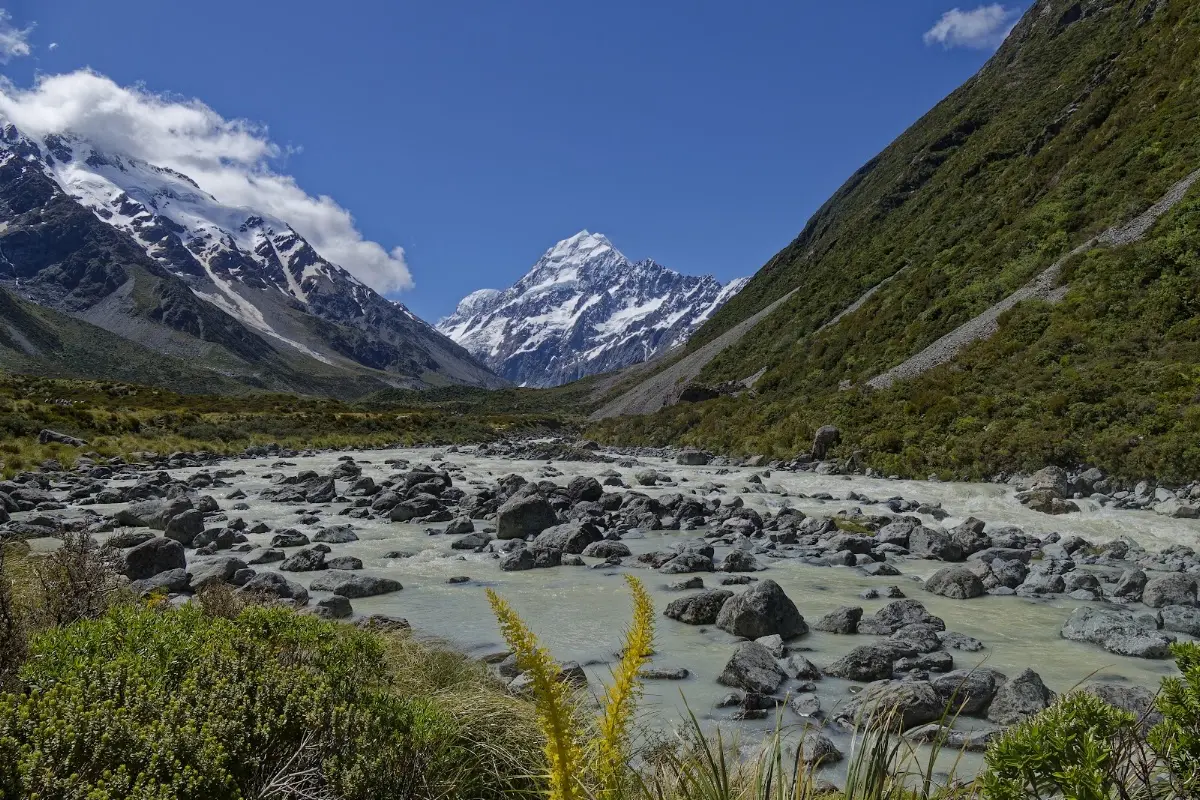
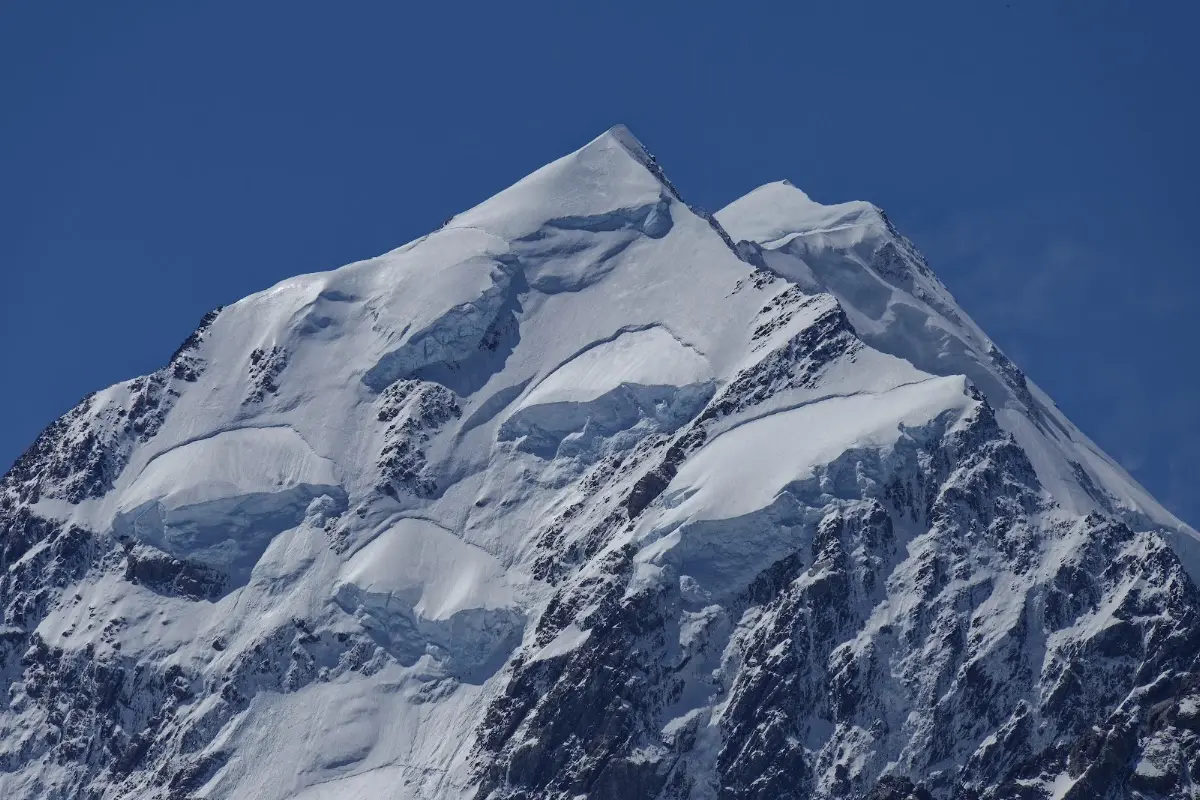
Aoraki / Mount Cook is New Zealand’s highest mountain, rising to 3,724 metres in the Southern Alps of the South Island. Standing within Aoraki / Mount Cook National Park, it forms a dramatic massif between the Hooker and Tasman valleys and is surrounded by glaciers, including the Tasman and Hooker Glaciers. The mountain has three summits—Low, Middle, and High Peak—and on clear days its striking, block-like profile can be seen from far across the South Island, from Lake Pukaki to the West Coast. Its position in the heart of a UNESCO World Heritage landscape makes it one of the country’s most iconic natural landmarks, admired alike by tourists, photographers, and mountaineers.
The mountain’s landscape has been shaped by both tectonic uplift and relentless erosion. Aoraki / Mount Cook lies close to the Alpine Fault, where the Pacific and Indo-Australian plates continue to push the Southern Alps upward, even as storms, glaciers, and rockfall carve them down again. Moist westerly winds from the Tasman Sea bring intense rainfall and snowfall, especially on the western slopes, creating one of New Zealand’s harshest alpine climates. Conditions can change rapidly, with poor visibility, avalanches, icefall, and sudden temperature drops making the mountain far more dangerous than its beauty might suggest. A major rock and ice collapse in 1991 reduced the summit height, and further erosion later brought it to its current official elevation.
Aoraki also holds deep cultural significance for Ngāi Tahu, for whom it is the most sacred of ancestral mountains. In Māori tradition, Aoraki and his brothers were turned to stone when their canoe became stranded, forming the South Island and the Southern Alps. The mountain’s Māori name was formally restored in 1998 as part of the Ngāi Tahu Claims Settlement, creating the official dual name Aoraki / Mount Cook. The English name had been given in 1851 by Captain John Lort Stokes in honour of James Cook, although Cook himself never saw the mountain. Today, the dual naming reflects both the indigenous history of the peak and its place in New Zealand’s colonial story.
As a climbing objective, Aoraki / Mount Cook has long held a special place in New Zealand mountaineering. The first recorded summit was achieved on Christmas Day 1894 by Tom Fyfe, Jack Clarke, and George Graham, while later climbers included Freda du Faur, the first woman to reach the top, and Sir Edmund Hillary, who made an early ascent here in 1948. Despite its fame, Aoraki remains a technically demanding and often deadly mountain, with around 80 climbers having lost their lives on its slopes since the early 20th century. Yet its combination of height, beauty, challenge, and cultural meaning continues to make it one of the most revered peaks in the Southern Hemisphere.
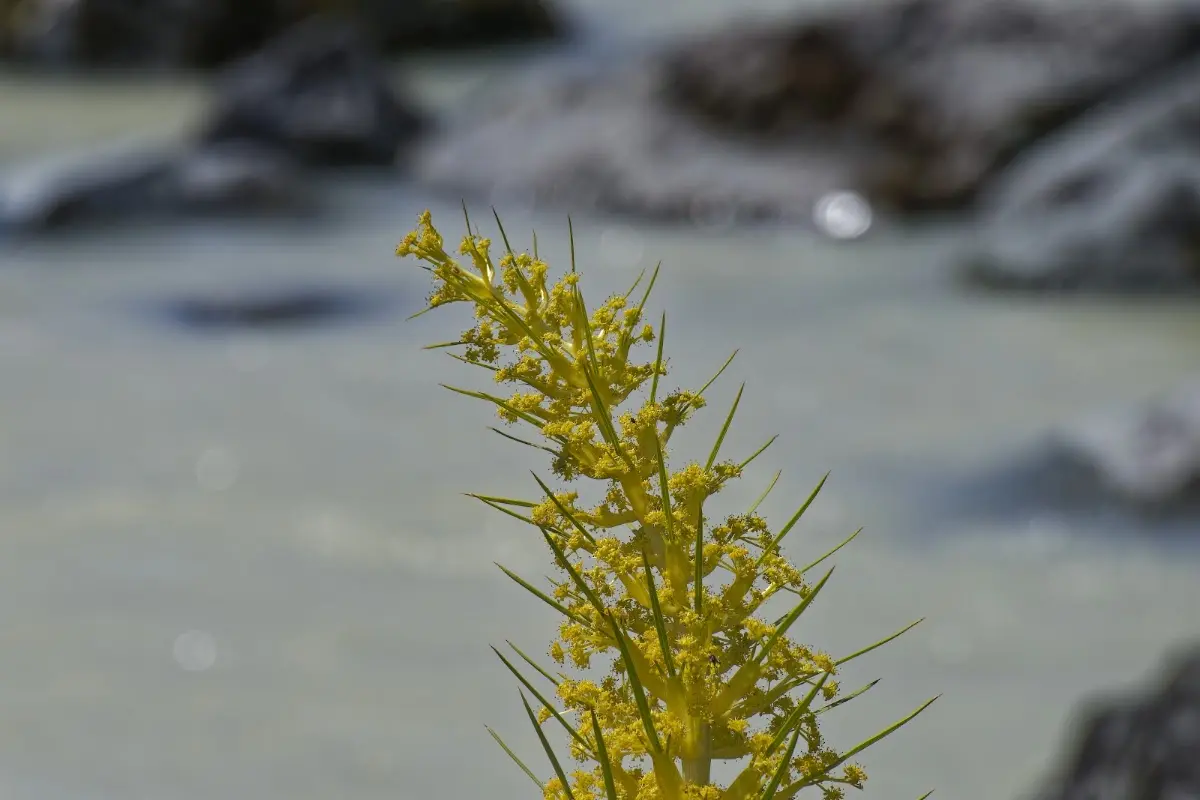
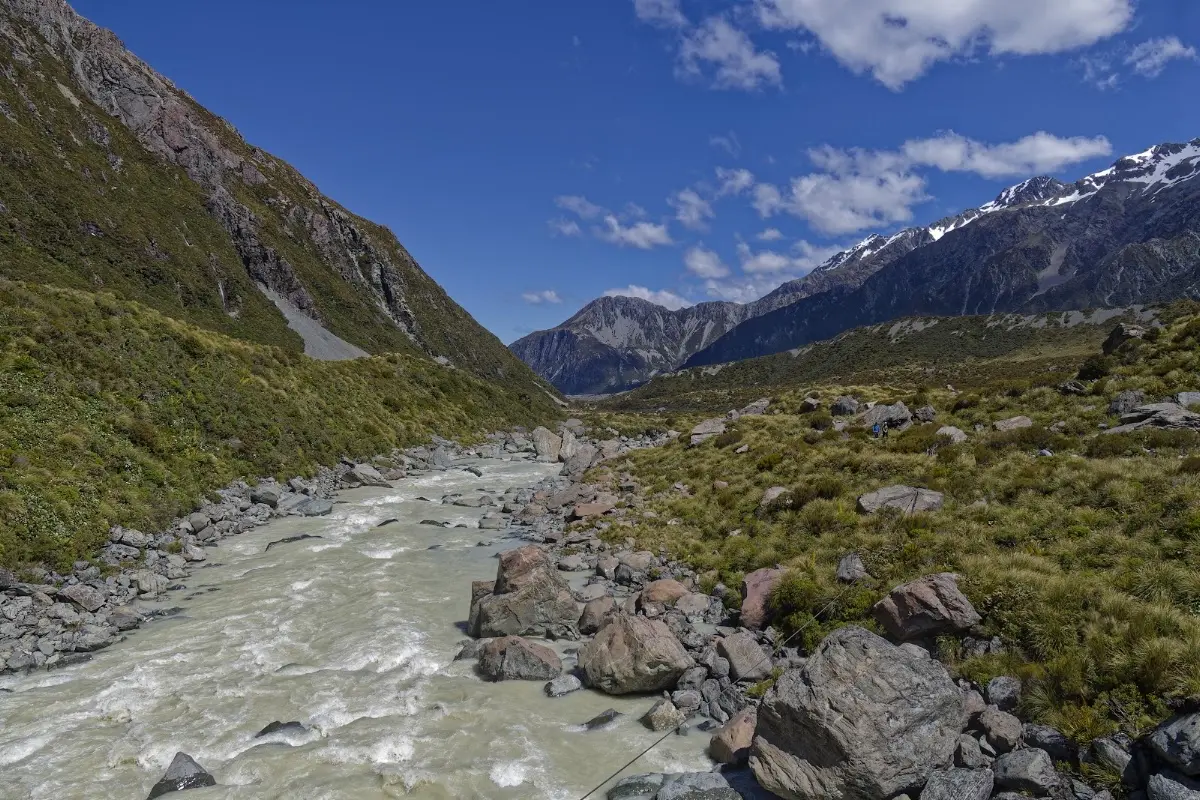
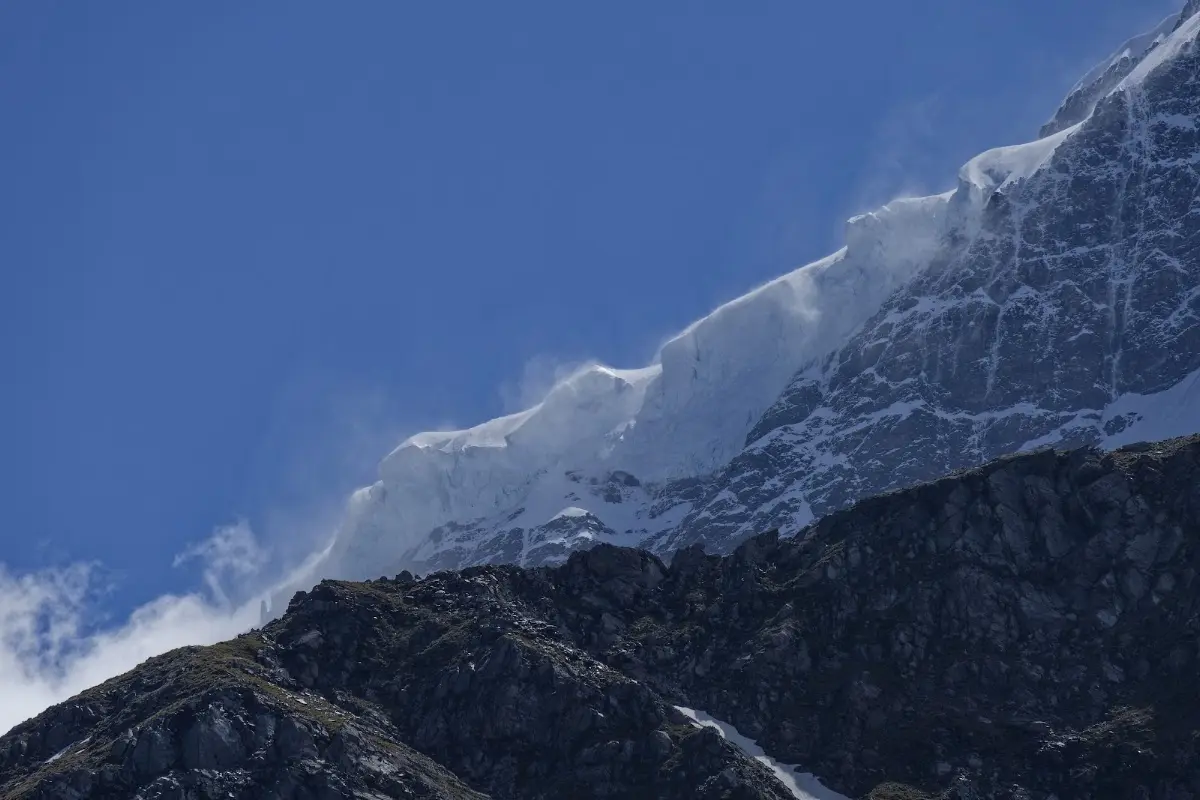
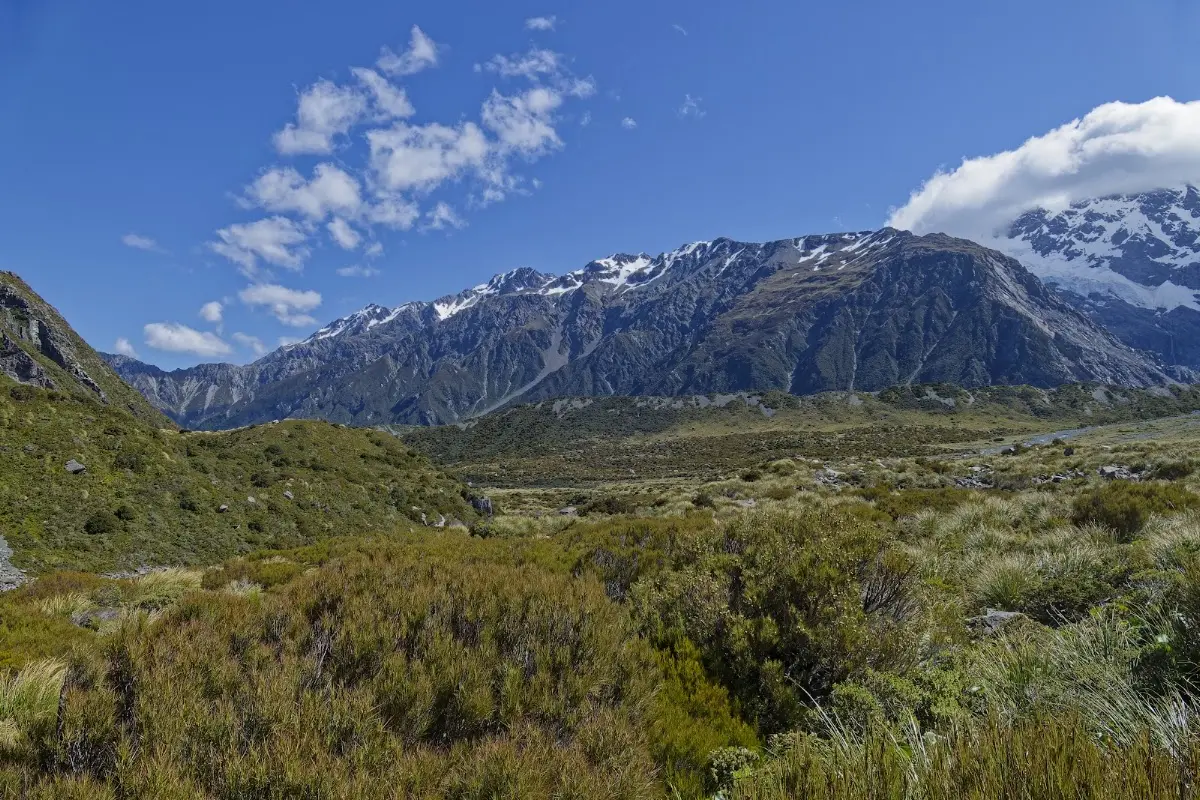
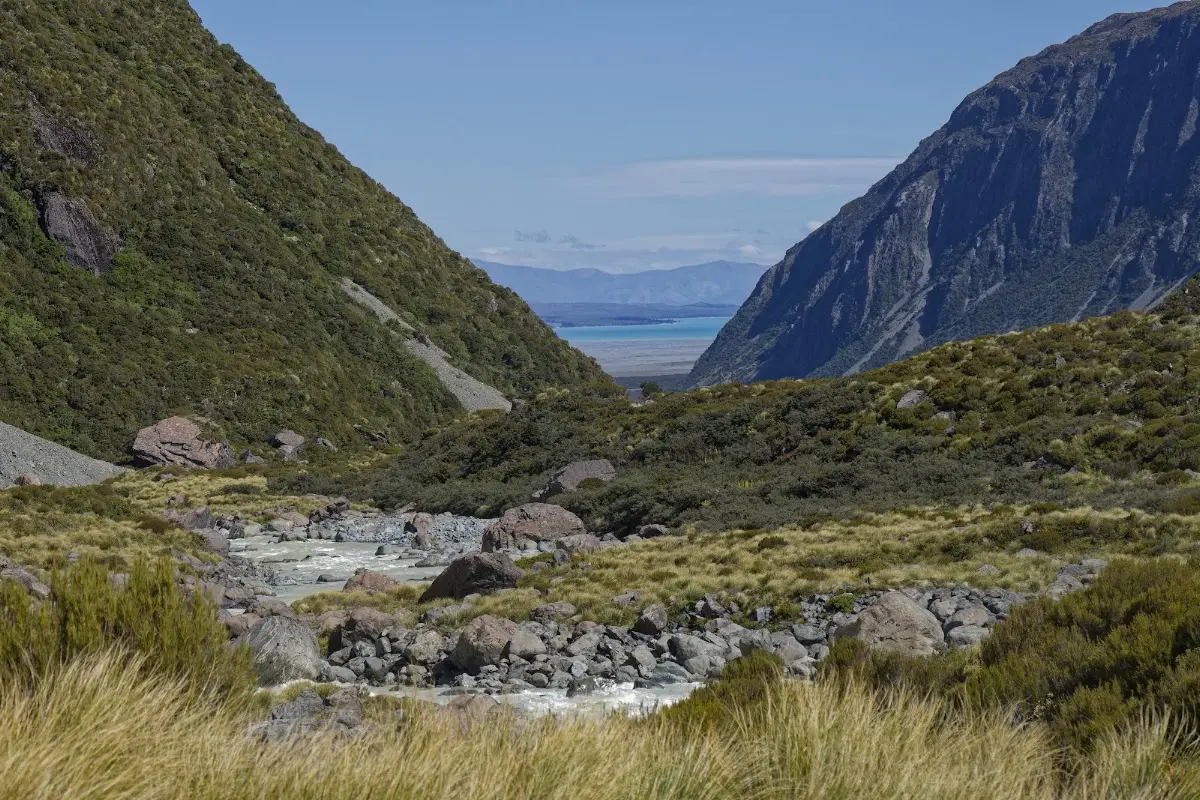
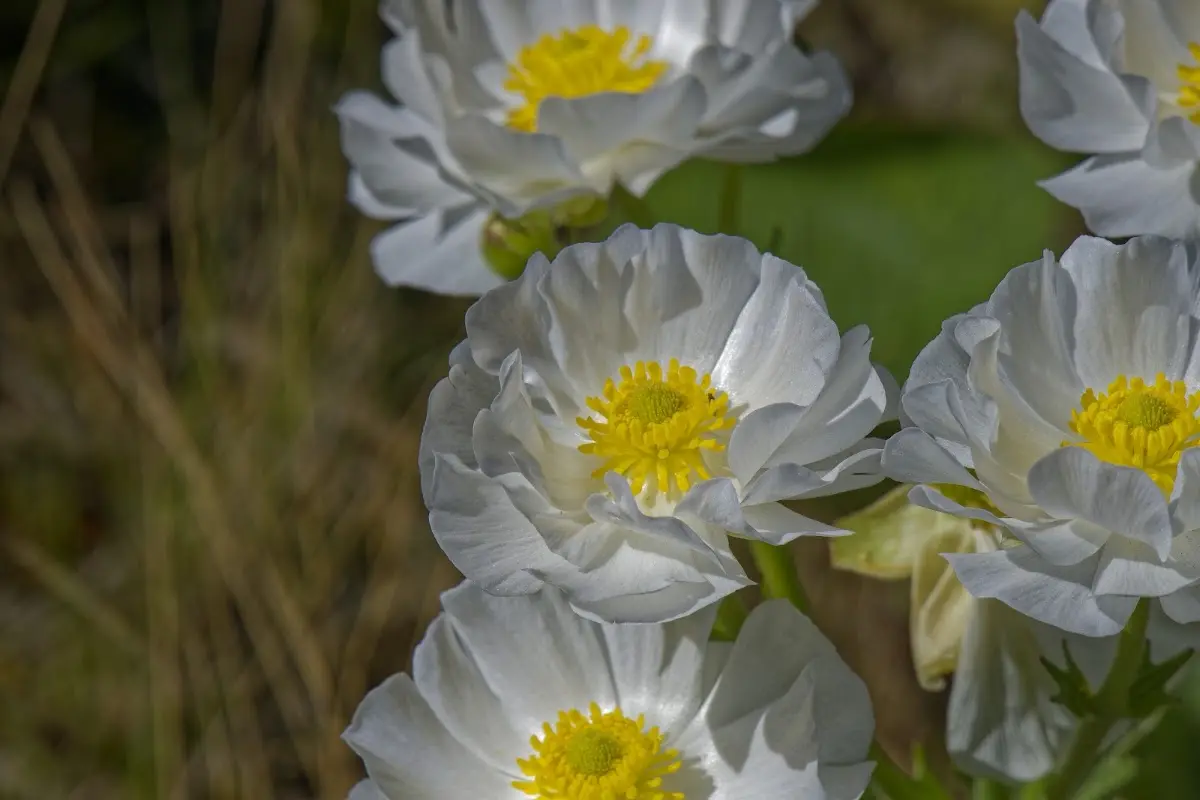
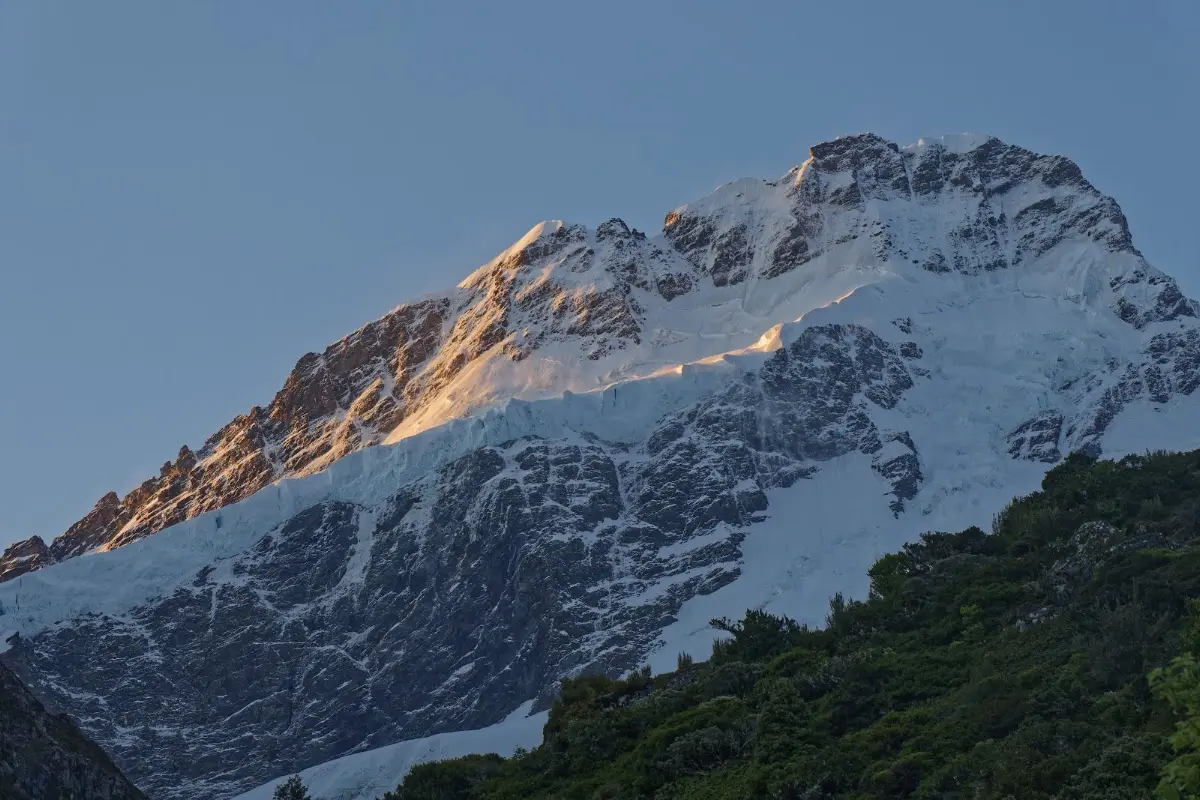
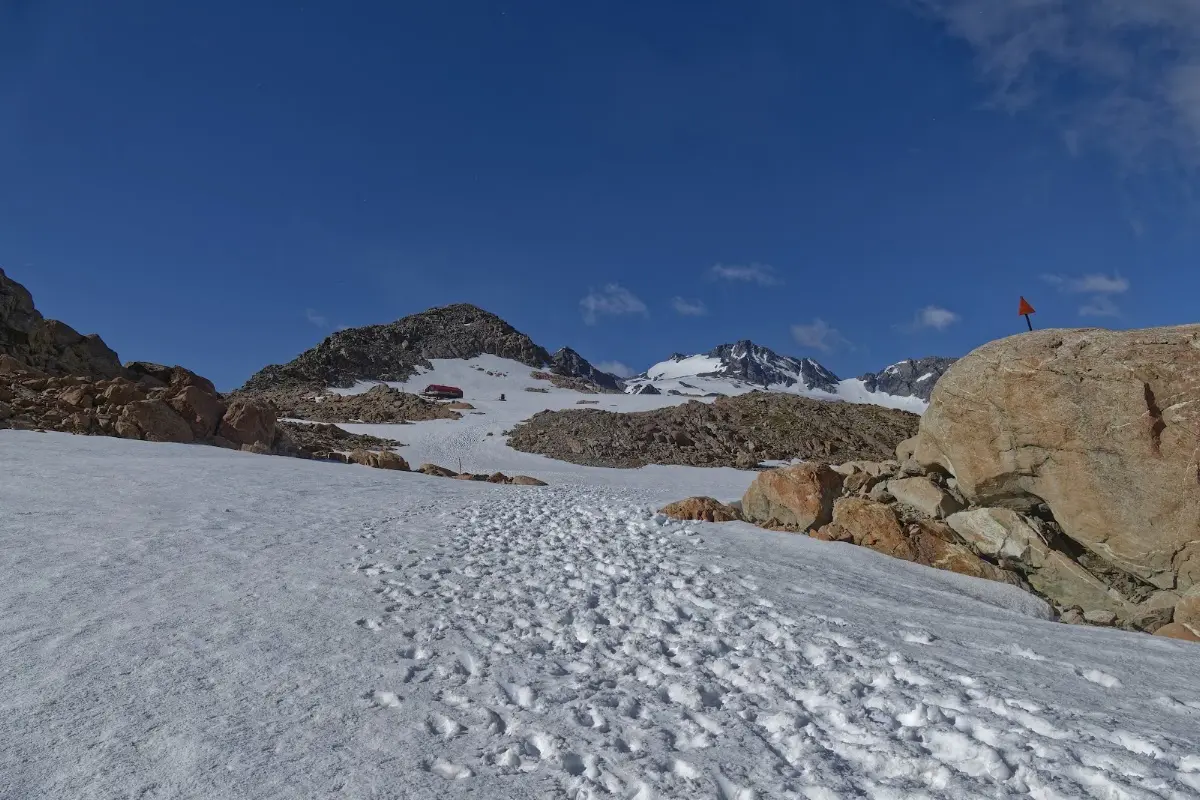
At 7:00 in the morning I set off for Mueller Hut. The weather was very windy and cold, but still manageable. Four and a half hours up with a break at the top, then back down again. After that came light rain and plenty of cloud, and I decided to ride out via Twizel to Omarama. Every now and then there was a very strong tailwind that pushed me along the flat at 45 km/h without pedalling. Not entirely bad. In the evening I met the Swiss couple again. They were in Twizel and had only 30 km to Omarama that day. It seemed they were going to do the Otago Rail Trail as well.
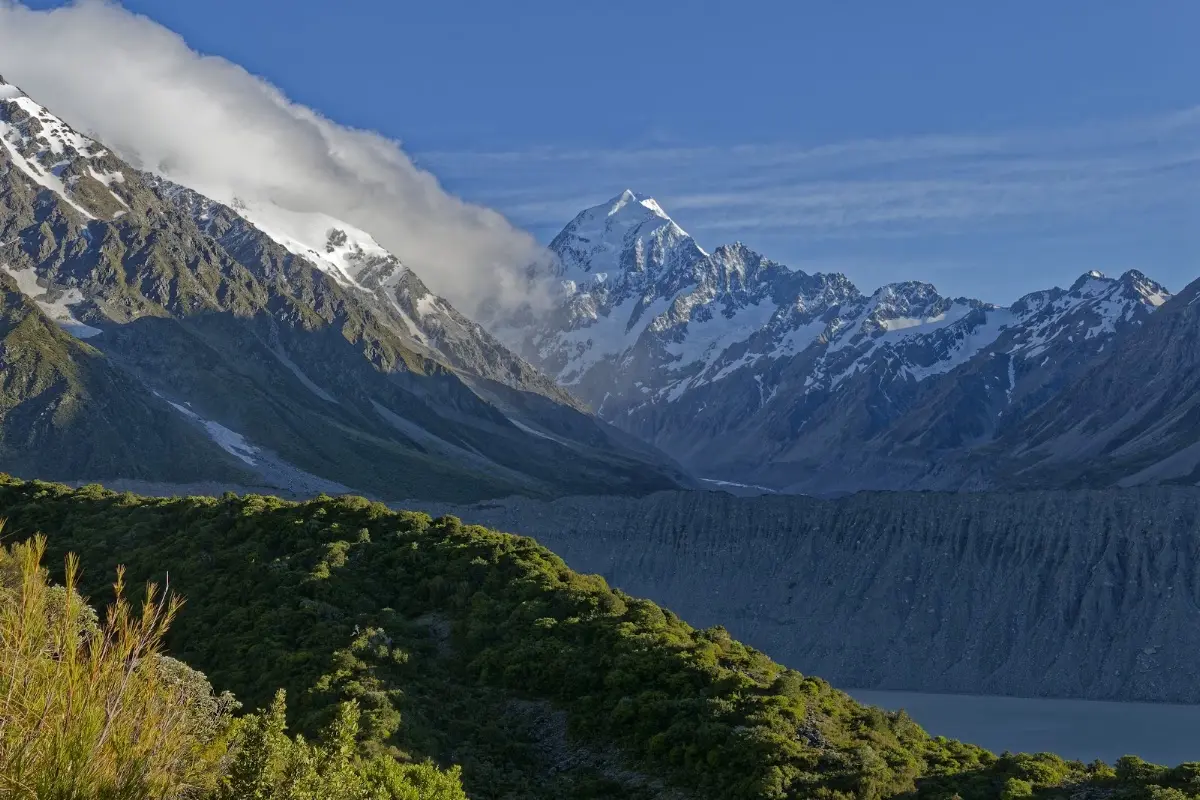
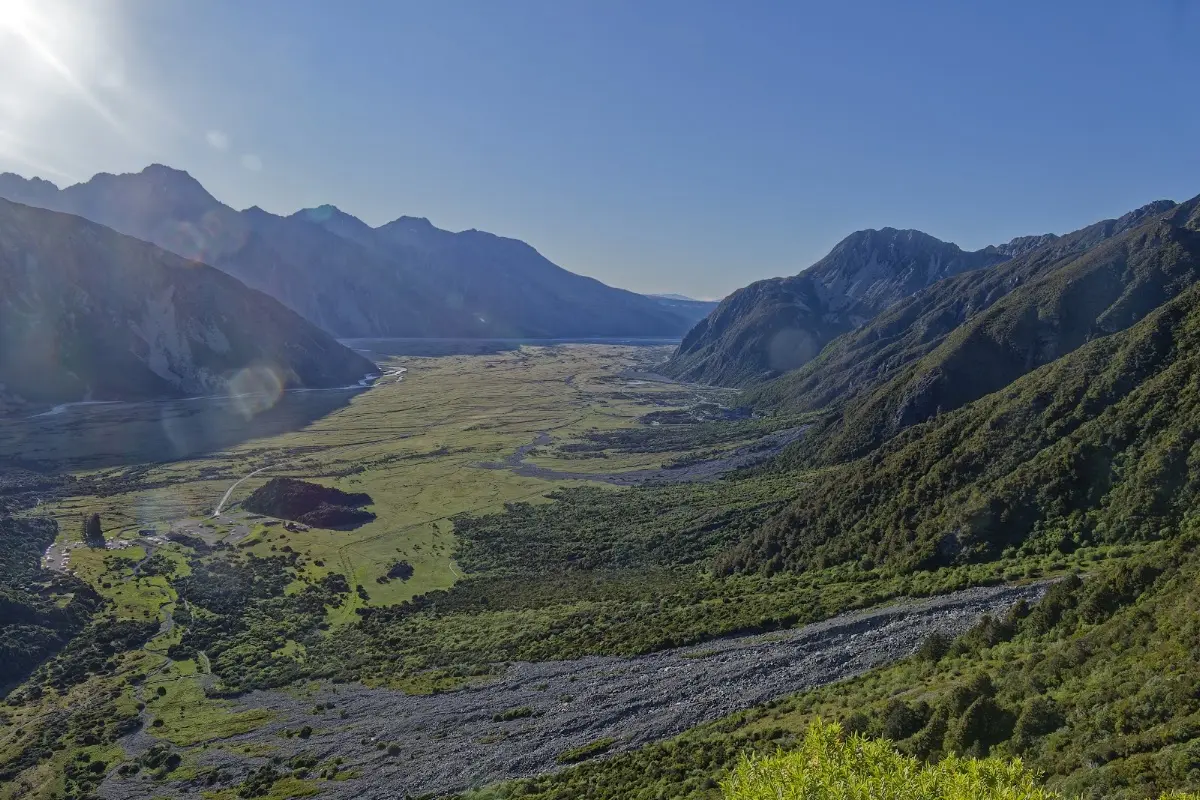
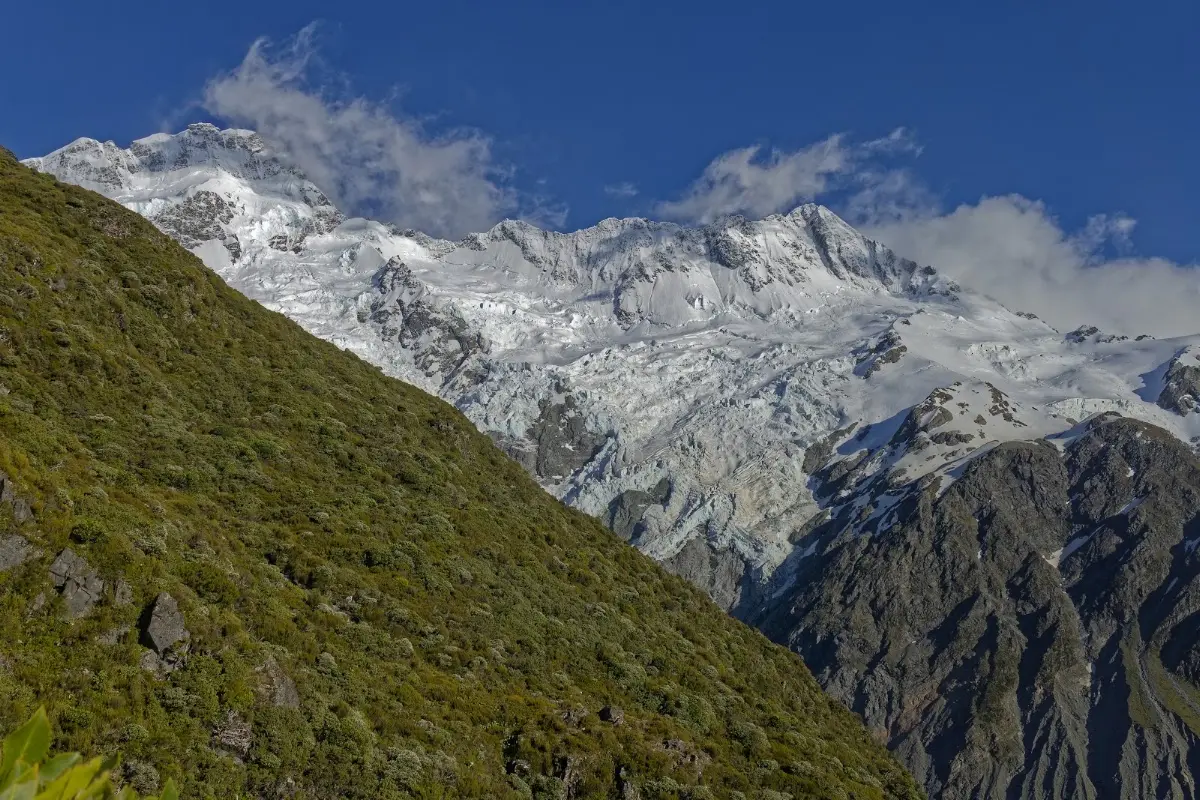
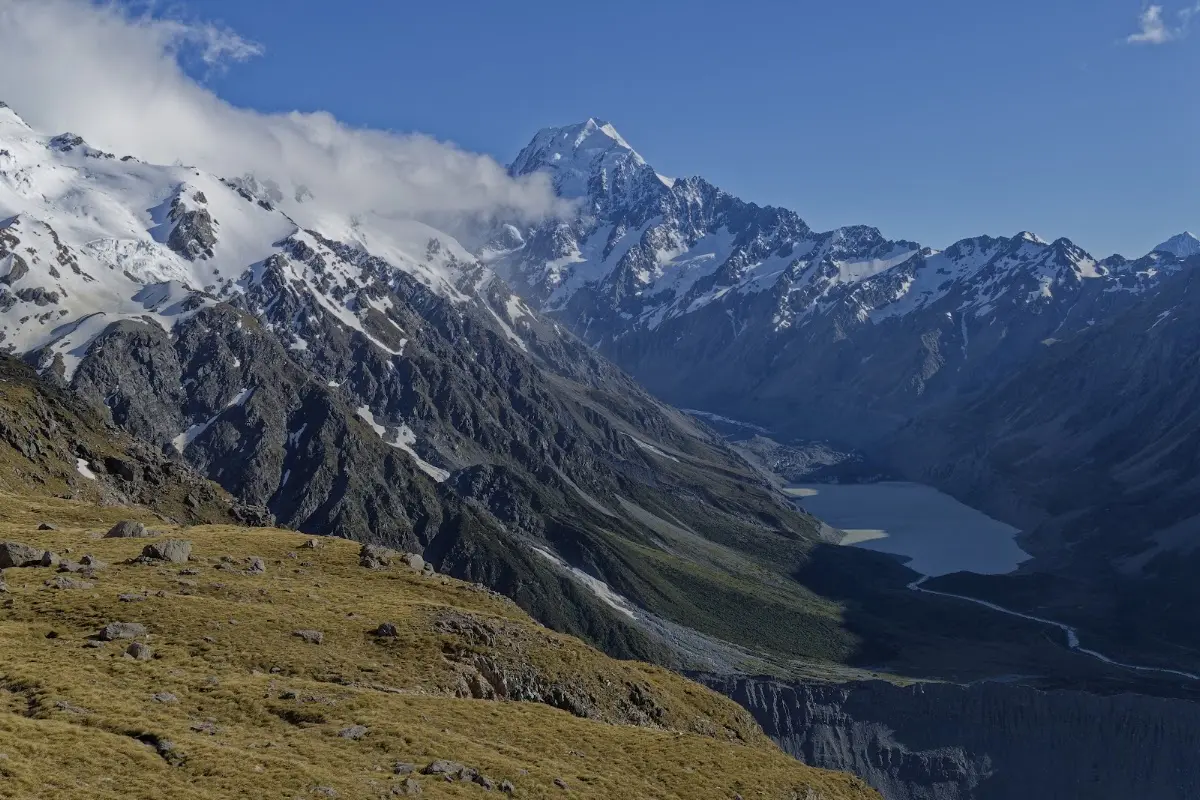
Mueller Glacier
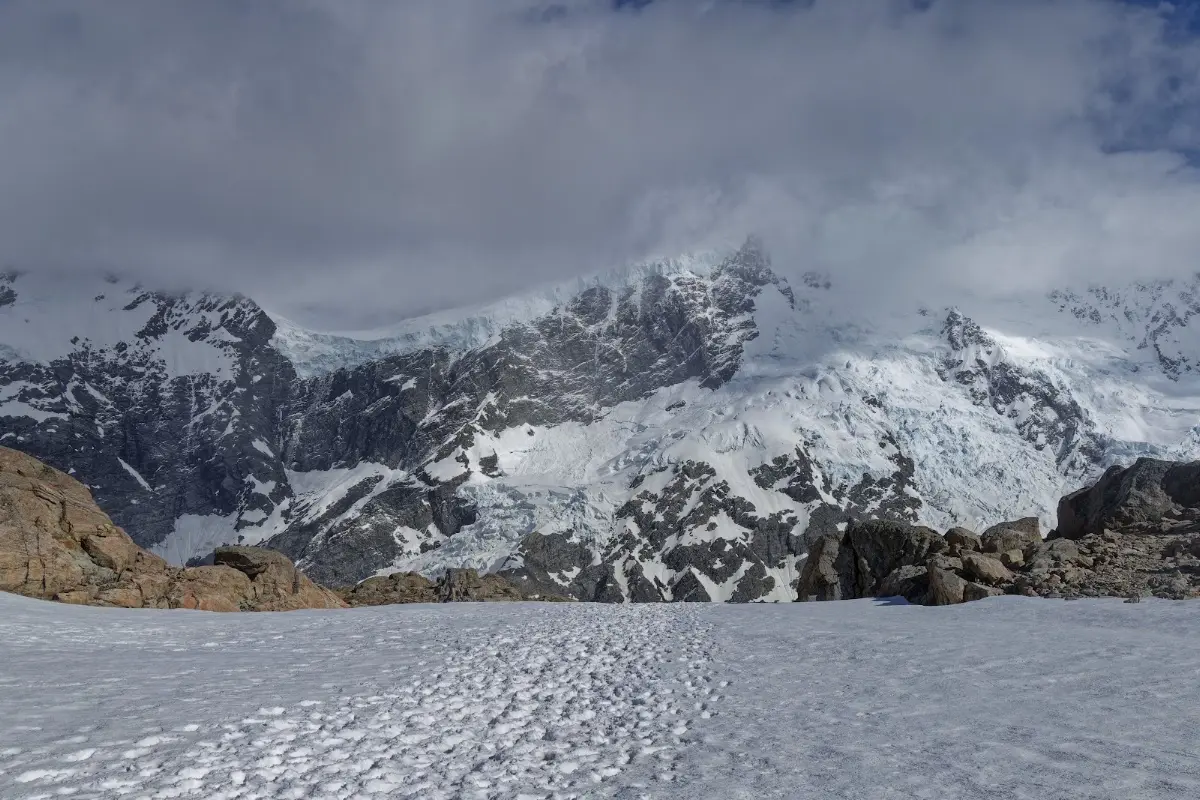
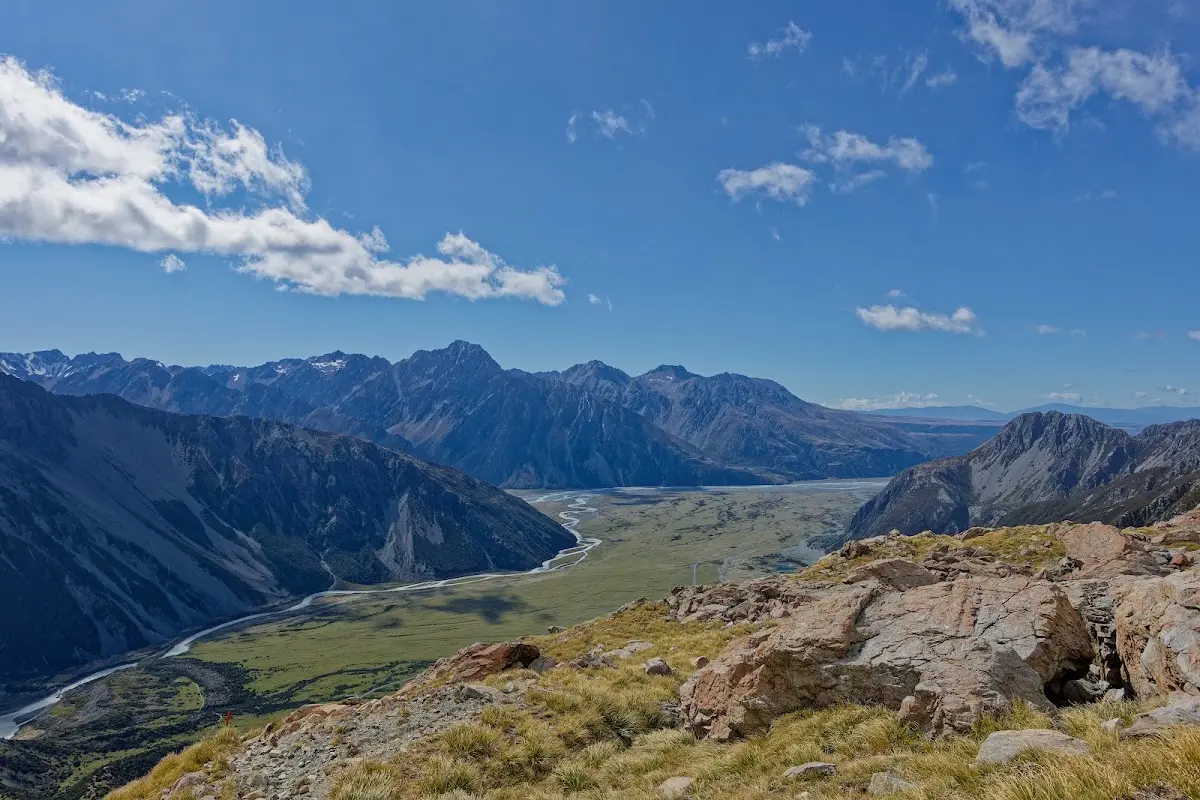
The Mueller Glacier is a 13-kilometre glacier in Aoraki / Mount Cook National Park on New Zealand’s South Island, lying west of Mount Cook Village in the Southern Alps. It flows roughly northwest from its névé near Mount Montgomerie, curves around the Sealy Range, and is joined along the way by smaller glaciers including the Frind and Huddleston. At its lower end, the glacier reaches a small unnamed terminal lake, which also receives meltwater from the nearby Hooker Glacier. From this lake flows the Hooker River, a tributary of the Tasman River that ultimately drains into Lake Pukaki.
The glacier was named after the German-Australian botanist and explorer Ferdinand von Mueller, who also gave his name to nearby Mueller Hut on the Sealy Range. Studies using lichen dating suggest that the glacier reached its Little Ice Age maximum extent sometime between 1725 and 1730. Evidence of that earlier advance remains visible today at White Horse Hill, a low rise north of Mount Cook Village that marks the moraine left behind when the glacier was once larger than it is now.
Mueller Hut
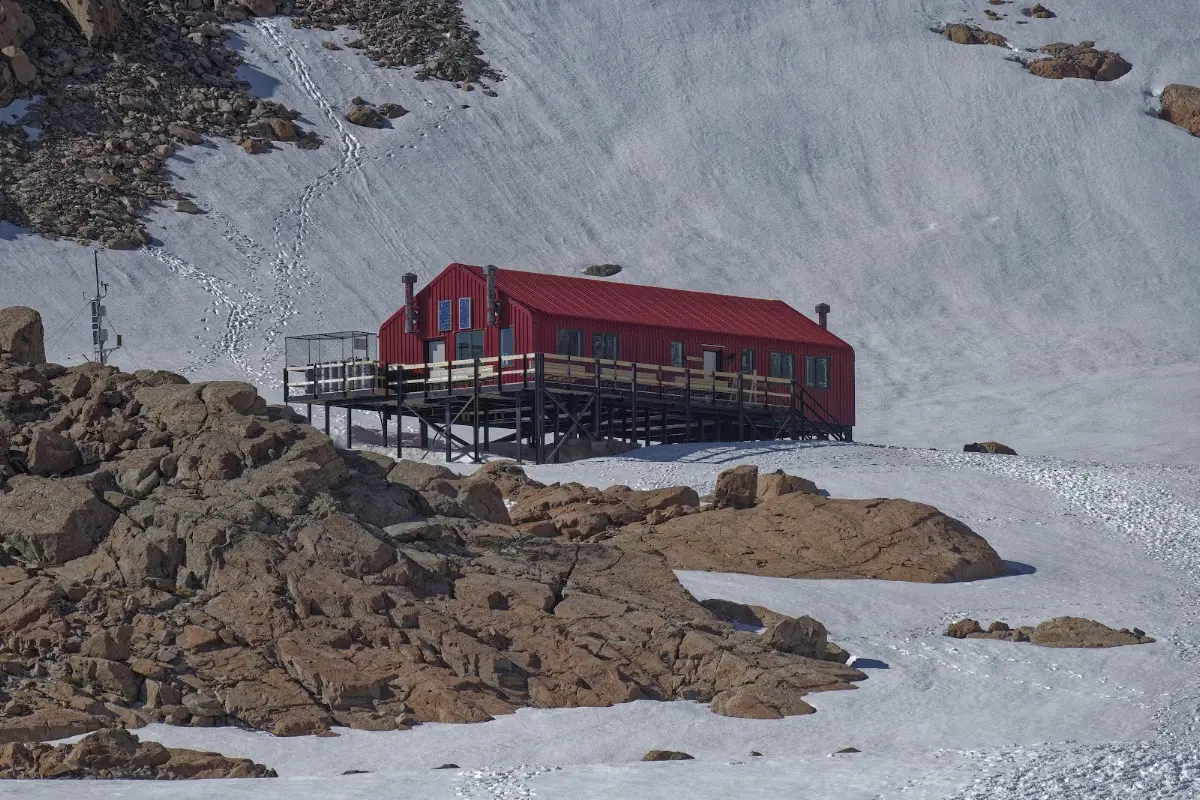
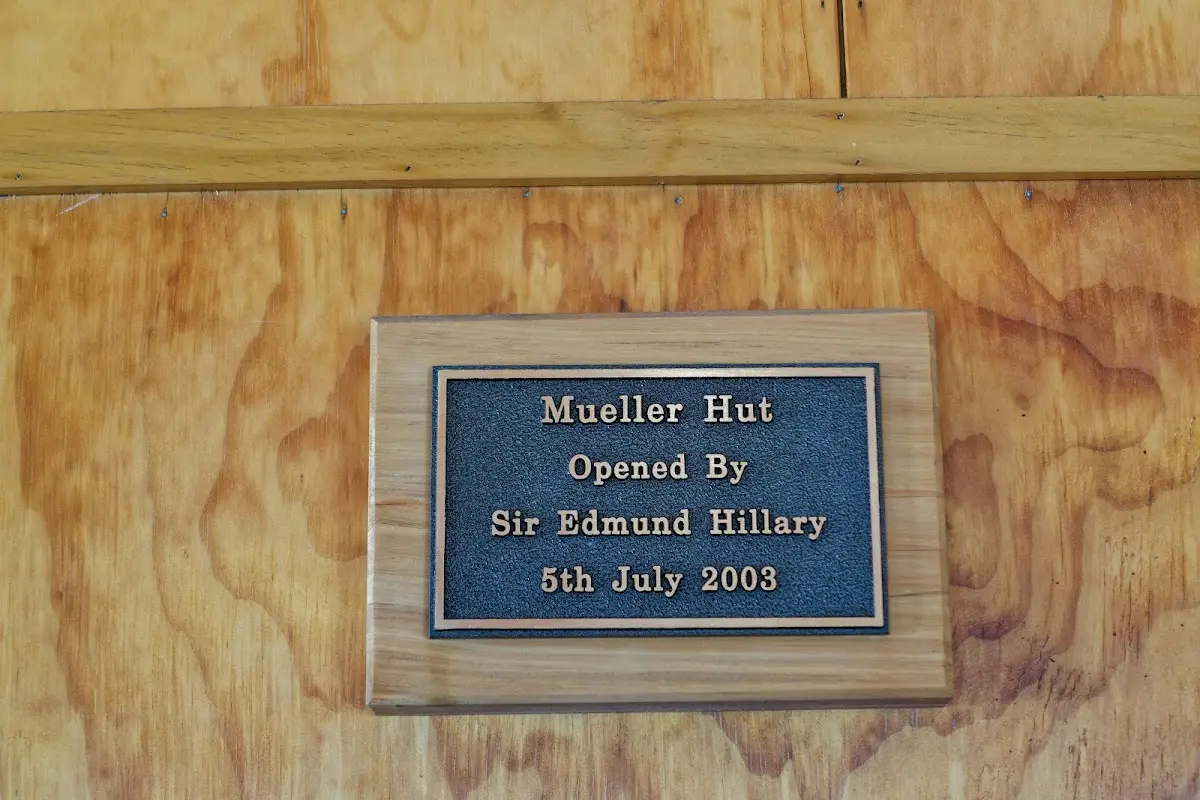
The Mueller Hut in Aoraki / Mount Cook National Park has a long history reflecting the development of mountaineering in the Southern Alps. The first hut was built in the summer of 1914–1915 and was a small wooden shelter with two bedrooms and a kitchen, constructed from tongue‑and‑groove timber and designed to accommodate climbers exploring the nearby glaciers. By 1947 it stood about 300 feet above the Mueller Glacier and was commonly used by guided tourists from the Hermitage. After the Second World War a second hut was constructed in 1949, with building materials dropped by aircraft onto the glacier. The hut was completed in 1950, but it did not last long; a wet‑snow avalanche later struck the structure and swept it down onto the glacier below. A replacement hut was therefore built high on the Sealy Range near Mt Ollivier, about 1,800 metres above sea level and outside avalanche danger. Materials for this third hut were again delivered by aircraft in 1952, and the hut was completed in 1953, serving climbers for fifty years. By the late 1990s it had become too small for the increasing number of visitors, so a temporary fourth hut was erected nearby using salvaged materials while a new building was planned. The present fifth Mueller Hut stands about 300 metres south and slightly higher than the earlier site. Completed in 2003, it contains 56 bunks along with modern warden facilities and services, continuing the tradition of providing a base for hikers and mountaineers exploring the alpine landscape around Aoraki / Mount Cook.
Omarama
Omarama is a small township in the southern Canterbury region of New Zealand’s South Island, near the southern end of the Mackenzie Basin, where State Highways 8 and 83 meet. Close to the Ahuriri River and not far from Twizel, Lake Ōhau, and Lindis Pass, it serves as a rural service centre for the surrounding high country. Although small in population, Omarama has grown in recent years as both a practical hub for local farmers and hydroelectric workers and a base for visitors drawn to the basin’s open landscapes and outdoor opportunities. Its Māori name has been interpreted in several ways, including “place of light,” a fitting description for a settlement known for its clear air and luminous skies.
The area has a long history of Māori use, particularly by Ngāi Tahu, for whom the wider Mackenzie Basin provided important food resources. European arrival followed in the 19th century, with Walter Mantell visiting in 1852 and pastoral stations such as Benmore and Ben Ohau established a few years later. Omarama also became associated with a significant episode in Ngāi Tahu history when, in 1877, the prophet Hipa Te Maihāroa led more than 100 supporters there to reassert Māori claims to the South Island interior, before they were forcibly removed in 1879. In more recent times, the district has changed from traditional sheep farming toward large-scale dairy farming, reshaping both the economy and the high-country landscape through irrigation and intensified land use.
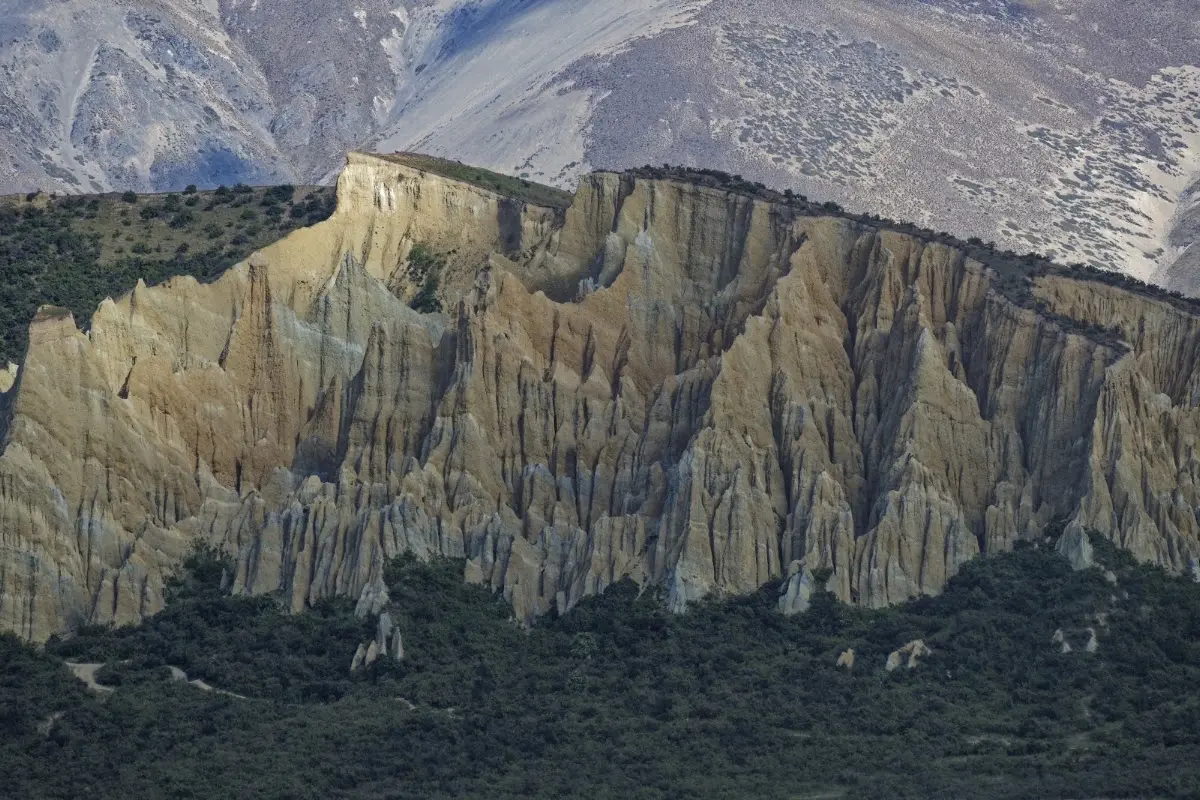
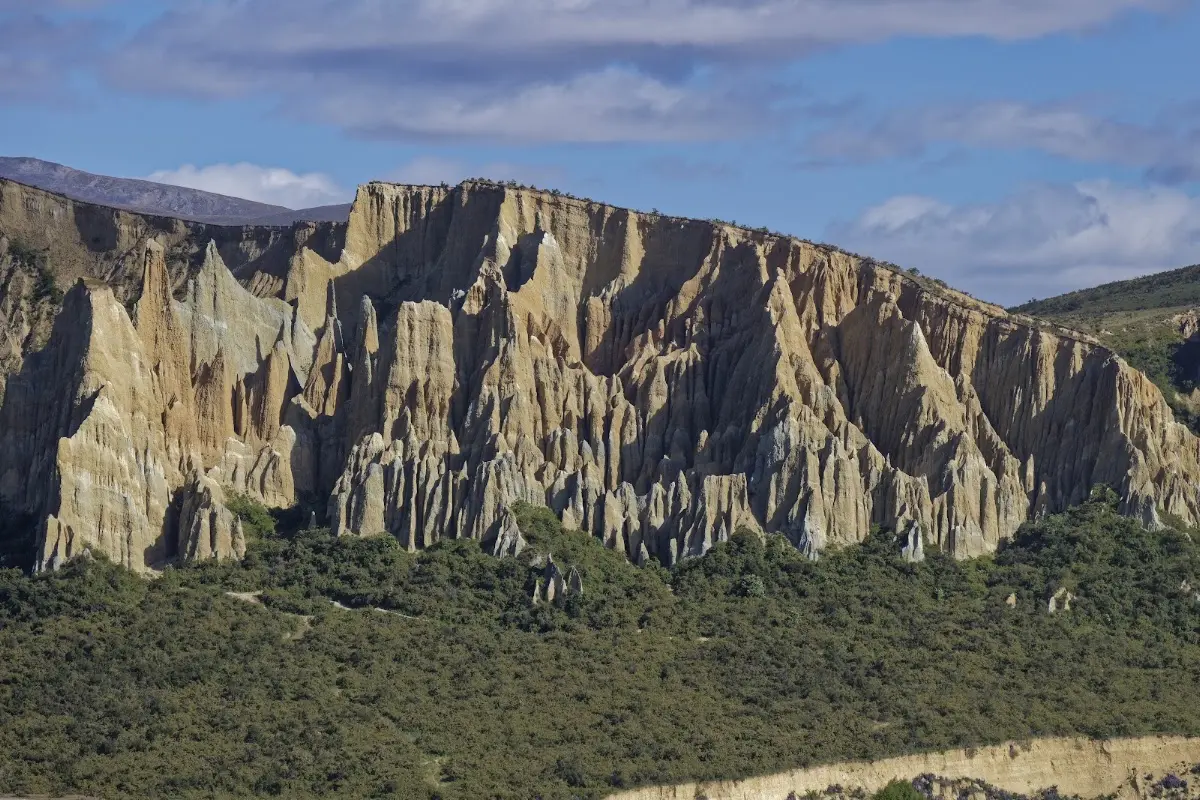
Today Omarama is best known as a destination for recreation and wide-open scenery. The nearby rivers and lakes attract anglers, boaters, and trampers, while the surrounding Mackenzie Basin has made the town internationally famous for gliding, thanks to exceptional wave, ridge, and thermal flying conditions. Omarama hosted the 1995 World Gliding Championships and remains a world-class centre for sailplane pilots. It is also popular with cyclists on the Alps to Ocean Trail, winter visitors heading to nearby ski fields, and stargazers enjoying its dark skies. With attractions such as the Clay Cliffs, a growing arts presence, and a relaxed village atmosphere, Omarama has become far more than a farming stop: it is one of the distinctive small settlements of the South Island high country.
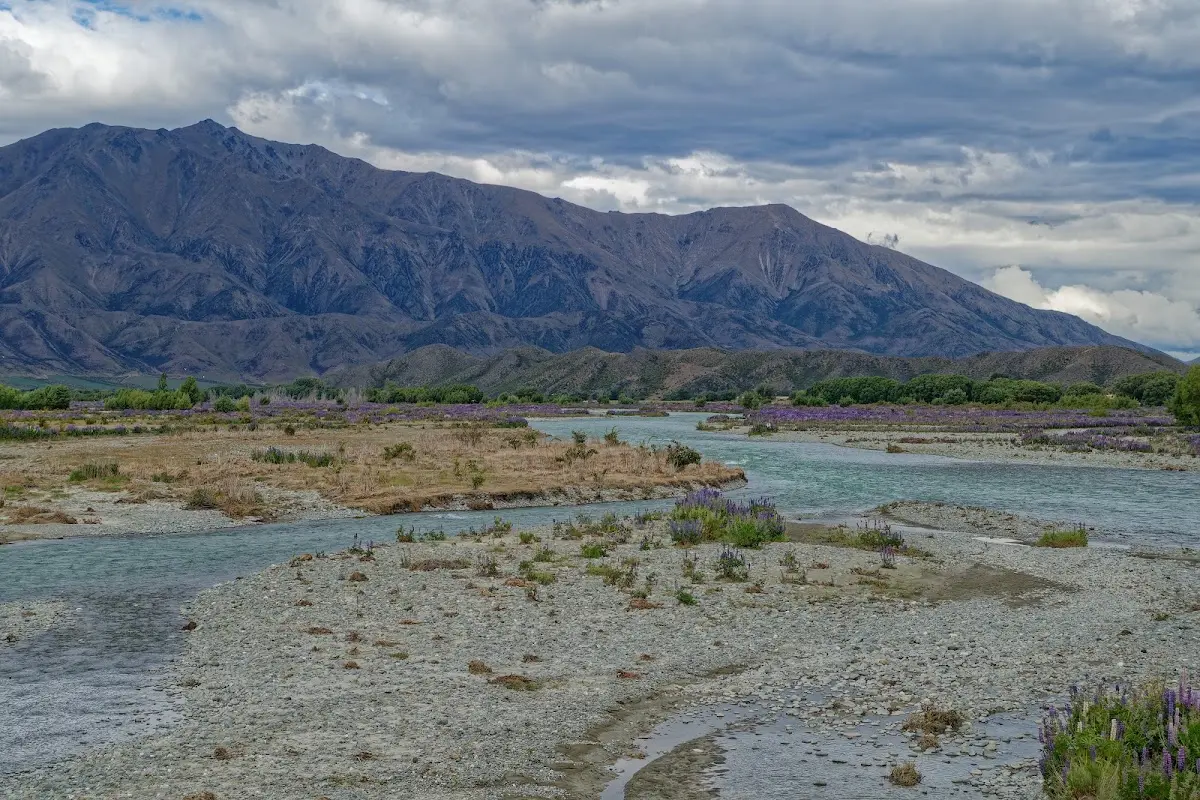
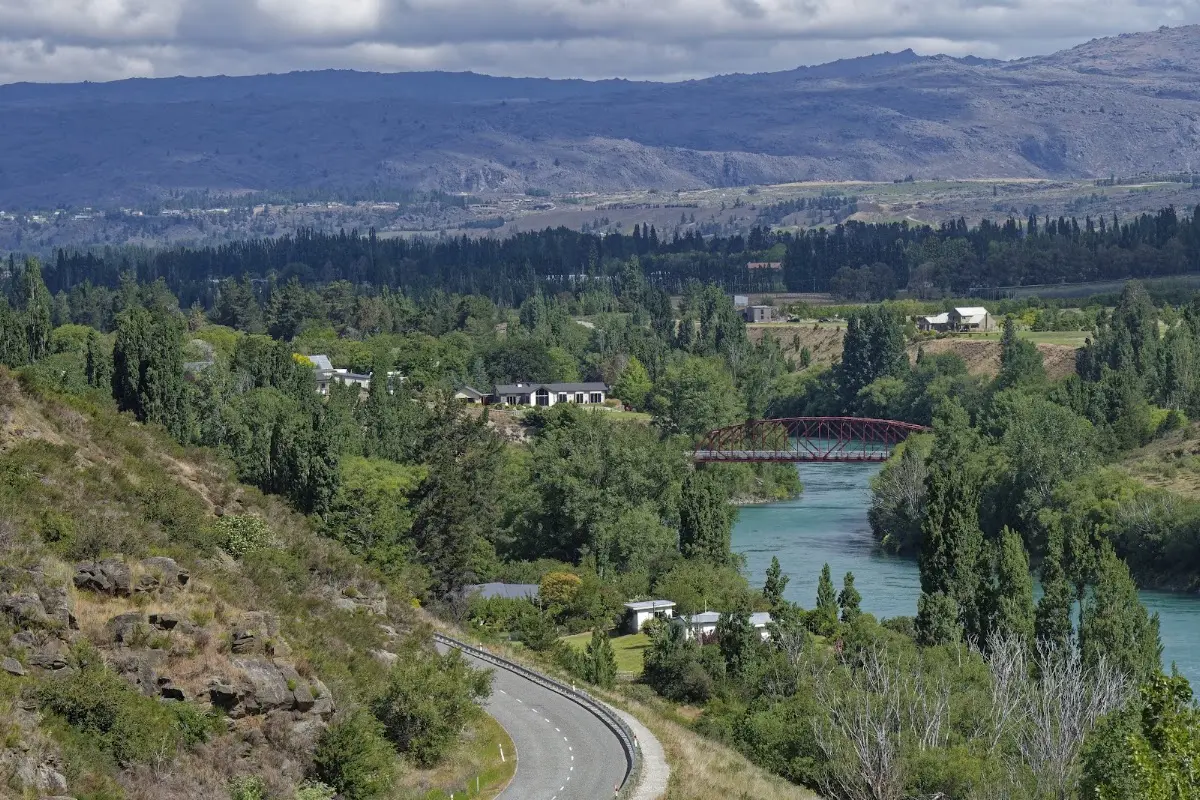
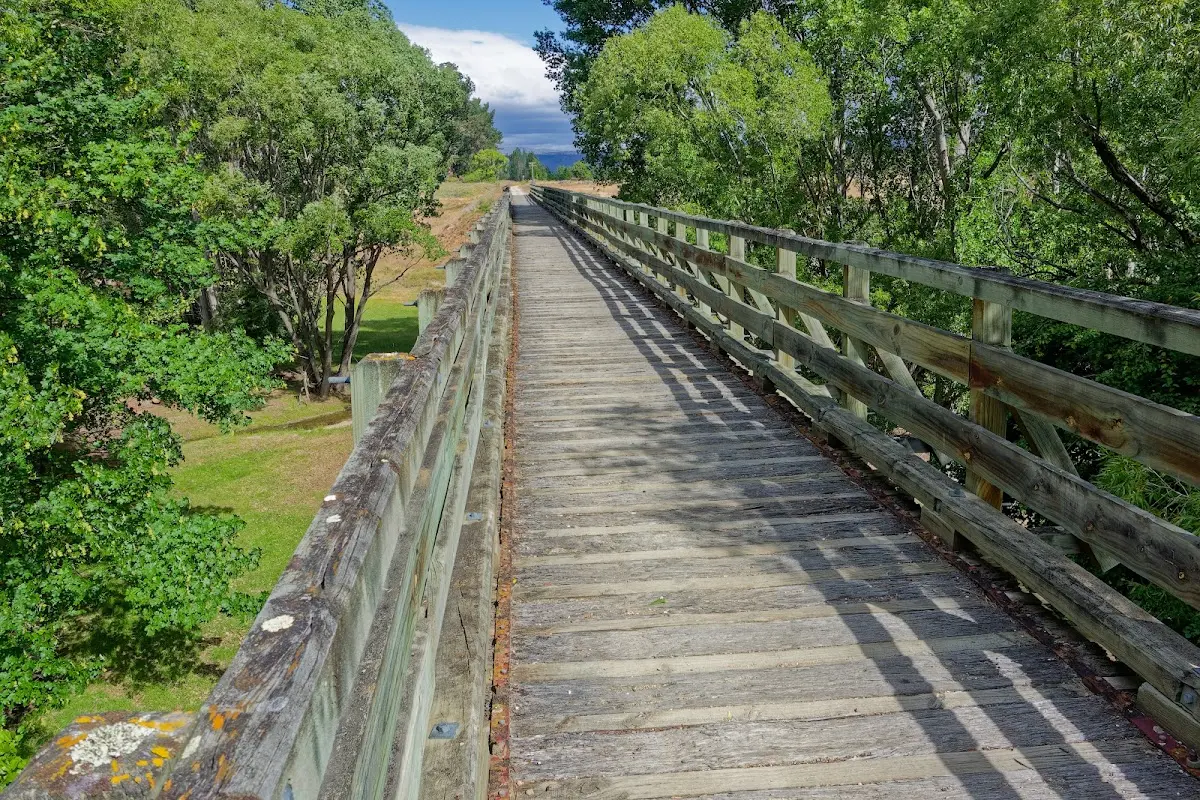
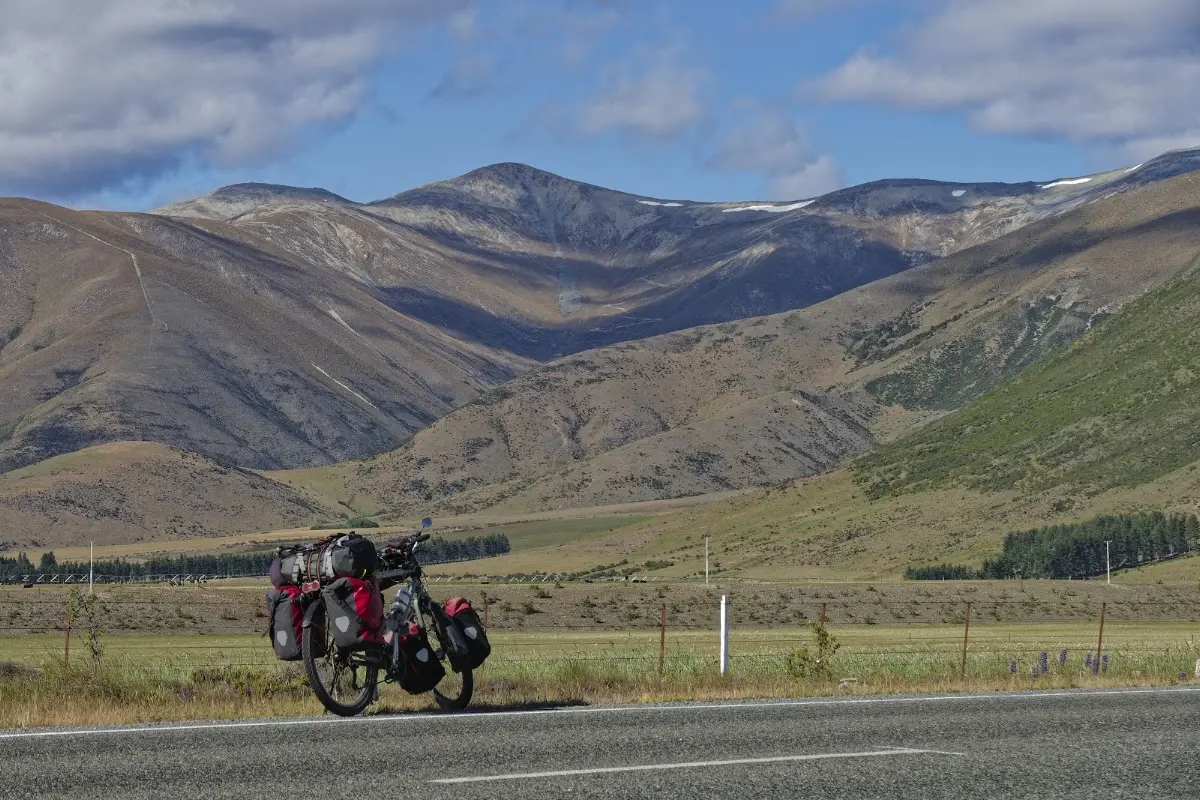
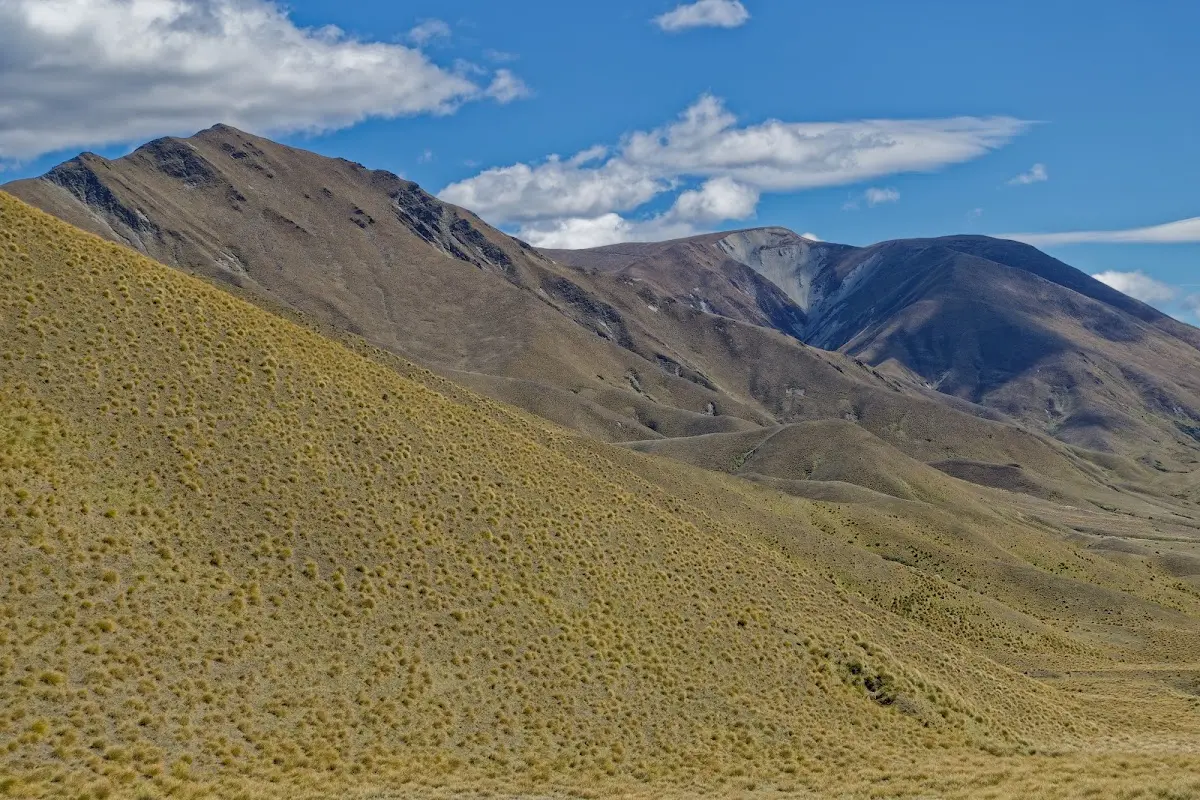
Lindis Pass and the road to Clyde were a bit tiresome, because whichever direction I rode, the wind somehow managed to turn against me, and in the tunnel-like valleys it was often brutal. Over the pass, then an ice cream in Tarras. Pizza from the supermarket in Cromwell, then via Clyde to Alexandra. The final stretch was already on the Rail Trail. 150 km is very long. Four days are normally allowed for it. Well, in the end I would not need one and a half — probably not even that.
Lindis Pass
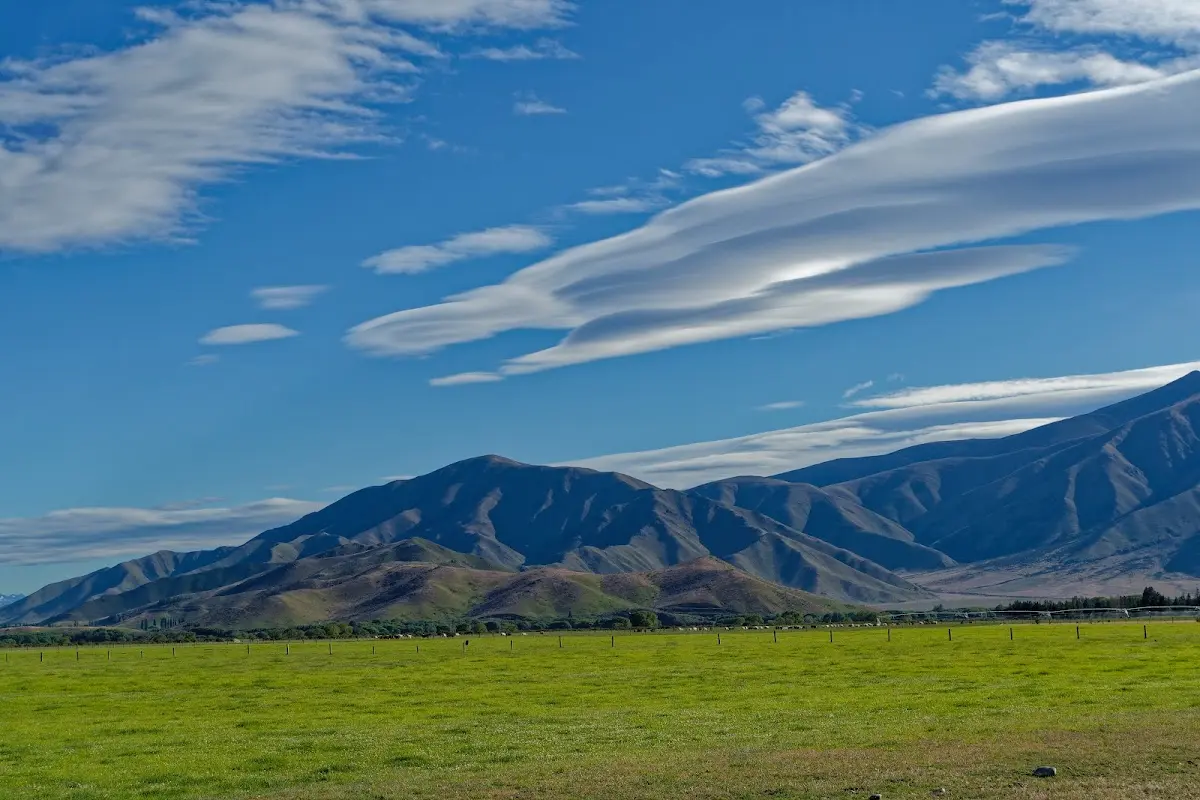
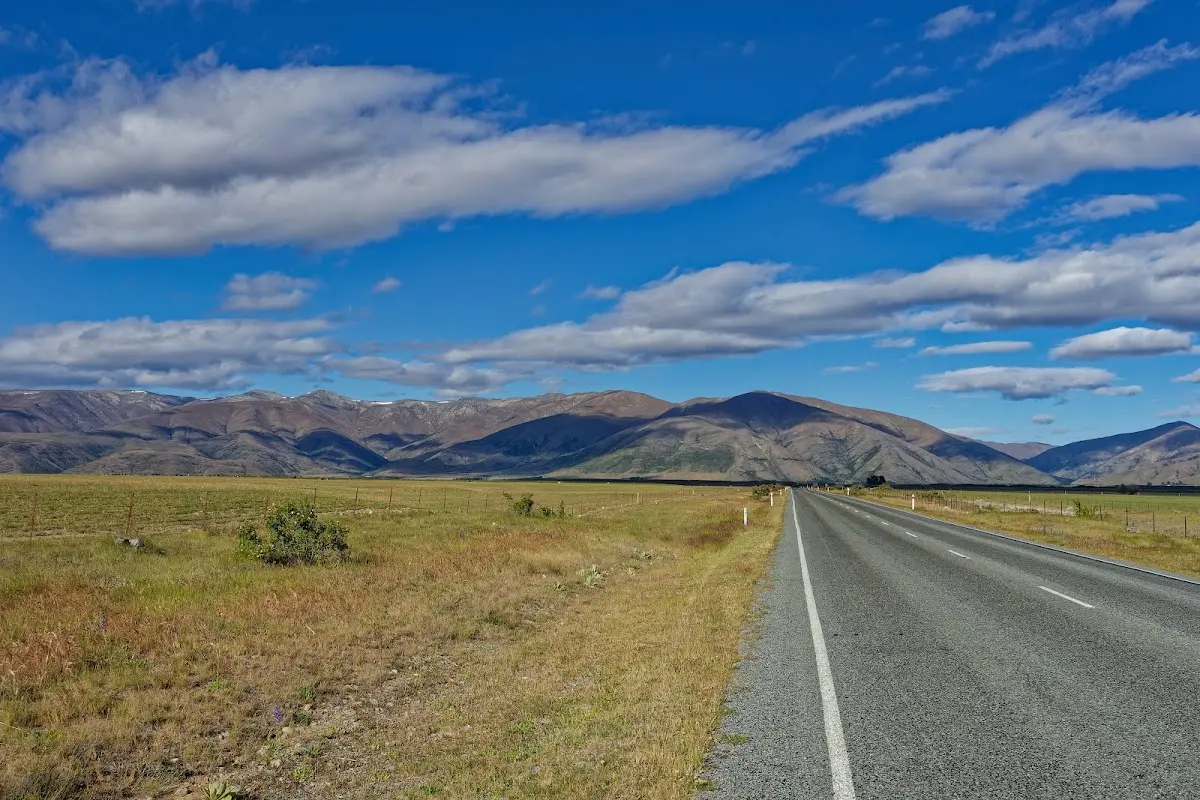
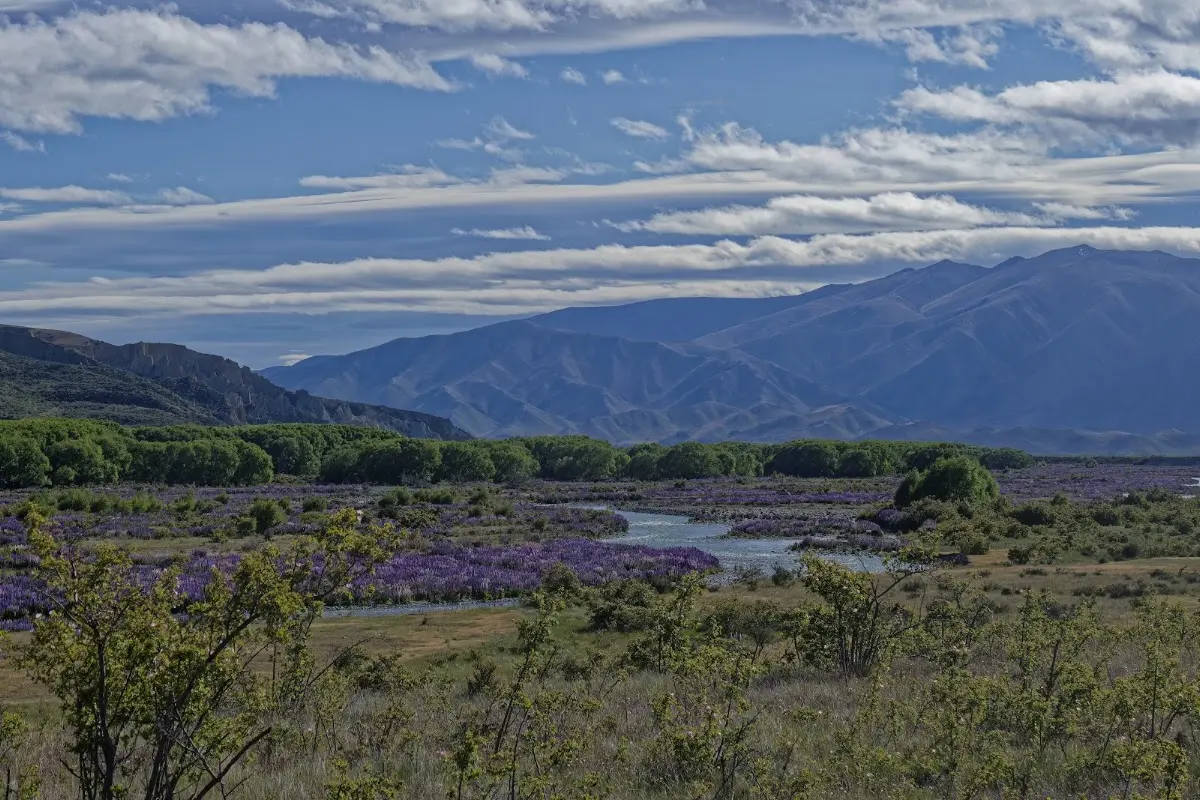
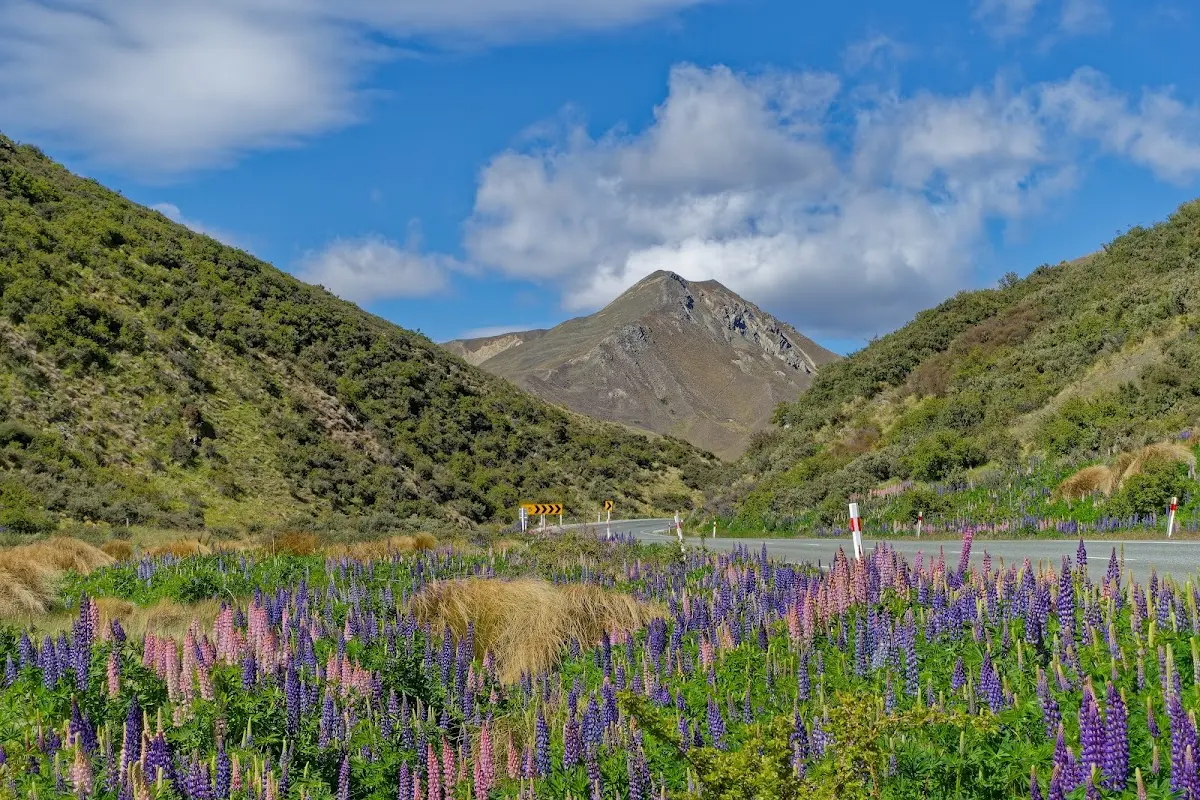
Lindis Pass, known in Māori as Ōmakō, is a high inland mountain pass in New Zealand’s South Island, reaching 971 metres above sea level. It lies between the valleys of the Lindis and Ahuriri Rivers, on State Highway 8 between Cromwell and Omarama, forming an important route between Central Otago and the Mackenzie Basin. Although it is not usually considered a true alpine pass, it is the highest point on the South Island’s state highway network and one of the highest on New Zealand’s highway system overall. Its setting is distinctive: rather than rugged alpine forest, the pass is surrounded by dry golden tussock country, with hot, arid summers and winters that often bring snow and ice.
Lindis Pass is both a scenic stop and a challenging road. A car park at the summit gives access to viewpoints and short walking tracks, offering wide views over the rolling high-country landscape and its grasslands, which support species such as kārearea, pipit, fantail, grey warbler, rifleman, and spotted skink. At the same time, the pass is known for difficult driving conditions and a history of crashes, made more dangerous by limited cellphone coverage. In response, road safety improvements have included webcams, better signage, wire-rope barriers, and electronic speed warnings. For travellers, Lindis Pass remains one of the South Island’s most memorable road crossings: exposed, beautiful, and demanding respect in all seasons.
Cromwell
Cromwell is a town in Central Otago on New Zealand’s South Island, set beside Lake Dunstan near the meeting point of the Clutha / Mata-Au and Kawarau Rivers. Known to Māori as Tīrau, the area was once an important landmark and food stop, while European miners later called it “The Junction” because of its strategic position. Gold discovered nearby in the 1860s brought a rush of miners and rapid growth, and Cromwell soon became a key inland hub linking Dunedin with Queenstown, Wānaka, and the interior. Even after the gold boom faded, the town remained important as a service centre for farming and orcharding in the surrounding dry, sunny valleys.
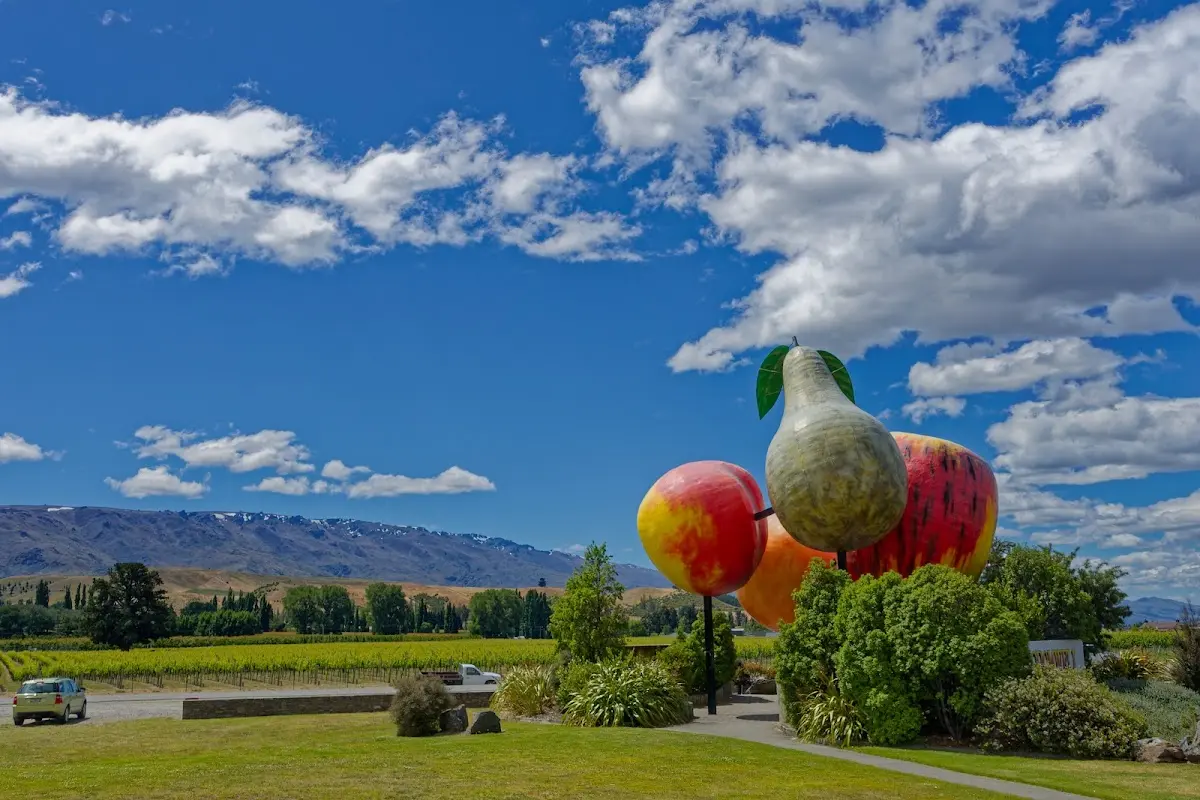
Over time Cromwell developed a new identity based on agriculture, especially stone fruit and, later, wine. With irrigation schemes transforming the land, the area became famous for orchards and earned the nickname “the fruit bowl of the south.” Its dry inland climate, mountain setting, and central position in Otago made it an ideal base for both horticulture and travel. The town sits among dramatic ranges including the Pisa and Dunstan mountains, not far from Lindis Pass, Bannockburn, and the routes to Queenstown and Wānaka, and it remains one of the South Island’s most important regional crossroads.
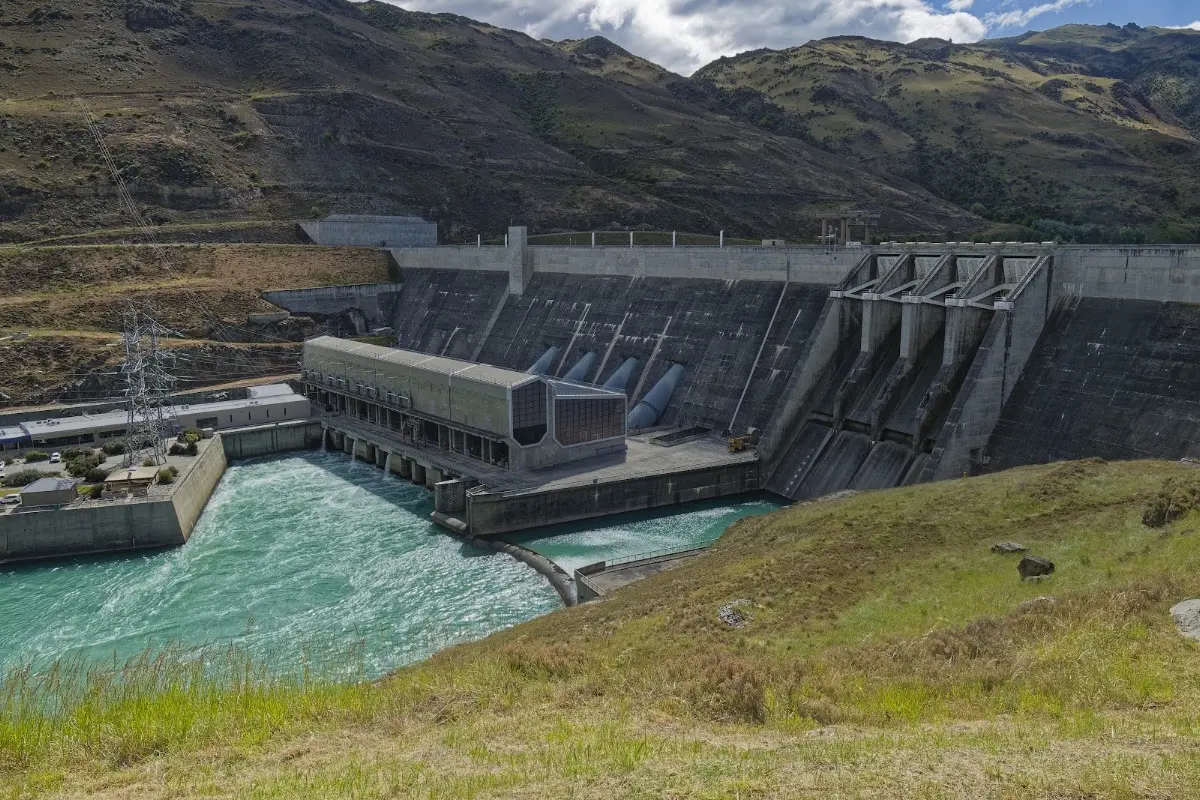
Cromwell changed dramatically in the late 20th century with the construction of the Clyde Dam and the creation of Lake Dunstan. As the lake filled in the early 1990s, about a third of the town had to be relocated to higher ground, including much of the old centre. Farmland, orchards, and the historic river confluence were submerged, but a number of older buildings were preserved and now form the Cromwell Heritage Precinct near the lakeshore. The reshaped town expanded as a modern service centre, with “The Mall” becoming its new commercial heart, while the lake itself created a striking new setting and opened fresh recreational possibilities.
Today Cromwell is a fast-growing town that blends history, agriculture, tourism, and outdoor recreation. Visitors come for its heritage precinct, orchards, wineries, and museum, as well as newer attractions such as Highlands Motorsport Park and the Lake Dunstan Trail, a spectacular cycling route linking Cromwell with Clyde. The town also has a strong sporting culture and serves as a base for exploring nearby historic goldfields such as Bannockburn and Bendigo. With its mix of gold rush history, fruit-growing tradition, and modern development beside a man-made lake, Cromwell has become one of Central Otago’s most distinctive and dynamic towns.